Family Friendly & Specialty Dentists in London, UK
Gum grafting replaces gum tissue that has been lost to recession, covering exposed roots and stopping the recession advancing. We assess whether you are suitable, and how long recovery takes, at your initial consultation at our Primrose Hill practice.
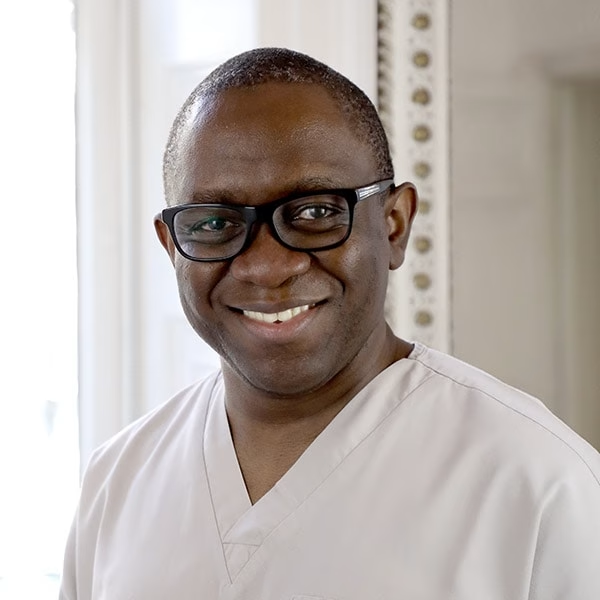
Led by Dr Ope Sodeinde, GDC-registered specialist periodontist.
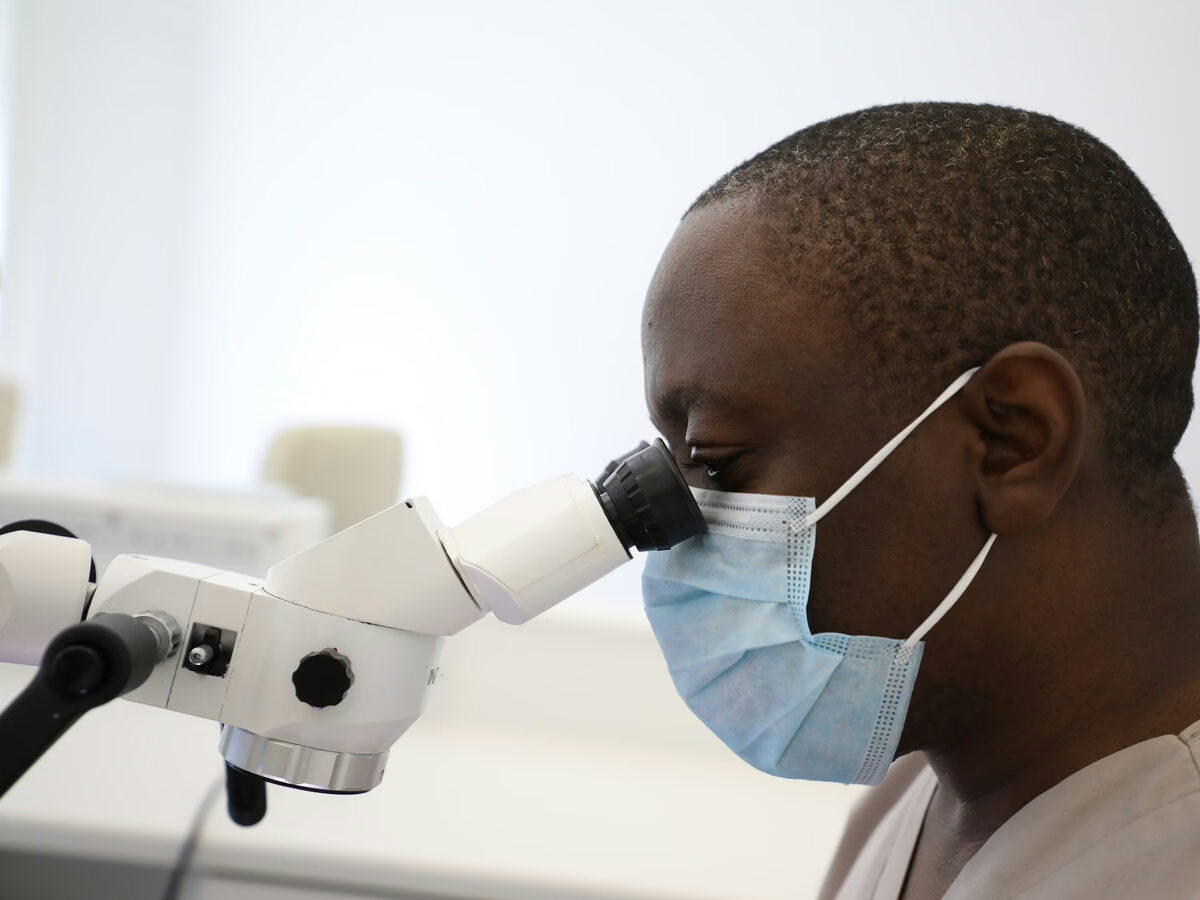
Gums that pull away from the teeth are often a sign of gum disease, though recession can also follow hard brushing or thin gum tissue. Whether the cause is early gingivitis or established infection, we provide periodontics in London to stop the tissue loss. Where bacteria are the cause, we use LANAP laser therapy to target them, and scaling and root planing to remove tartar below the gum line so the gum can reattach.
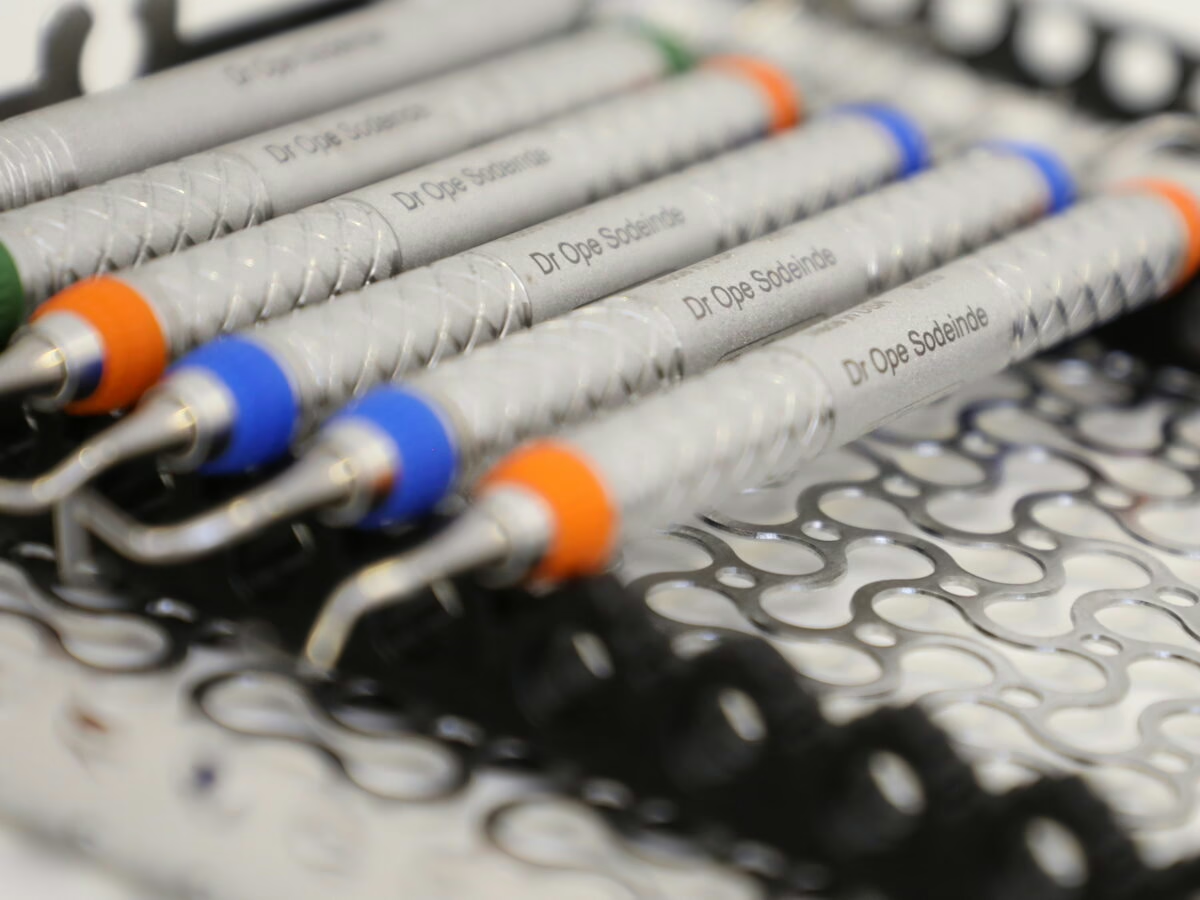
Untreated recession exposes the root, which is softer than enamel and more prone to sensitivity, decay and further loss. Covering it early protects the tooth. Your first visit is diagnosis first: we confirm the cause of the recession before proposing a graft, so you are not treated for something you do not have.
Where recession sits alongside other problems, we also provide gum abscess drainage for acute infection and gummy smile correction where the gum line is the concern. Dr Ope Sodeinde assesses whether grafting is the right way to restore your gum line.
Leave your number and we will call you back. Nothing is booked until you say so.
Patients usually come to us with sensitivity, visible root exposure, or worry about how stable the teeth are. Dr Ope Sodeinde examines the recession and the surrounding tissue to confirm whether a graft will work for you.
Some cases need a combined approach: pocket reduction surgery to treat deep gum pockets first, and a periodontal maintenance programme afterwards to protect the graft. If seeing a specialist feels daunting, tell us; the consultation is unhurried.
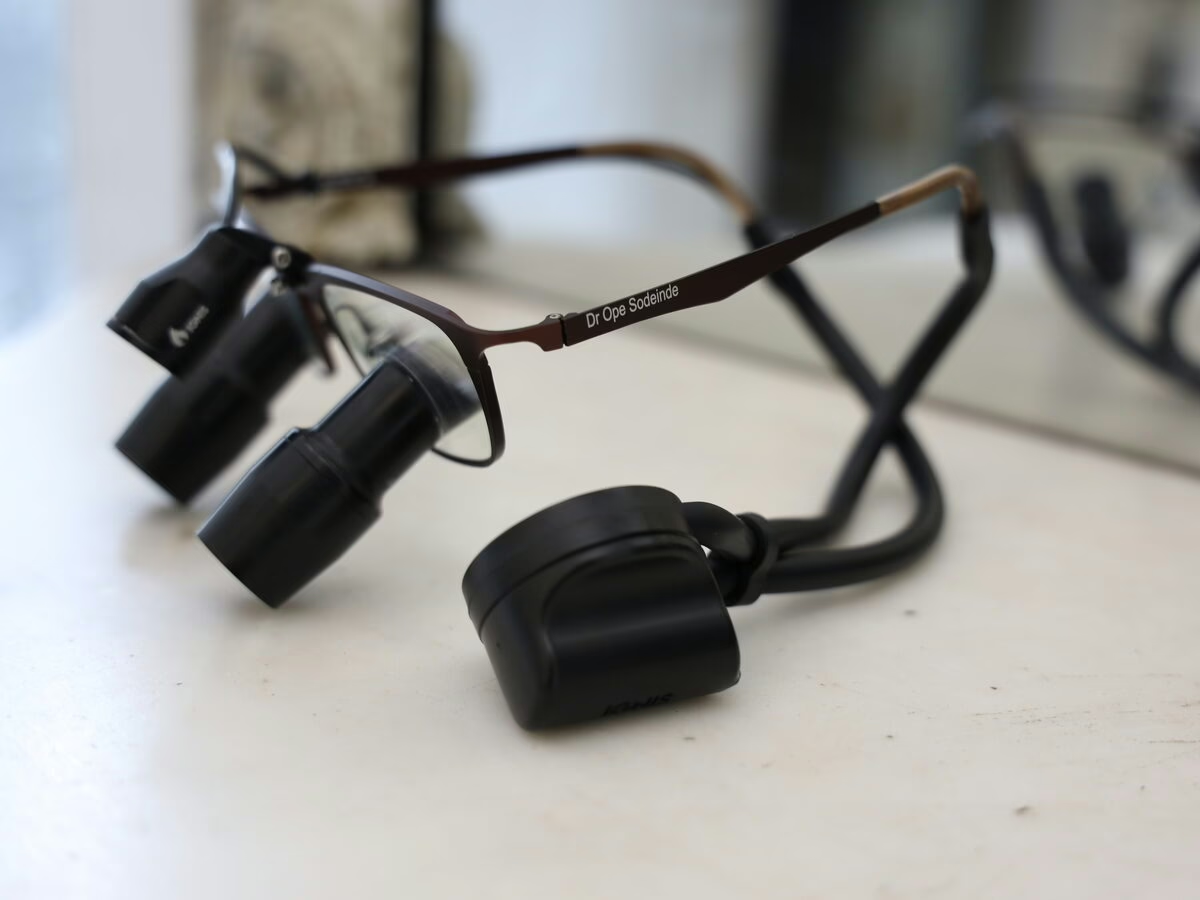
We start with a clinical assessment to establish the cause and extent of the recession, and whether a graft or guided tissue regeneration is the better option. You leave with a clear plan.
Under local anaesthetic, we place the graft over the exposed root and secure it with fine sutures. If the idea of gum surgery worries you, we offer sedation for gum surgery.
The first few days decide whether the graft takes. Our gum disease aftercare guide covers this period; following it keeps the graft from being disturbed.
Follow-up visits check how the new tissue is integrating with your existing gum, and we track the graft's stability over time.
Keeping the result needs a consistent care routine and a maintenance programme so that disease does not return around the graft.
Your treatment is led by Dr Ope Sodeinde, specialist periodontist (GDC No. 104071), who examines your gums and reviews your medical history before recommending any procedure. Grafting is one part of a wider range: subgingival cleaning and root debridement, gingivitis treatment, laser gum therapy, gum abscess drainage, gum irrigation to reduce inflammation, and crown lengthening where a crown needs more tooth exposed.
Follow-up appointments are scheduled after surgery so we can check that the gum tissue is healing as expected, because maintenance is what keeps a periodontal result.
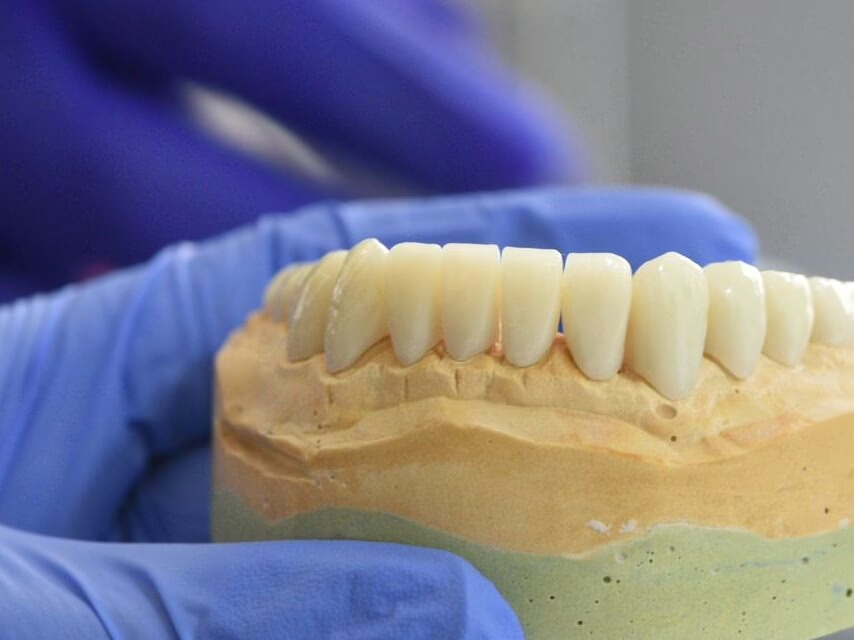
We focus on the long-term stability of your gum line. Consultations are calm and unhurried, with honest options: you are told plainly whether a graft is the right choice or whether crown lengthening suits your anatomy better.
Ope explained to me that a gum graft is not always standard but that he has found it a worthwhile and effective process in some cases.
The fee depends on how many sites need grafting. We assess the extent of the recession at your consultation and give you an itemised quote.
The procedure time depends on the number of sites. We give you a specific timeframe for your case at your consultation.
The area is numbed with local anaesthetic during the procedure. Your consultation covers our options for managing anxiety and pain.
That depends on your oral health and on keeping to a maintenance programme. For patients with implants, we also provide peri-implantitis treatment to protect the tissue around them.
Whether your concern is sensitivity or appearance, a clinical assessment settles whether you are suitable. We measure the depth of the recession and the health of the supporting tissue, then explain the process and the recovery timeline. Find out what happens at your first periodontal consultation and how to book.
A consultation with Dr Ope Sodeinde confirms whether grafting is the right choice. Other surgical procedures we provide:
Dr Ope Sodeinde provides a written plan and an itemised quote at your assessment. The plan is yours to keep and take to any other practice.
Call 020 7589 7792.
Real, verified Google reviews from patients of London Dental Specialists.
Your details are used to arrange your appointment and for nothing else.
111 Regent's Park Road, Primrose Hill, London NW1 8UR
Use our contact page if you would rather ask something than book.
