Family Friendly & Specialty Dentists in London, UK

Palate expansion works optimally between ages 7 and 14 when jaw bones remain flexible and responsive to gentle pressure. However, adults may also be candidates for treatment. Modern techniques like MARPE utilise mini-implants to achieve expansion, whilst surgical options can address more complex cases. Adults with crowded teeth, crossbites, or sleep apnoea may find this treatment beneficial. The appropriate timing depends on individual needs and bone structure, with personalised treatment plans determining the most suitable approach for each patient.
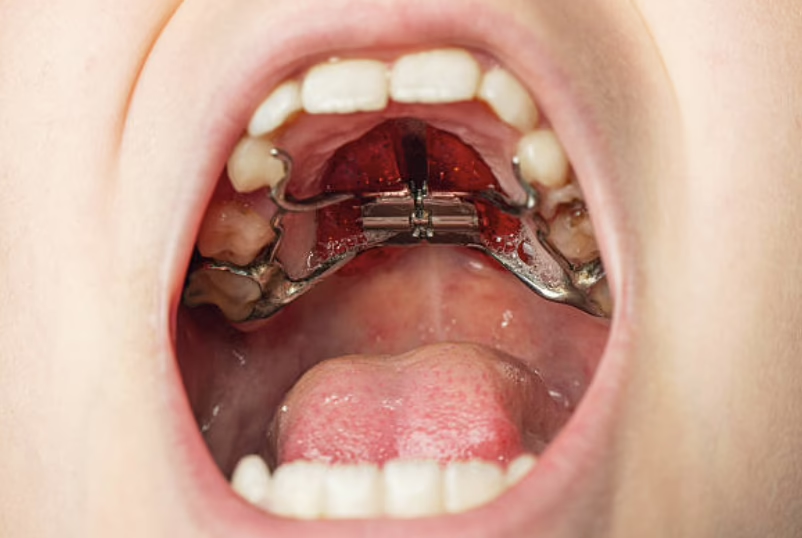
Palate expansion represents an orthodontic approach to widening the upper jaw and resolving dental complications ranging from crowded teeth to crossbites. Expanders are orthodontic devices that apply gentle, consistent pressure to the maxilla, gradually encouraging bone growth and creating additional space for teeth alignment.
Palate expansion widens the upper jaw and resolves dental complications like crowded teeth and crossbites through gentle, consistent pressure.
These devices function by stimulating the palatal suture—the growth centre in the roof of the mouth—to expand naturally over time. As the upper jaw widens, teeth can shift into better positions, improving both function and aesthetics.
Whilst traditionally used during childhood when jaw bones remain more malleable, adult patients may also be considered for palate expansion through modern innovations.
Advanced orthodontic treatment options now enable adult patients to potentially achieve similar results through specialised techniques, though individual suitability varies and requires professional assessment. A complimentary initial consultation with an experienced orthodontist can help determine whether palate expansion is the right approach for your specific dental needs.
This orthodontic solution may be accessible across different age groups depending on clinical factors.
While the ideal window for palate expansion is between ages 7 and 14, when the upper jaw bones remain separate and malleable, this does not mean adults are without options.
Once the jaw bones fuse around age 16 to 18, traditional expansion becomes more challenging, but advanced techniques like MARPE and surgical methods may be considered for older teens and adults.
An orthodontist can evaluate individual cases to determine whether expansion remains a suitable option and which approach may be most appropriate for each patient's needs. Expansion can provide long-term benefits for dental health even when pursued through alternative methods in adulthood.
The upper jaw's developmental window presents favourable circumstances for expansion treatment. Between ages 7 and 14, children may benefit from traditional expansion because their upper jaw bones remain separate and actively growing. This biological advantage can make the palate expander effective during this period.
As skeletal maturity approaches around ages 16 to 18, the upper jaw bones fuse together, which may limit traditional expansion effectiveness. For adults experiencing crowding or other dental issues, an orthodontist may consider alternative approaches like MARPE or surgical expansion rather than conventional methods.
However, age alone doesn't determine candidacy. An early assessment by a qualified orthodontist remains essential for evaluating individual dental conditions and determining the most appropriate treatment plan, regardless of whether the patient is a child or adult.
Although skeletal maturity typically occurs by the late teens, adults can still pursue palate expansion to address dental crowding, crossbites, and impacted teeth.
Whilst less effective than childhood treatment, adult expansion remains viable through advanced techniques. MARPE and SARPE offer minimally invasive and surgical intervention options for those with narrow palate conditions. These procedures may improve dental alignment and alleviate associated issues, including sleep apnoea.
For adults preferring non-surgical approaches, clear aligners and traditional braces provide gradual expansion without invasive procedures. These orthodontic solutions work effectively for many patients seeking subtle changes over time.
Individual candidacy varies considerably based on bone density, jaw structure, and specific dental needs.
Professional consultations remain essential for evaluating suitability and determining the most appropriate expanders and treatment methods for achieving optimal results.
Many older teens and adults discover that palate expansion can address long-standing dental issues that have persisted despite previous orthodontic treatment or natural development.
Several indicators suggest expansion might be beneficial. Chronic crowded teeth that overlap or misalign signal the need for additional space. A narrow palate often manifests as a V-shaped dental arch, limiting smile aesthetics. Crossbites, where upper teeth sit inside lower teeth, represent significant bite issues that may require correction. Impacted teeth unable to emerge properly due to insufficient space may necessitate expansion for clearance.
Crowded teeth, narrow palates, crossbites, and impacted teeth are key indicators that palate expansion may benefit your oral health.
Additionally, adults experiencing mouth breathing, snoring, or sleep apnoea may find that palate expansion could help alleviate airway restrictions and improve breathing quality. For those with existing periodontal disease, expansion combined with proper gum care can optimize treatment outcomes.
These signs collectively indicate that palate expansion could potentially enhance both oral function and overall dental health in older patients.
Fortunately, older teens and adults have several effective palate expansion options tailored to their needs and circumstances.
Non-surgical innovations like MARPE offer a minimally invasive alternative using mini-implants, whilst surgical solutions such as SARPE may address severe cases where the palate has already fused.
Traditional braces and modern aligners like Invisalign provide additional pathways to expand the dental arch and achieve improved alignment and aesthetics.
For patients seeking comprehensive restorative solutions after palate expansion, All-on-4 dental implants present a viable option for full-arch restoration in cases of significant tooth loss.
MARPE (Minimally Invasive Rapid Palatal Expansion) offers palate expansion for teens and adults by using mini-implants to achieve jaw widening without surgical intervention.
This approach addresses the challenges adults face, particularly those whose palate bones have already fused.
Key features of MARPE include:
Treatment duration varies depending on individual circumstances, followed by a retention phase to maintain results.
MARPE represents an advancement in orthodontic treatment, offering adults an option for jaw expansion. A thorough consultation and clinical examination are essential to determine whether this technique is appropriate for individual orthodontic needs.
When the palate bones have fully fused due to skeletal maturity, traditional expansion methods lose their effectiveness, making surgical intervention necessary for adults and older teens with severely constricted palates.
Surgically Assisted Rapid Palatal Expansion (SARPE) combines surgical intervention with palatal expanders to address this challenge. The orthodontic procedure involves creating space in the jaw through surgery, followed by expander placement to facilitate continued widening.
A narrow palate can contribute to breathing difficulties and crowded teeth, making SARPE a potential solution for eligible candidates.
Adults whose palates have fused require an experienced orthodontist's thorough evaluation to determine if SARPE suits their bone structure and specific needs, supporting appropriate treatment planning.
For teens and adults seeking palate expansion without invasive surgery, modern orthodontic appliances offer effective alternatives tailored to individual needs and preferences.
Several options exist for widening the upper jaw (maxilla) and palate:
These braces and aligners work synergistically with traditional expanders.
Invisalign with expansion techniques appeals to patients prioritising discretion, whilst self-ligating braces offer efficiency in space creation.
Each approach addresses individual orthodontic requirements differently, making professional consultation essential for determining which method suits specific palate expansion needs and overall dental goals.
Orthodontists fit a specialised device over the upper molars to gradually widen the maxilla through consistent pressure application. This palatal expansion treatment consists of two halves connected by a screw mechanism that requires regular turning to achieve incremental widening of the upper jawbone.
The process typically spans three to six months, during which orthodontists monitor progress closely. For those with narrow palates, this gradual expansion may help create more space for proper tooth alignment and bite correction.
Adults face unique challenges since their palates are fully fused. In these cases, surgically assisted rapid palatal expansion (SARPE) offers an alternative approach, combining surgical intervention with orthodontic expansion to address oral function. Advanced implant technology and computer-guided surgery can also support comprehensive smile transformation when palatal expansion is combined with other restorative dental procedures.
Several key advantages distinguish London Dental Specialists as an excellent choice for palate expansion treatment. The practice combines expertise with modern technology to deliver dental solutions tailored to individual needs.
The clinic's commitment to comprehensive orthodontic care—whether for children or adults—makes it a suitable destination. A consultation allows patients to explore customised expansion solutions that address their specific concerns.
By age 16 to 18, palate expansion becomes considerably more challenging as the upper jaw bones fuse, making traditional expanders less effective.
However, no age is technically "too late." Adults may be able to pursue surgical options like SARPE or non-surgical alternatives such as MARPE and orthodontic braces.
Whilst these methods require more intervention than childhood expansion, they may achieve satisfactory outcomes for those with crowding, crossbites, or impacted teeth.
Individual suitability depends on various factors and requires professional assessment by a qualified dental practitioner.
Yes, adults can undergo palate expansion, though the process differs considerably from treatment in children.
Due to jawbone fusion typically occurring by age 16-18, adult expansion requires more sophisticated approaches. Options include Surgically Assisted Rapid Palatal Expansion (SARPE) for severe cases or Minimally Invasive Rapid Palatal Expansion (MARPE), which uses mini-implants.
Treatment duration extends longer, often necessitating additional orthodontic procedures to achieve optimal outcomes.
The ideal window for palatal expansion occurs between ages 7 and 14, when the upper jaw bones remain separate and highly pliable.
During this developmental period, treatment typically proves effective and may require less complex orthodontic approaches.
Children with sufficient adult teeth—generally between ages 5 and 16—may be suitable candidates for expansion therapy.
Older teens and adults experiencing crowding, crossbites, or impacted teeth might also pursue expansion, though treatment approaches may differ.
An orthodontist should evaluate individual cases regardless of age to determine appropriate treatment options.
Adult palate expanders typically cost between £2,959 and £3,950 for traditional options, with clear aligner techniques averaging £3,250.
Surgically Assisted Rapid Palatal Expansion (SARPE) involves higher costs, ranging from £15,000 to £25,000 due to the surgical component.
Treatment duration varies between 6 to 12 months, followed by retention phases.
Many orthodontic practices offer flexible payment plans and finance options to help make expansion treatment more accessible for adult patients.
Palate expansion remains a viable option throughout life, though timing considerably impacts the approach and outcome. Whilst children benefit from natural skeletal adaptability, teens and adults may achieve results using specialised techniques. Outcomes depend on individual anatomy and treatment goals. Consulting with an experienced orthodontist helps determine whether expansion may be suitable for specific needs and which method—traditional or surgical-assisted—could be appropriate for long-term dental health and alignment.