Family Friendly & Specialty Dentists in London, UK

Wondering how long dental implants last in the UK? Dr Opeoluwa Sodeinde explains implant lifespan, what affects it, and how to protect your investment.
When you are considering dental implants, you are likely looking for a long-term solution to missing teeth. It is natural to wonder how long this investment will truly last. This article will clarify the lifespan of dental implants, including the factors that influence their durability and what you can do to ensure their longevity.
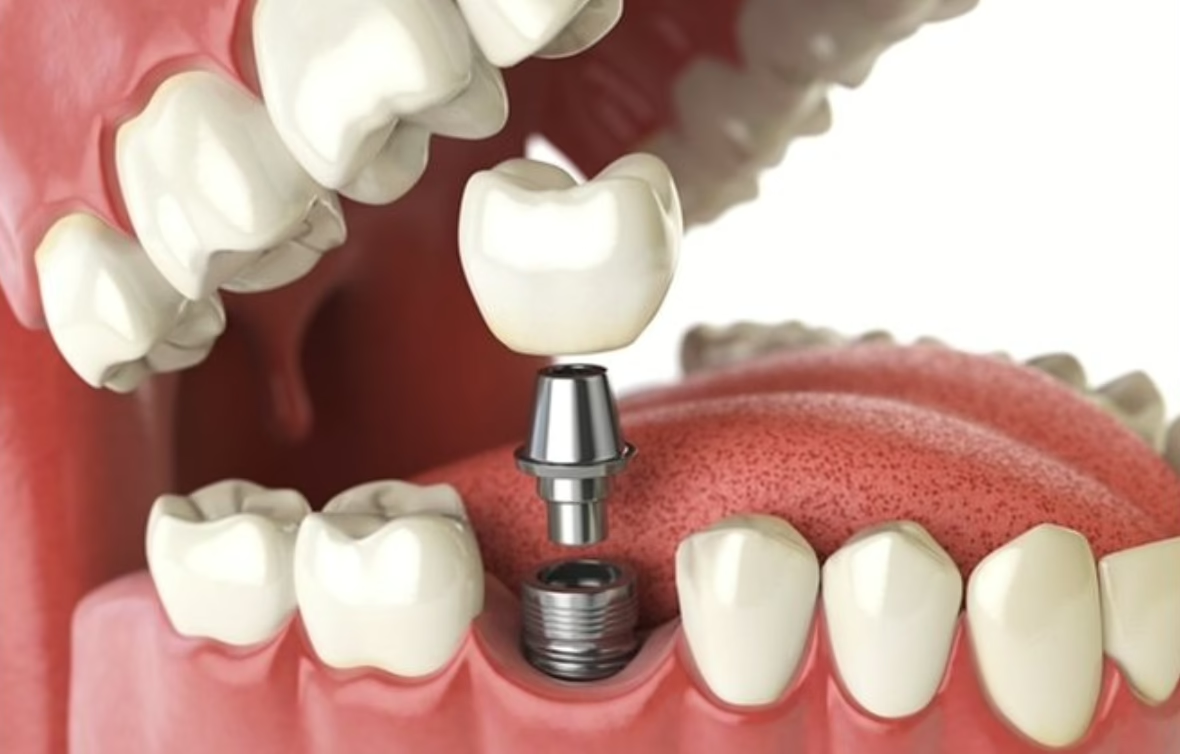
While often discussed as a single entity, a dental implant system is actually comprised of two distinct components: the embedded titanium fixture and the visible crown that sits atop it. These two parts have different materials, different functions, and consequently, very different life expectancies. Understanding this crucial separation is key to setting realistic expectations for your investment.
The implant fixture itself, which Dr Opeoluwa Sodeinde places directly into your jawbone, is typically made of medical-grade titanium. This material is chosen for its biocompatibility, meaning your body readily accepts it, allowing it to fuse with the bone in a process called osseointegration. Once this fusion is complete, the titanium implant fixture can last for many decades, often a lifetime, with proper care and good oral health. Its longevity is primarily dependent on the health of your jawbone and gums, and your commitment to maintaining excellent oral hygiene. London Dental Specialists focuses on specialist implant and periodontal care, ensuring the foundational health of your gums and bone to support these long-lasting fixtures.
In contrast, the dental crown, which is the visible tooth-like restoration attached to the implant, is designed to withstand the forces of biting and chewing. Crowns are typically made from materials like porcelain, zirconia, or a combination of both. While durable, these materials are subject to wear and tear, just like natural teeth. The lifespan of a dental crown on an implant is generally between 10 to 20 years, though some can last longer. Factors influencing a crown's lifespan include the material used, your biting habits, whether you grind your teeth (bruxism), and your overall oral hygiene. Replacing a worn or damaged crown is a routine procedure that does not require disturbing the underlying implant fixture. London Dental Specialists offers comprehensive care, including the placement and restoration of dental implants, ensuring both the fixture and the crown are optimally managed for your long-term oral health.
The longevity of a dental implant, often exceeding two decades, is not solely determined by the quality of its initial placement but rather by a confluence of clinical realities and patient behaviours that begin immediately after surgery. Understanding these contributing elements can help you maintain your implant for as long as possible.
These factors highlight that while dental implants are a robust solution, their lifespan is a shared responsibility between the patient and the specialist team.
Published research consistently demonstrates remarkable longevity for dental implants, with numerous studies tracking survival rates over decades. For most patients, the expectation is that a well-placed and maintained dental implant can function effectively for many years, often exceeding two decades. For example, a significant body of evidence suggests that dental implants achieve survival rates of over 95% at 10 years, and many studies report rates above 90% even after 20 years.
It is important to understand what these survival rates mean for you as an individual. These figures represent the implant itself remaining stable in the bone, not necessarily the crown or bridge attached to it, which may require periodic replacement due to wear and tear. While these statistics provide a strong indication of overall success, your individual outcome can vary based on factors such as your oral hygiene, general health, and whether you follow the recommended aftercare, including regular check-ups and hygiene appointments. Dr Opeoluwa Sodeinde and the specialist team at London Dental Specialists focus on comprehensive care that supports both the implant and its restoration for the longest possible lifespan.
Despite these impressive figures, it is also important to acknowledge that dental implants, like any medical procedure, carry a small risk of complications or failure. Early failures, typically within the first year, are often related to issues with osseointegration – the process where the implant fuses with the bone. Late failures, occurring years after placement, can be linked to factors such as gum disease around the implant (peri-implantitis) or excessive biting forces. London Dental Specialists offers specialised periodontal care and implant maintenance services to help mitigate these risks, ensuring that potential issues are identified and addressed promptly to protect your investment in your oral health.
Patients considering dental implants in the UK often face a choice between conventional two-stage implants, same-day immediate implants, and implant-supported bridges, each presenting distinct advantages and long-term durability profiles. Understanding these differences is crucial for making an informed decision about your treatment plan and setting realistic expectations for the lifespan of your new teeth.
Achieving the longest possible lifespan for your dental implant begins not just with expert placement, but with a diligent, personalized aftercare regimen. This involves a partnership between your home care efforts and professional support to protect your investment.
By adhering to these steps, you actively contribute to the enduring success and health of your dental implants, ensuring they continue to serve you well for many years.
Even with the best care, dental implants can sometimes encounter complications, and recognising the early warning signs of potential failure is crucial for timely intervention. The most common issue affecting implant longevity is peri-implantitis, a condition similar to gum disease that affects the tissues surrounding the implant. Symptoms often begin subtly, such as persistent redness or bleeding around the gum line of the implant when brushing or flossing. You might also notice a dull ache or tenderness in the area, or a change in the way your bite feels.
As peri-implantitis progresses, the signs become more apparent. You might observe a visible recession of the gum tissue around the implant, exposing more of the metal or ceramic post. Swelling, pus discharge, or a bad taste in your mouth are also serious indicators that an infection is present. In advanced cases, the implant may feel loose, or you might experience significant pain when chewing. For instance, a patient in their late 50s who notices their implant crown feels slightly mobile when eating tougher foods should seek immediate review.
If you experience any of these symptoms, it is important not to delay seeking specialist advice. London Dental Specialists offers comprehensive diagnostic services for dental implants, including detailed examinations and imaging, to accurately assess the health of your implant and the surrounding bone and gum tissue. Early diagnosis of peri-implantitis allows for targeted treatment, which can range from professional cleaning and antibiotics to advanced periodontal procedures, often preventing the need for implant removal. Dr Opeoluwa Sodeinde and the team have extensive experience in managing implant-related gum and support care, providing solutions for issues that might otherwise lead to implant failure.
Beyond the general lifespan estimates, several specific inquiries frequently arise regarding the longevity and practicalities of dental implants.
What happens after 25 years if my dental implant is still functioning well? If your dental implant remains healthy and stable after 25 years, it can continue to serve you effectively. Regular check-ups with Dr Opeoluwa Sodeinde and the London Dental Specialists team are crucial to monitor its condition, the surrounding gum tissue, and bone support, ensuring any potential issues are addressed promptly. Continued diligent oral hygiene at home is also vital for its ongoing success.
What are the financial considerations for dental implants in the UK? The cost of dental implants in the UK varies based on factors such as the number of implants needed, the complexity of the case, and any additional procedures like bone grafting. London Dental Specialists provides transparent pricing following a comprehensive consultation, and while implants represent an investment, their long-term benefits often outweigh the initial cost compared to other tooth replacement options. While dental implants are not typically covered by the NHS, private dental plans or financing options may be available.
What is the typical failure rate for dental implants? Dental implant success rates are remarkably high, generally exceeding 95% over 10 years when placed by experienced specialists like those at London Dental Specialists. Failures, though rare, can occur due to factors such as poor oral hygiene, smoking, certain medical conditions, or early implant loading. London Dental Specialists focuses on careful patient selection and precise surgical techniques to minimise risks.
What is the "3-2 rule" for dental implants? The "3-2 rule" is a guideline that refers to the minimum amount of bone required around a dental implant for optimal stability and long-term success. It suggests having at least 3mm of bone height above the implant and 2mm of bone width on either side of the implant. Dr Opeoluwa Sodeinde uses advanced imaging and planning to ensure adequate bone volume, and if insufficient, bone grafting procedures are performed to prepare the site.
What should I do if a previous dental implant has failed? If a prior dental implant has failed, London Dental Specialists can assess the situation to determine the cause and discuss potential solutions. This often involves removing the failed implant, treating any underlying infection or bone loss, and then evaluating whether a new implant can be placed after a healing period, or if alternative treatments are more suitable. London Dental Specialists specialises in complex cases, including problem-solving for existing dental implants.
Talk to someone real.
If anything in this article landed for you, London Dental Specialists offer a free 15-minute consultation with Dr Opeoluwa Sodeinde — no obligation, just a chance to see whether what we do fits what you need.
About the author: Dr Opeoluwa Sodeinde, BDS, MFDS RCS(Ed), MSc (Rest Dent), MClinDent (Perio), MPerioRCS (Ed) with 30 years of experience.
Dr Opeoluwa Sodeinde, Principal Dentist and Specialist in Periodontics, brings exceptional expertise to all of London Dental Specialist's Dental Procedures. His MSc in Restorative Dentistry from Newcastle University and MClinDent in Periodontics from King’s College London, alongside Membership in Periodontics from the Royal College of Surgeons of Edinburgh, equip him with advanced implant placement and gum management skills, and almost all other general dentistry and oral surgery comes second nature.
