Family Friendly & Specialty Dentists in London, UK

A dental implant typically takes 3 to 9 months from consultation to crown. See each stage, what changes the timing, what the fee covers and how to start in Primrose Hill.
You are likely tired of vague answers and just want to know when you will actually have your smile back. You might be wondering if you can skip the wait or if a "same-day" option is realistic for your specific gap.
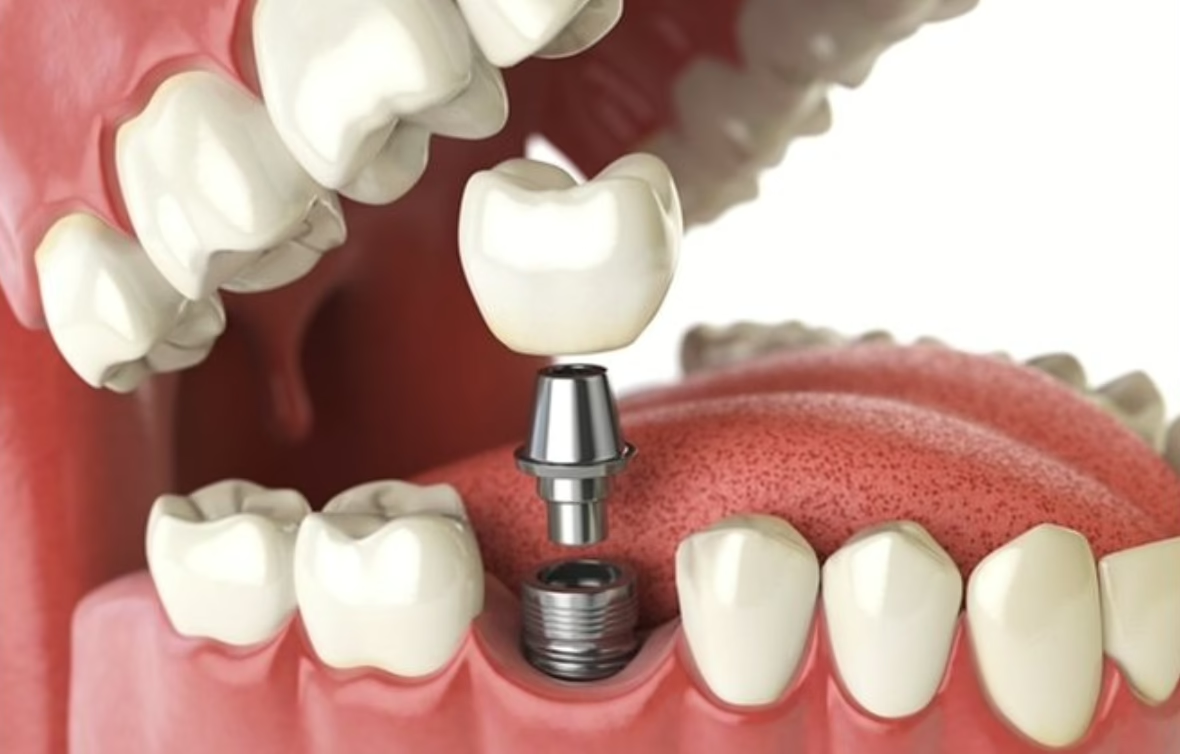
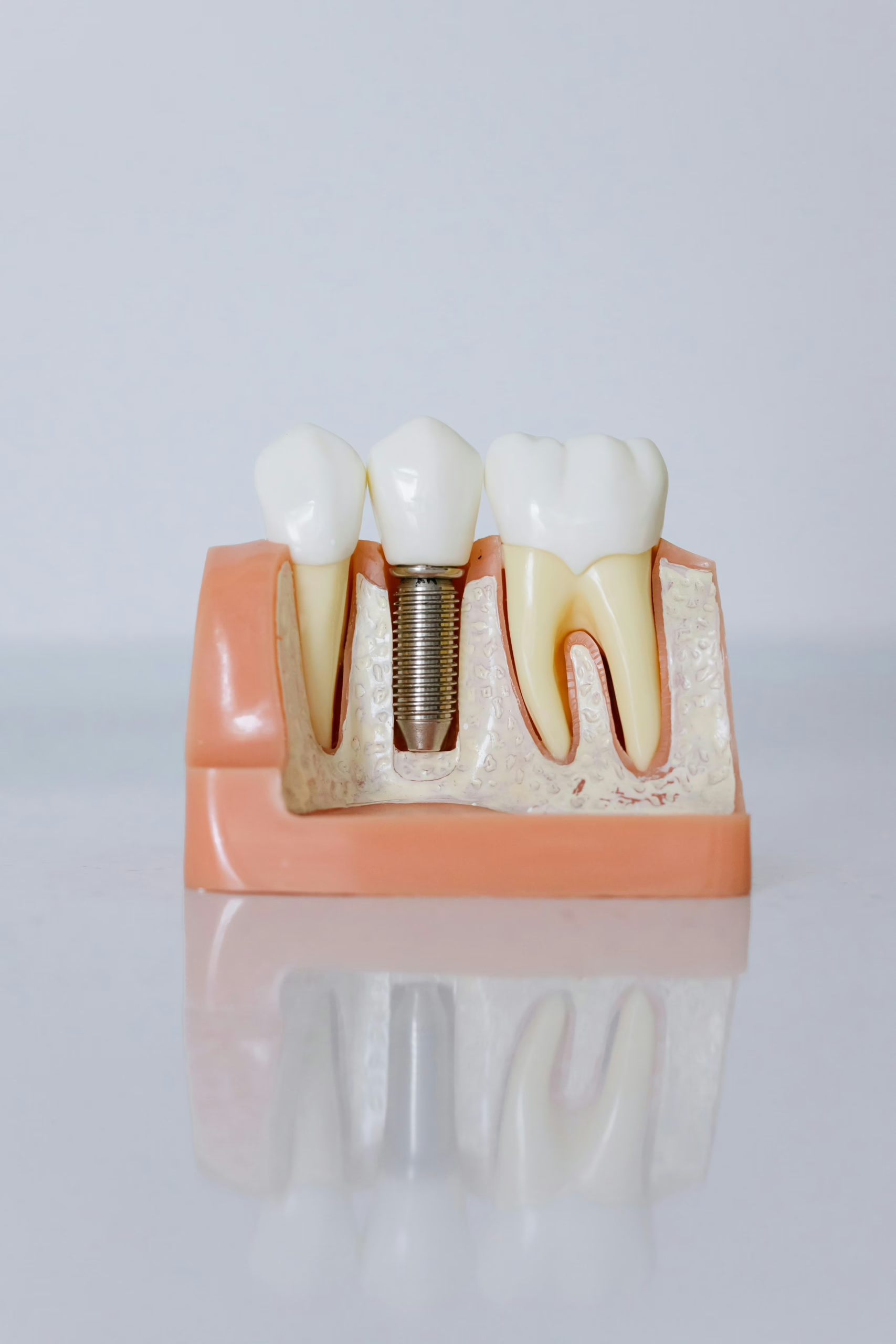
Most people sitting in the consultation chair just want someone to cut to the chase: weeks, months, a year: which is it? The honest answer is 3 to 9 months, and the timeline is set by how fast your jawbone heals, not by how many appointments you can squeeze in. That whole process is building three separate parts into one tooth, a titanium post acting as the new root, a connector called an abutment, and the crown on top, and at this practice it's planned and placed by Dr Ope Sodeinde, Principal Dentist & Clinical Director, using the Straumann implant system.
For a patient with significant bone loss in the upper jaw, the timeline may extend if a sinus bone graft is required first to create a stable foundation. Once the titanium post is placed, it must undergo osseointegration, where the bone fuses to the metal; think of it like concrete setting around a post, where rushing the process would compromise the stability of the final tooth.
After this healing phase, the abutment is attached to link the implant to the final crown. This final restoration stage typically takes a few weeks to complete. This ensures the custom crown fits precisely. Unlike a conventional bridge, which requires the neighbouring teeth to be cut down to act as supports, the implant stands independently, preserving the health of your remaining natural teeth.
From the moment a CBCT scanner maps your jaw to the day a crown is screwed or cemented into place, six distinct stages stand between you and a finished tooth. While every patient's anatomy differs, this sequence provides a roadmap for how the process unfolds.
Dr Ope Sodeinde examines your jawbone and gum health to determine if you can proceed directly to surgery. This stage involves a CT scan (CBCT) to map your actual bone and gum anatomy. This ensures precise planning. Typical timeframe: 1 to 2 weeks for planning.
If the jawbone is too thin or soft to support a post, you may require a bone graft or gum graft. This stage may also include tooth extractions, such as removing a failing tooth to clear the site. Typical timeframe: 2 weeks to 6 months, depending on the healing required for the graft.
The titanium post is surgically placed into the jawbone under local anaesthetic. You will see a small incision in the gum, which is then closed with stitches if necessary. Typical timeframe: A single surgical appointment.
During this phase, the jawbone fuses with the titanium post to create a stable foundation. This is a critical biological process where the implant becomes a permanent part of your anatomy. Typical timeframe: 3 to 6 months.
Once the implant is stable, a small connector piece called an abutment is attached to the post. This piece acts as the bridge between the root substitute and the final tooth. Typical timeframe: 2 to 4 weeks for fitting and gum healing.
The process concludes with the fabrication and placement of your custom crown, bridge, or full mouth implant restoration. This final piece is designed to match the colour and shape of your natural teeth. Typical timeframe: 2 to 4 weeks.
Please note that healing is variable; the lower jaw often heals faster than the upper jaw or areas where bone has been grafted.
Your clinician will use these stages to build a personalised treatment plan tailored to your specific clinical needs.
Not every gap in the mouth is the same, and the bone sitting under it decides whether you're looking at one surgery or several. While some patients can move directly to implant placement, others require a foundation of new bone to ensure the titanium post is stable and secure.
The following table compares how different clinical needs alter the sequence of your treatment.
| Route | Preparation first | Teeth during healing | What sets the timing |
|---|---|---|---|
| Standard Single Implant | Clinical assessment & imaging | Temporary option if requested | Bone density and integration speed |
| Implant with Bone Graft | Grafting (Donated or Autogenous) | Temporary restoration | Graft healing (typically 2 weeks to 6 months) |
| Sinus Bone Graft | Grafting in the sinus area | Temporary restoration | Sinus bone regeneration rate |
Whether you require donated bone or autogenous bone (taken from your own chin or the back of the lower jaw), the primary goal is creating a stable environment for the implant.
You can use this tool to see which route aligns with your current oral health.
It is important to note that the dental field is divided on the use of immediate placement versus delayed loading. Because every jaw anatomy is unique, the decision to proceed with a specific route is a clinical one made by Dr Ope Sodeinde during your assessment.
Use this comparison as a general guide to help you ask specific questions about your bone health during your consultation.
You'll be shown into the surgery, numbed up with a local anaesthetic, and talked through each step as the dentist opens the gum and fits the titanium post into your jawbone during dental implants treatment. For many, the primary concern is whether the process is painful; while discomfort varies between individuals, the local anaesthetic ensures the area is numb during the procedure. If you struggle with dental anxiety, sedation is available to help you feel more relaxed throughout the appointment.
The timing of the surgery depends on the complexity of your case. For a standard placement, the procedure typically takes between 30 to 90 minutes per implant. For example, a patient replacing a single tooth may be in and out quickly, whereas someone undergoing a more complex full mouth implant procedure will require a longer session to ensure precise placement of multiple posts.
Once the titanium post is securely in place, the gum is closed over the implant to protect it while it fuses with the bone. You will be able to go home the same day, though you should refer to our dental treatment aftercare guides for specific instructions on managing your recovery and maintaining the site during the healing phase.
A tooth that's been missing for years, a sinus sitting too close to the jaw, or gums that need settling before anything else can happen: these are the things that actually stretch a timeline, long before a clinic diary gets involved. If you feel your plan is moving slowly, it is often because biology cannot be rushed. The most critical phase is osseointegration, where your jawbone naturally fuses with the titanium post; this foundation typically takes three to six months to stabilise, and rushing this stage risks the long-term success of the implant.
For some, the process begins with preparatory work that adds several months to the overall treatment. Dr Ope Sodeinde assesses your gums and bone to decide if gum treatment or grafting must come first. For example, a patient requiring a sinus bone graft or an autogenous graft (where bone is taken from the chin or lower jaw) will face a longer wait while the new bone matures. In complex cases involving advanced bone loss or necessary tooth extractions, the healing period is a clinical requirement, not a scheduling delay.
You can use this checklist to identify which biological factors might be influencing your specific treatment intervals.
If your timeline feels unusually fast or slow, it is a suggestion to ask your clinician for the specific reasoning behind each interval. Whether you have waited months for a gap to be filled or worry that a provider is rushing the fusion process, understanding the clinical "why" helps you judge the timeline. Remember that while technology like CAD/CAM can speed up the creation of a crown, the biological bonding of bone to metal remains the primary governor of the schedule.
Most London clinics quote implants as a single figure, but that number is really a bundle of separate charges rolled into one line. To help you plan, the following list breaks down the published fees and what is included in those specific bundles.
Because every mouth is different, other fees depend on your specific clinical needs and your final quote will be fully itemised.
Patients booking a consultation in London tend to ask the same handful of questions, and most of them come down to what happens to their mouth while the implant is settling in.
Yes, options are available to ensure you are not left with a gap. For a single tooth implant, the fee includes both temporary and definitive teeth.
Clinical classification can vary depending on the complexity of the case and the amount of bone grafting required. We suggest a clinical assessment to determine the specific nature of your procedure and to discuss the surgical approach tailored to your anatomy.
Recovery times vary for every patient, so you should follow the specific instructions provided by your dentist. We recommend referring to our dental treatment aftercare guides for general recovery steps and monitoring your healing as directed during your appointment.
The timing between stages is strictly dependent on how your bone and gums heal. You should not stretch the treatment plan on your own; instead, ask your clinician if a schedule adjustment is clinically safe for your specific case.
Many adults with significant bone loss are still suitable for treatment. In cases where the jawbone is insufficient, bone grafting can often make an implant possible, a determination that is made during your initial clinical assessment.
Every timeline in this guide starts the same way: a face-to-face look at your bone and gums at 111 Regent's Park Road. You may have spent weeks researching the differences between a single tooth implant and full mouth implants, but the only way to move from a general estimate to a personal date is through a clinical assessment.
For a patient who has dealt with a missing molar for several years, the bone may have receded. This means a standard placement isn't immediately possible. In these cases, Dr Ope Sodeinde (GDC 104071, Principal Dentist & Clinical Director) uses 3D imaging to map your specific anatomy, determining if a bone graft is required before the dental implants can be placed. This precision ensures the titanium post is positioned for maximum stability and long-term success.
The fee for this consultation is £245, which is deducted from the cost of your treatment if you choose to proceed.
Not sure where to start?
Book a Dental Implants consultation with London Dental Specialists (£245). Call +442075897792 or visit london-dental-specialists.co.uk.
Dr Ope Sodeinde, Principal Dentist & Clinical Director, GDC registration 104071, BDS (Hons), MFDS RCS(Ed), MSc Restorative Dentistry, MClinDent Periodontics, MPerio RCS(Ed)
Principal Dentist & Clinical Director; founder and owner of the practice.