Considering subperiosteal implants? These specialised dental solutions offer hope when traditional implants aren't viable. Designed for patients with insufficient jawbone density, subperiosteal implants sit above the bone but beneath the gum tissue. At London Dental Specialists, we understand you may have questions about success rates, suitability, and how they compare to endosteal alternatives. While these implants show promising long-term success rates—up to 91% over 10 years with proper coating—they're specifically recommended for those unable to use conventional dentures or who lack adequate bone height for traditional implants. We've compiled the most frequently asked questions to help guide your decision-making process regarding this valuable treatment option.
What are subperiosteal implants?
Subperiosteal implants are a type of dental implant that sits on top of the jawbone but underneath the gum tissue. Unlike traditional endosteal implants that are placed directly into the jawbone, subperiosteal implants consist of a metal framework that rests on the bone surface. They are specifically designed for patients who lack sufficient bone height or density for conventional implants but still want a fixed tooth replacement solution.
What is the success rate of subperiosteal implants?
Modern subperiosteal implants have shown impressive success rates. Studies indicate survival rates of 79% over a 10-year follow-up period and 60% after 15 years. More recent research evaluating hydroxyapatite-coated subperiosteal implants demonstrated a success rate of 91% over 10 years. At London Dental Specialists, we carefully assess each patient's specific situation to maximise the likelihood of successful outcomes.
Who is an ideal candidate for subperiosteal implants?
Ideal candidates for subperiosteal implants include:
- Patients with insufficient bone height or volume for traditional implants
- Individuals who cannot or do not wish to undergo bone grafting procedures
- Patients who have experienced significant bone loss due to long-term denture wear
- Those seeking a fixed alternative to removable dentures
- Patients with good overall oral health and healthy gum tissue
What is the difference between endosteal and subperiosteal implants?
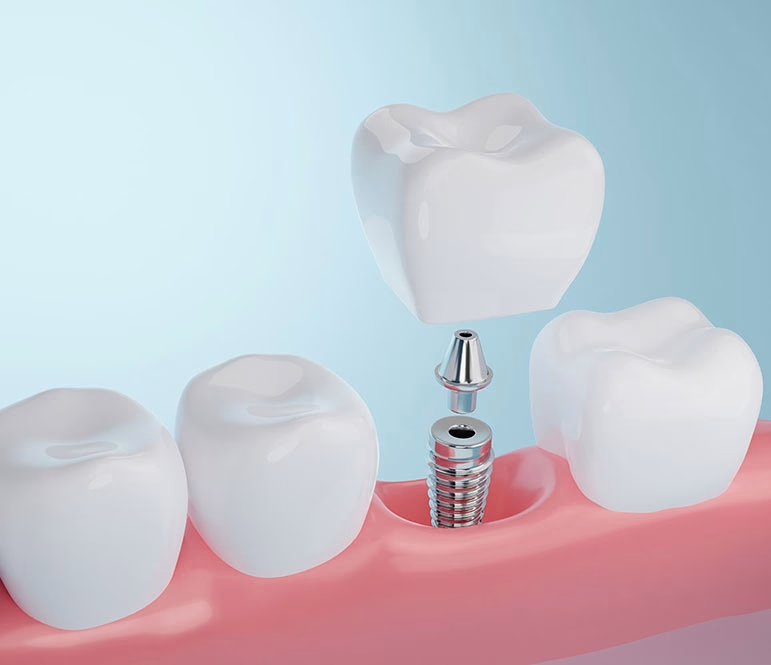
Endosteal implants are placed directly into the jawbone (\"endo\" meaning \"in\" and \"osteal\" referring to \"bone\"). They typically have a screw-like or cylindrical shape. Subperiosteal implants, however, are positioned on top of the jawbone but beneath the periosteum (the membrane covering the bone). They consist of a custom-made metal framework that sits on the bone surface with posts that protrude through the gums to support the replacement teeth.
What does the subperiosteal implant procedure involve?
The subperiosteal implant procedure at London Dental Specialists typically involves:
- Comprehensive examination and 3D imaging to create a precise model of your jawbone
- Custom fabrication of the metal framework to fit your unique bone structure
- A surgical procedure to place the framework on the jawbone and under the gum tissue
- A healing period of approximately 3-6 months
- Attachment of the final prosthetic teeth to the posts that extend through the gums
How long do subperiosteal implants last?
With proper care and regular dental check-ups, subperiosteal implants can last 15 years or more. The longevity depends on several factors including oral hygiene practices, regular professional maintenance, and lifestyle habits. At London Dental Specialists, we provide comprehensive aftercare guidance to help maximise the lifespan of your implants.
What are the advantages of subperiosteal implants?
Subperiosteal implants offer several advantages, including:
- Viable solution for patients with insufficient bone volume
- Elimination of the need for extensive bone grafting procedures
- Provision of fixed, stable tooth replacement
- Improved chewing function compared to removable dentures
- Prevention of further bone loss
- Enhanced facial aesthetics and confidence
Are there any risks associated with subperiosteal implants?
As with any surgical procedure, subperiosteal implants carry some risks, including infection, implant movement, and gum inflammation. There's a slightly higher risk of infection compared to endosteal implants since the framework is placed under the gum tissue. However, at London Dental Specialists, we implement strict sterilisation protocols and provide detailed aftercare instructions to minimise these risks. Regular follow-up appointments are essential to monitor the health of your implants.
How do I care for my subperiosteal implants?
Proper care for subperiosteal implants includes:
- Brushing twice daily with a soft-bristled toothbrush
- Daily flossing around the implant posts
- Using antimicrobial mouth rinses as recommended
- Attending regular professional cleanings and check-ups at London Dental Specialists
- Avoiding tobacco products and limiting staining foods and beverages
- Wearing a night guard if you have bruxism (teeth grinding)
Can’t find the answer to your Subperiosteal Implants questions here? Always feel welcome to
contact us with your Subperiosteal Implants questions and concerns.