Family Friendly & Specialty Dentists in London, UK
An apicoectomy is a small surgical procedure for persistent inflammation or infection at the tip of a tooth root after root canal treatment has failed. The infected root tip and surrounding tissue are removed and the end of the root is sealed. At your consultation, Dr Neha Patel, specialist in endodontics (GDC No. 150517), assesses whether this is the right procedure for your tooth.
The number of visits depends on the complexity of the infection. We explain the expected timeline and each step at your initial assessment.
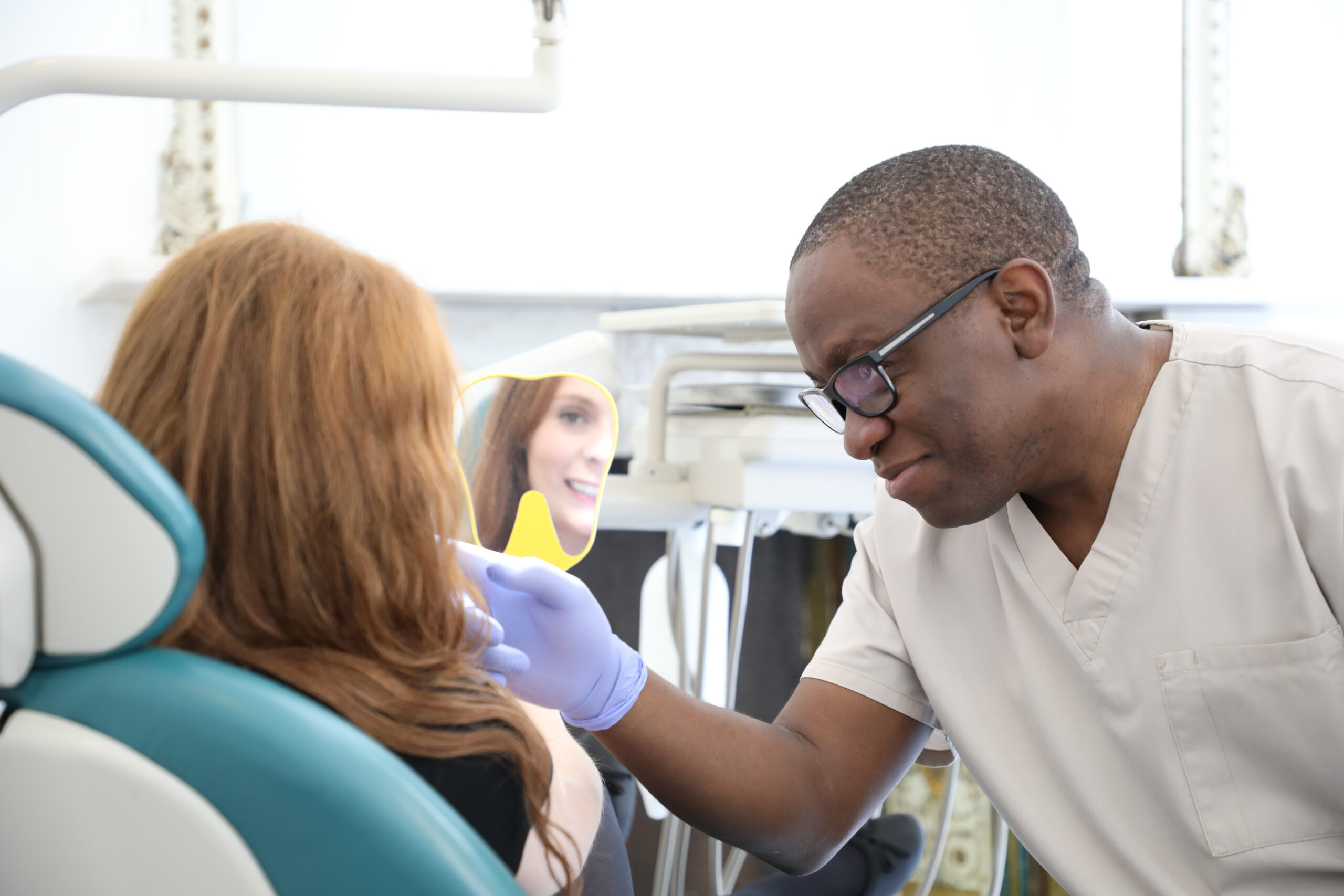
Pain that does not settle after a root canal often means infection has persisted beyond the root tip. You may feel a dull ache, tenderness on biting, or sensitivity that does not resolve. We use 3D CBCT imaging to find the cause before deciding on treatment, which is central to how we practise endodontics in London and reduces the need for exploratory procedures. Whether the problem is cracked tooth syndrome or a failed previous root canal, Dr Patel combines pulp vitality tests and microscopic examination to assess nerve response and pick up incomplete fractures.
Choosing the wrong treatment for a failing root canal can cost you the tooth, so we plan before we treat. Dr Patel assesses whether a surgical approach is the most reliable way to save the tooth, and you only undergo the procedure if it is clinically necessary.
A microscopic examination identifies hidden fractures or complex anatomy that standard X-rays miss. We also provide dental trauma care where an infection stems from an earlier impact injury. You receive an itemised quote before any fees are finalised.
Leave your number and we will call you back. Nothing is booked until you say so.
A tooth that has failed previous root canal treatment can often be saved. We treat people who face the risk of losing a tooth, including those with luxation injuries. Dr Patel assesses whether the infection can be removed from the root tip so that extraction is avoided. Many people put off this visit because of anxiety about the dentist; we do not judge anyone for delaying care. We can go through endodontics costs in London at the visit, and your suitability depends on the specific nature of the inflammation.
Working under the microscope, we lift a small flap of gum, remove the infected tissue around the root tip and cut away the last few millimetres of the root. This saves the natural tooth when standard root canal treatment is not enough. We carry out the procedure at our practice at 111 Regent's Park Road, Primrose Hill.
Every surgical procedure carries some risk. We go through the possibilities at your assessment so you understand the process, and honesty about those risks lets us plan the safest route for your case.
Once the infection is cleared, we place a small filling in the cut end of the root to stop bacteria re-entering. This seal is what protects the long-term result. Our root canal aftercare guide explains how to look after the tooth afterwards.
The gum and bone need time to knit back together after surgery, and we monitor that recovery. For more severe trauma, we also provide knocked-out tooth treatment.
We schedule a follow-up to check that the infection has resolved and the surrounding tissue is healthy. Dr Patel reviews the outcome at this visit.
Apicoectomy is carried out under an operating microscope with fine instruments and modern materials for sealing the root end. The same magnification is used during a microscopic examination to diagnose tooth fractures that are invisible to the naked eye.
Where a pulp can be kept alive, we use bioactive materials that encourage a new layer of dentine to form. Alongside apicoectomy, our endodontic work includes root canal retreatment, care for a cracked tooth, dental trauma care and treatment for luxation. The practice is led by Dr Ope Sodeinde, GDC-registered specialist periodontist (GDC No. 104071).
We focus on the clinical result. Patients tell us they value a calm, unhurried manner, honest options and consultations without pressure. Where the damage is structural rather than infective, we also provide cracked tooth treatment to save the natural tooth.
Bacteria enter the tooth through a deep cavity or a crack and, once they reach the pulp, cause an infection. In some cases the infection persists even after a root canal, leaving a chronic abscess at the tip of the root.
It is the main option for saving a tooth that would otherwise need extraction. We use it when root canal retreatment is not possible or has failed, so you keep the natural tooth and the bone around it.
Fees vary with the root anatomy and the tooth involved. You get a precise cost breakdown at your clinical assessment, after we have examined the area.
The procedure is typically completed in a single appointment. The exact duration depends on the number of roots needing treatment, which Dr Patel confirms at your consultation.
Whether this procedure suits your case is decided at a clinical examination, where we evaluate the infection and whether the tooth can be saved. You can read what happens at your root canal consultation and how to book to get a definitive answer. You leave the visit with a clear written assessment of your options.
020 7589 7792
A consultation with Dr Patel determines whether apicoectomy is the better option for your tooth. The pages linked above on microscopic examination, costs, aftercare, root canal retreatment, cracked tooth treatment and dental trauma care cover the related questions in more detail.
You receive a written plan and an itemised quote that is yours to keep and use at any other practice. You can arrange your assessment with Dr Patel to find out whether this procedure is the right step for your tooth.
020 7589 7792

Real, verified Google reviews from patients of London Dental Specialists.
Your details are used to arrange your appointment and for nothing else.
111 Regent's Park Road, Primrose Hill, London NW1 8UR
Use our contact page if you would rather ask something than book.
