Family Friendly & Specialty Dentists in London, UK
Cyst and tumour removal treats abnormal growths in the jaw or soft tissues of the mouth. We assess the nature of the growth during your consultation and refer you to a hospital maxillofacial team when surgery is needed.
Our clinical lead, Dr Ope Sodeinde, assesses these cases and coordinates referrals at our Primrose Hill practice.
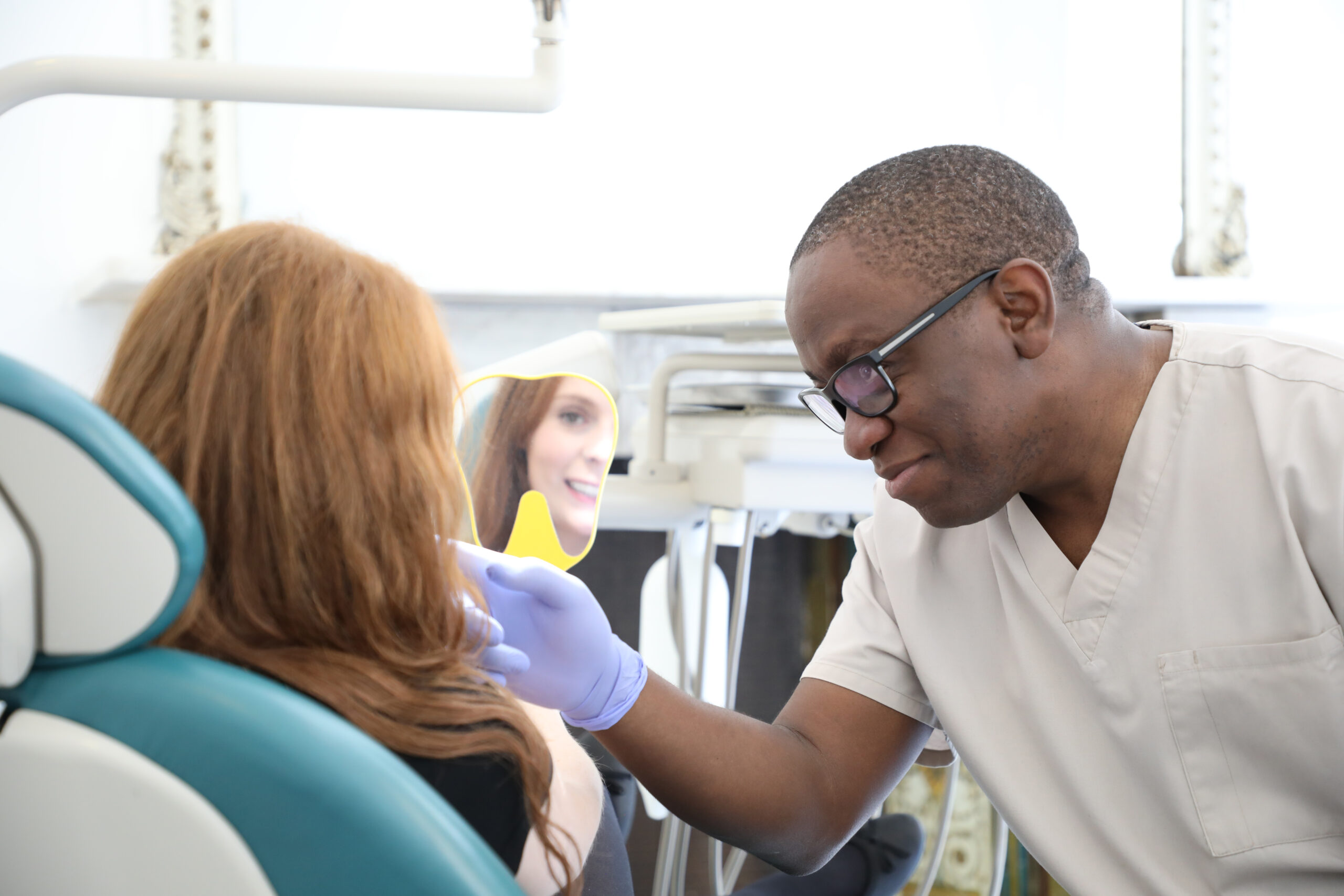
Finding an unusual lump or lesion in the mouth is often unsettling. You need to know exactly what it is before deciding on a treatment. We use current diagnostic imaging to identify and manage oral pathologies accurately. This precision is a core part of our oral surgery in London. If a lesion is suspicious, we perform a biopsy. This is an essential diagnostic test where we extract a small tissue sample for laboratory examination to confirm the diagnosis.
Accurate identification is the only way to determine the most appropriate treatment. Whether the next step is monitoring, referral for surgical excision, or something else, we follow strict infection prevention protocols throughout. Dr Sodeinde and our team focus on these diagnostic steps to give you clarity before any referral.
Choosing the wrong path can lead to avoidable delays. We provide specialist-led assessment to make sure every case is based on a definitive diagnosis. This process begins with a consultation to assess the growth and determine the safest next step. For those requiring more complex care, we provide oral cancer screening to identify the nature of the lesion before any referral.
Cost is a primary concern for most patients. We itemise every fee to provide pricing transparency, so you understand every element of the cost before treatment begins. Our team, including the specialist periodontist, coordinates your assessment. In cases where a growth affects the surrounding bone or teeth, we can also perform multiple teeth extraction to clear the site.
Leave your number and we will call you back. Nothing is booked until you say so.
Receiving a serious diagnosis can feel overwhelming. We understand that the fear of the unknown often makes the first step the hardest. Our team provides a calm environment to address these concerns, whatever the clinical findings turn out to be. We assess each case individually to determine the safest approach for your specific anatomy.
Some patients require additional support so the area heals correctly. We can provide bone grafting to restore lost structure or platelet rich plasma therapy to support the body's natural repair process. We also take specific precautions to reduce the risk of nerve damage. A consultation with your specialist periodontist allows us to map the growth and plan the next step.
We begin by assessing the size and location of the growth. This stage determines the most effective next step, whether that is removal here or a hospital referral. We will discuss oral surgery costs in London and the expected timeline for your specific case.
A hospital maxillofacial team carries out the excision to clear the cyst or tumour from the jaw or soft tissues. We refer you and coordinate the appointment on your behalf.
All surgery carries a risk of complications. We explain these possibilities clearly before you proceed. Our team monitors your progress to manage any unexpected reactions or healing delays.
Healing times vary depending on the complexity of the removal. We provide a clear aftercare plan to manage swelling and protect the site, which supports healing and reduces the risk of infection.
We schedule a follow-up to verify the site has closed and healed. This final check confirms the lesion is gone. If you have other jaw concerns, we can also discuss TMJ surgery during your visit.
We use 3D imaging technology to plan assessments and check optimal placement for dental implants. You can review the credentials of Dr Ope Sodeinde, GDC-registered specialist periodontist (GDC No. 104071), who leads our clinical approach, including surgical extractions, wisdom teeth removal, and the placement of dental implants.
Fees depend on the size of the growth and where it is located. You get a specific cost breakdown during your consultation after we assess the area. Where a hospital referral is needed, surgical fees are separate.
The duration of the procedure varies based on the complexity of the lesion. We will explain the expected timeframe for your specific case during your clinical assessment, including the referral pathway where surgery is needed.
Pain management during surgery is handled by the hospital team. If you feel anxious about the referral or the procedure, we can discuss this with you and help you understand what to expect.
The goal is complete removal of the growth to prevent recurrence. We assess the risk of nerve damage or complications during your planning. In some cases, this work is coordinated alongside a referral for orthognathic (jaw) surgery.
We assess the growth's size and position to determine the most appropriate next step. Dr Sodeinde uses this initial visit to explain the process and answer your questions. You can learn what happens at your oral surgery consultation and how to book to get a clear clinical plan.
Our team provides these services as part of our wider range of oral surgery in London. We focus on precision to protect the surrounding bone and tissue.
This includes a range of surgical interventions at our Primrose Hill practice to address complex oral health issues. Depending on your clinical needs, we may recommend biopsy procedures to identify tissue changes or oral cancer screening for early detection. Some cases require more detailed care, such as assessment and referral for orthognathic (jaw) surgery or TMJ surgery to correct joint dysfunction.
Other patients may need multiple teeth extraction to clear infection or prepare for restoration. In instances where the jaw has lost density, we perform bone grafting to rebuild the foundation. Your specialist periodontist assesses each case individually to determine the most appropriate path.
You will receive a written plan and an itemised quote from your assessment with Dr Sodeinde. This plan is yours to keep and take to any other practice.
Real, verified Google reviews from patients of London Dental Specialists.
Your details are used to arrange your appointment and for nothing else.
111 Regent's Park Road, Primrose Hill, London NW1 8UR
Use our contact page if you would rather ask something than book.
