Family Friendly & Specialty Dentists in London, UK
Orthognathic (jaw) surgery corrects structural misalignments of the jaw to improve function. We assess your suitability during a clinical consultation at our Primrose Hill practice and refer you to a hospital maxillofacial team for the surgery itself.
Living with chronic TMD symptoms often means dealing with persistent jaw pain and inflammation. It is frustrating when these issues affect how you speak or eat. We assess these abnormalities using diagnostic imaging to identify the exact cause of your discomfort. If you need a broader range of oral surgery in London, we provide a full suite of surgical interventions. Our team follows strict infection prevention protocols throughout the process.
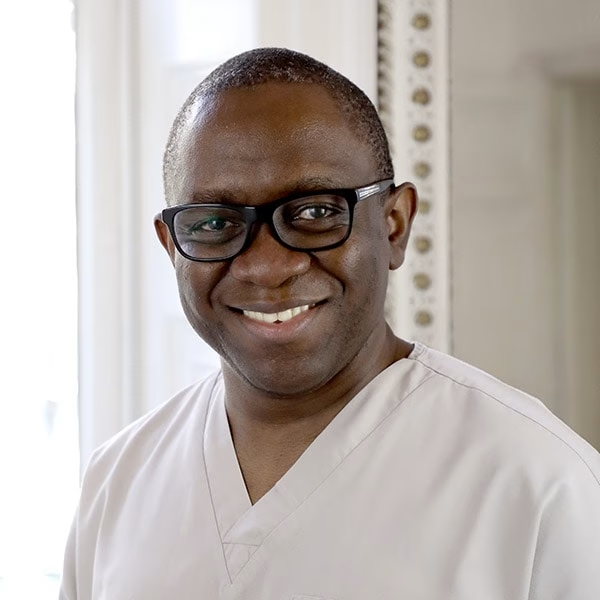
Whether you are facing jaw misalignment or inflammation, the first step is an accurate diagnosis. We use these tools to determine if you are suitable for a referral and to plan the most appropriate next step. Dr Ope Sodeinde assesses each case so the treatment matches your specific clinical needs.
Correcting jaw alignment requires a precise, diagnosis-first approach so the right choice of procedure is made. We provide specialist-led assessment to reduce the risks of an incorrect referral. This rigorous assessment determines if you are suitable for surgery and how the referral will be structured. For those requiring different oral interventions, we also provide simple tooth extractions and biopsy procedures.
We believe in pricing transparency for your assessment, which is why we itemise every fee. This means you see exactly what you are paying for before any work begins. A consultation allows us to assess your specific needs and provide a clear cost breakdown.
Leave your number and we will call you back. Nothing is booked until you say so.
Correcting the position of the jaw is a significant decision. We understand that the prospect of surgery can feel overwhelming, and feeling anxious about the process is a normal response. We assess whether you are a candidate for referral during your consultation, where we also evaluate the need for multiple teeth extraction or oral cancer screening.
Whether you are managing a serious diagnosis or have concerns about nerve damage, we provide the factual guidance you need to decide. We use these clinical assessments to check whether a referral is right for you.
We begin with a clinical assessment to check whether surgery is right for you. During this visit, we evaluate your own situation and discuss the expected timeline. This stage lets us address your concerns regarding the number of visits required.
If your case requires additional support, we can discuss bone grafting to provide a stable foundation for the bone. Your hospital surgical team maps the precise jaw movement required for your case, and may coordinate with other specialists.
The surgery is carried out by a hospital maxillofacial team under general anaesthetic. To support the healing of soft tissues afterwards, we may use platelet-rich plasma therapy.
Healing requires a period of restricted activity and a specific diet. We provide clear instructions to manage complications and swelling. It is normal to feel some discomfort, but you get a structured plan to manage this.
We monitor your progress through a series of follow-up appointments. These checks help confirm the jaw has healed in the correct position, and we review whether the functional goals of the surgery have been met.
We use 3D imaging technology to plan treatment and check optimal placement for dental implants. Our clinical lead, Dr Ope Sodeinde, GDC-registered specialist periodontist (GDC No. 104071), oversees the standard of care provided at our Primrose Hill practice, including wisdom teeth removal and surgical extractions.
Our team is known for a calm, unhurried manner and providing honest options during no-pressure consultations. This professional approach extends whether you are here for jaw assessment or referral for cyst and tumour removal.
Fees vary based on the complexity of your case. We give you a detailed cost breakdown for your assessment during your consultation. Surgical fees are set separately by the hospital team when a referral is needed.
The duration of the procedure and the recovery timeline depend on your specific diagnosis. We explain the expected timeframe during your initial assessment, and the hospital team confirms surgical scheduling.
We discuss your suitability for referral, including managing post-operative sensations and potential complications, such as nerve damage, during your planning phase.
The longevity of the outcome depends on your individual anatomy and adherence to aftercare. We discuss long-term stability during your visit. For those with joint-specific issues, we also assess and refer for TMJ surgery.
Determining if you are suitable for this procedure requires a clinical examination. We use this visit to assess your anatomy and explain what happens at your oral surgery consultation and how to book. The specialist periodontist will review your case to determine the best path forward.
We provide this specialist care as part of our wider range of oral surgery in London. If you have questions about the process, you can speak with us directly.
An examination with your specialist periodontist determines if a referral for jaw surgery is the right path for you. We also provide other surgical interventions at the practice in Primrose Hill, including simple tooth extractions and multiple teeth extraction. For those requiring structural support, we perform bone grafting. Our team also assesses and refers for TMJ surgery and cyst and tumour removal, and provides biopsy procedures.
You will receive a written plan and an itemised quote from your assessment with Dr Sodeinde, which is yours to keep and use at any other practice.
Real, verified Google reviews from patients of London Dental Specialists.
Your details are used to arrange your appointment and for nothing else.
111 Regent's Park Road, Primrose Hill, London NW1 8UR
Use our contact page if you would rather ask something than book.
