Family Friendly & Specialty Dentists in London, UK
Exploratory surgery lets us determine whether a tooth can be saved or needs extraction by directly examining a suspected root fracture. This procedure provides the clinical certainty needed to plan your next step.
The time this procedure needs is assessed at your consultation with Dr Neha Patel, specialist in endodontics (GDC No. 150517), for the most accurate diagnosis of your case.
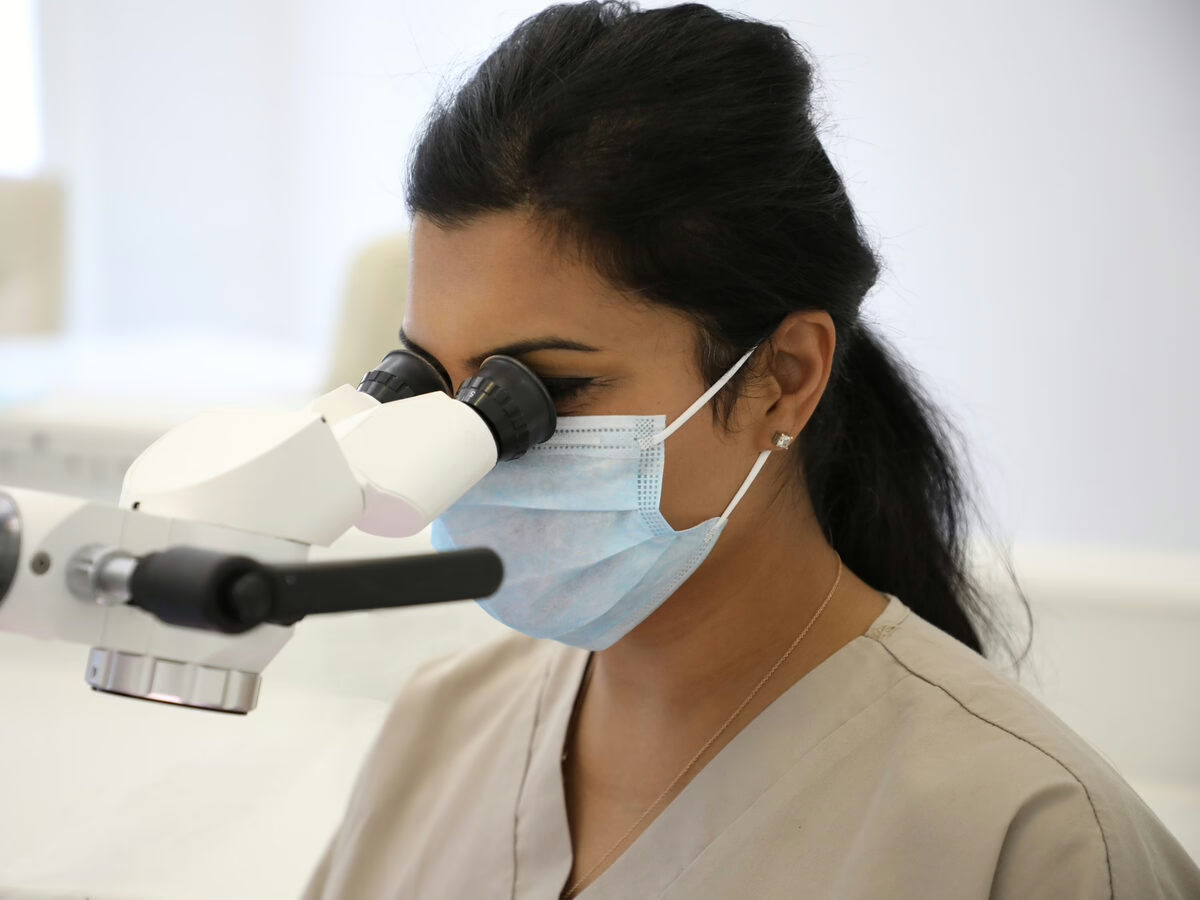
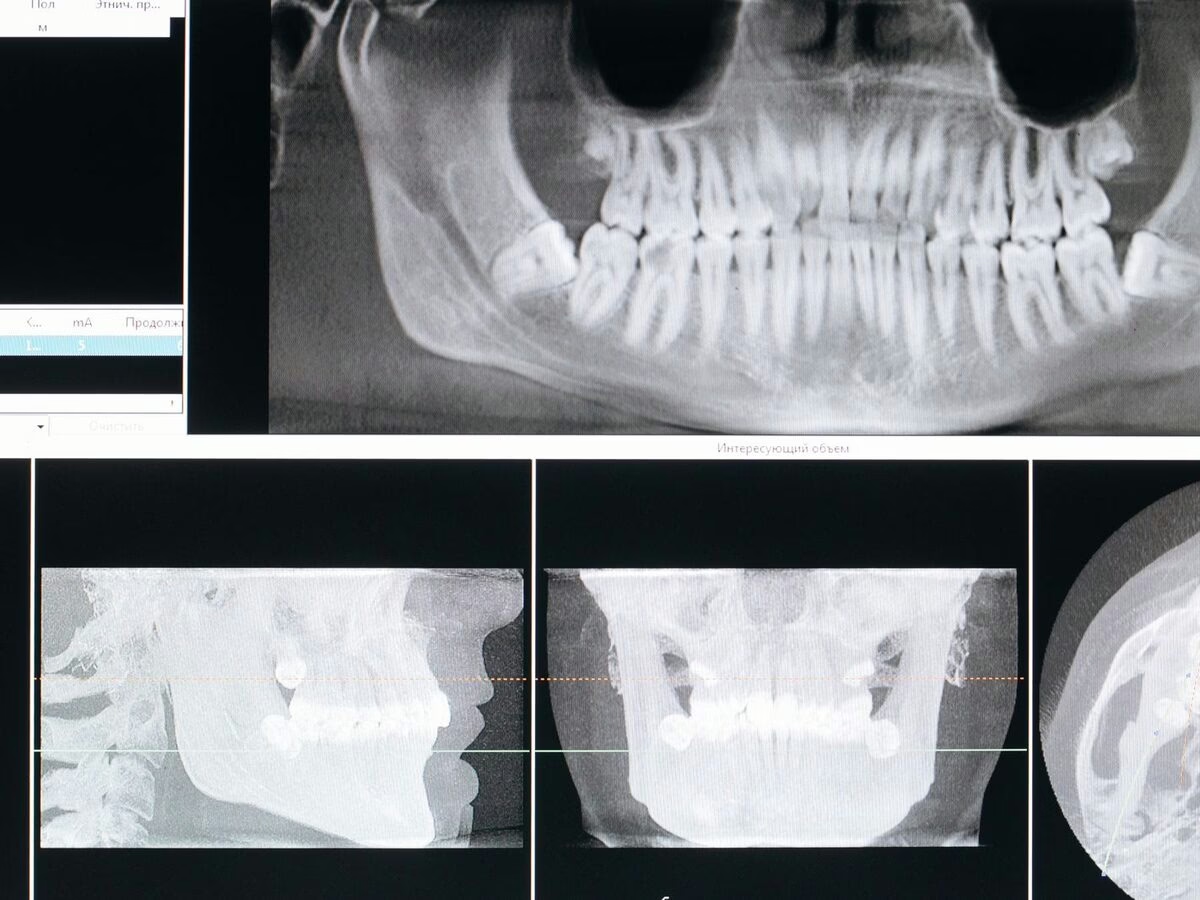
You may be struggling with a tooth that feels broken or sensitive, yet standard exams cannot find the fault. This uncertainty is frustrating. We use 3D CBCT imaging and microscopic examination to find the precise cause of dental pain, including cracked tooth syndrome and incomplete fractures. Combining these diagnostic approaches lets us build a targeted plan as part of endodontics in London. Dr Patel uses these tools to cut the need for exploratory treatment by identifying the issue before we begin. We also use pulp vitality tests and non-invasive sensibility tests to gauge nerve response and tooth sensitivity, which helps us preserve the natural tooth structure.
Choosing the wrong treatment for a suspected fracture can lead to unnecessary tooth loss. We prevent this through specialist-led planning. Dr Patel uses a diagnosis-first approach, so we only operate when it is the correct clinical choice. This starts with a consultation to assess your case and set out the costs before any work starts.
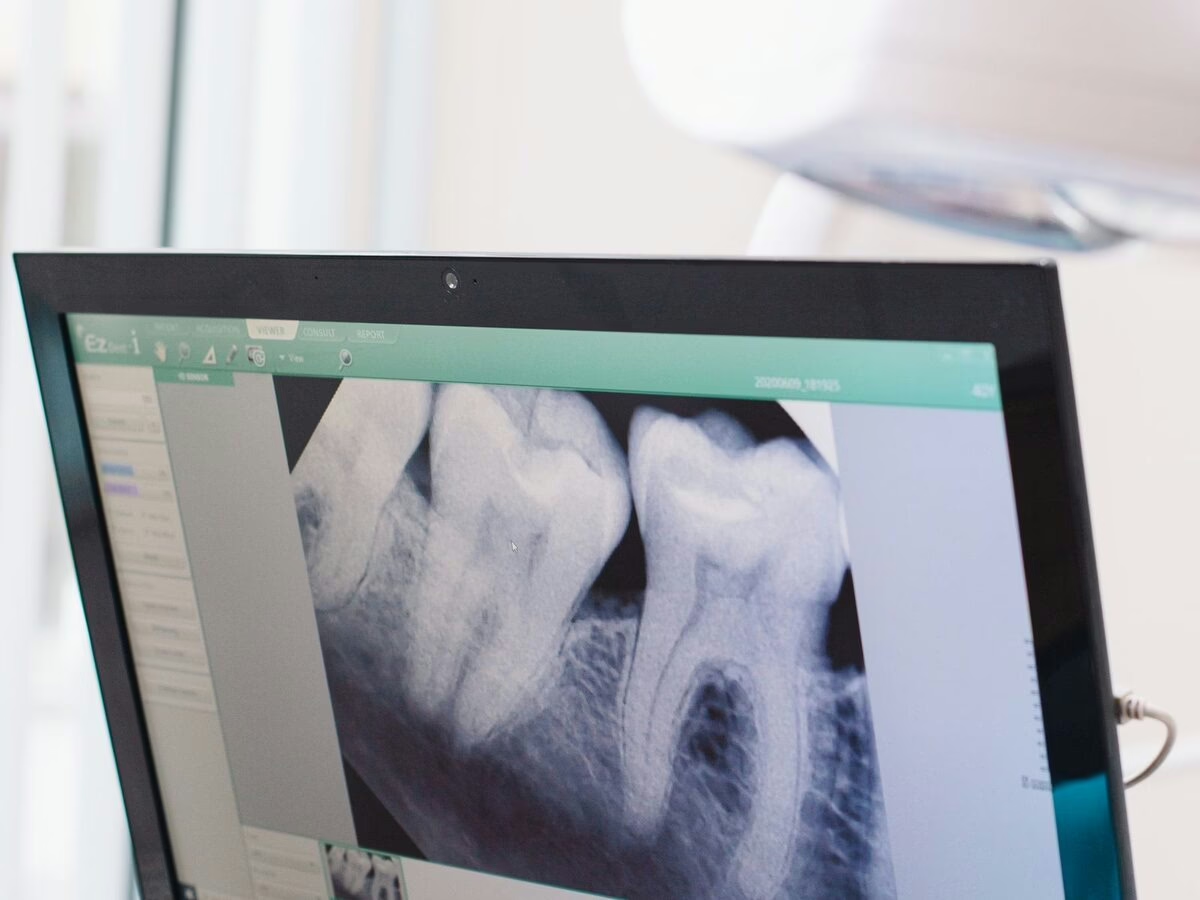
To decide whether surgery is necessary, we use precise diagnostics. This includes pulp vitality tests for nerve health assessment and thermal and electric pulp testing for tooth sensitivity, which help us identify the exact nature of the damage. We then use digital radiography to examine the tooth while keeping your radiation exposure low.

Leave your number and we will call you back. Nothing is booked until you say so.
We provide this diagnostic step for patients where a root fracture is suspected but cannot be confirmed through standard imaging. It is a common point of uncertainty. You may feel anxious about the possibility of tooth loss or further intervention, but identifying the exact nature of a crack is the only way to know whether the tooth is saveable. An endodontist performs this assessment to provide the clarity a definitive treatment plan needs.
If the fracture is not salvageable, we can discuss root canal treatments: which option fits or other restorative alternatives. We understand returning to the dentist can feel daunting, so we keep the environment calm and supportive. Dr Patel keeps the process predictable and transparent.
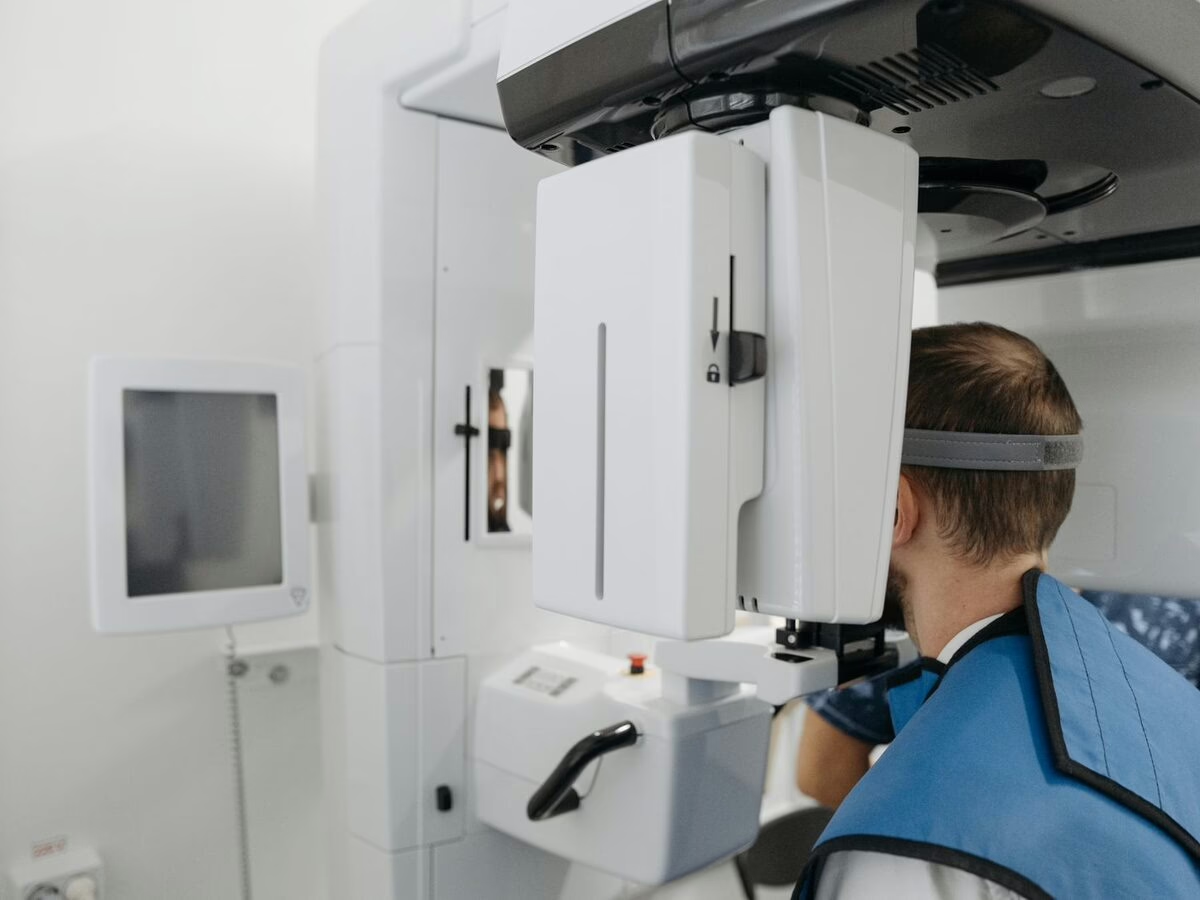
We begin by assessing the tooth structure. To get a precise view of the internal damage, we use CBCT 3D imaging, which lets us identify the exact location of a suspected crack or break before any surgical work begins.
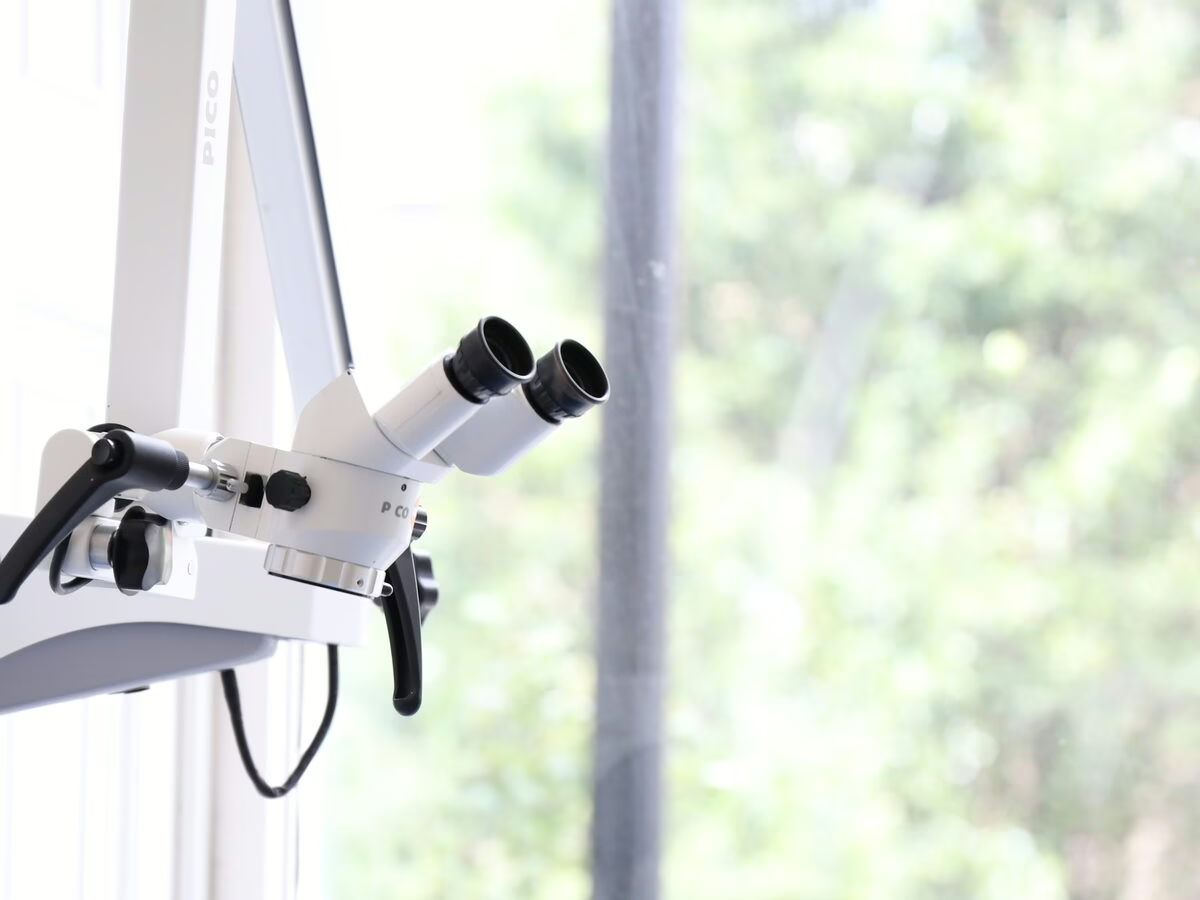
We carry out the procedure to visually confirm the fracture, using a small incision to reach the root and a microscope to examine the area. This precision helps us decide whether the tooth can be kept or must be extracted.
Surgical intervention carries risks. We discuss potential complications with you at your assessment, and our team monitors the site closely to manage any issues that arise during the inspection.
Once the inspection is complete, we close the site and review the findings to decide the next clinical step, which may be root canal therapy or a different restorative plan.
The final step is a decision on the tooth's viability. If the fracture is too severe, the tooth cannot be saved, and we explain the results clearly so you can decide on the best replacement option.
We use operating microscopes, precision instruments, and advanced materials for filling and canal disinfection, and the same magnification supports a precise diagnosis of tooth fractures during microscopic examination.
We use bioactive materials to stimulate dentine bridge formation, which supports pulp healing, and provide microsurgery to preserve the natural tooth and restore oral health.
The practice is led by Dr Ope Sodeinde, GDC-registered specialist periodontist (GDC No. 104071). Our clinical capabilities include root canal retreatment, apicoectomy, cracked tooth treatment, and dental trauma care, including luxation.
We focus on the outcome of every procedure, in a calm, unhurried manner with honest, no-pressure consultations.
Fees are set at your initial assessment. We provide a full breakdown of costs once the clinician has assessed your specific clinical needs.
The duration of the procedure depends on the complexity of the root structure. Your clinician gives you a precise timeframe at your consultation.
Putting it off is completely normal. We use local anaesthesia for patients who feel anxious.
The goal of this procedure is to provide a definitive diagnosis of a root fracture. The outcome determines whether the tooth will survive or needs extraction.
We establish the suitability of this procedure at your initial clinical assessment. Dr Patel assesses the tooth to establish whether a fracture exists and whether the tooth is saveable. You can learn what happens at your root canal consultation and how to book to get a definitive diagnosis.
Our team provides a range of endodontics in London to manage complex root issues, with a focus on precision.
020 7589 7792
A consultation with Dr Patel determines whether this procedure is the right path for your case. We use this appointment to assess the tooth and discuss the steps needed to identify a fracture, including pulp vitality tests for nerve health assessment and thermal and electric pulp testing for tooth sensitivity.
You receive a written plan and an itemised quote that is yours to keep and use at any other practice. You can arrange your assessment with Dr Patel to determine whether this procedure is right for you.
020 7589 7792

Real, verified Google reviews from patients of London Dental Specialists.
Your details are used to arrange your appointment and for nothing else.
111 Regent's Park Road, Primrose Hill, London NW1 8UR
Use our contact page if you would rather ask something than book.
