Family Friendly & Specialty Dentists in London, UK
A knocked, chipped or displaced tooth needs to be assessed quickly to give it the best chance. We examine the injury, stabilise the tooth where needed, and set out the treatment timeline and cost at that first visit.
Our dentists provide this care at our Primrose Hill practice.

A knocked-out tooth or a sudden crack is frightening for you and your child, and the first question is whether the tooth can be saved. We use dental x-rays to see the extent of the injury, including damage to the root or the developing adult tooth that is not visible from outside. Injury care is part of the paediatric dentistry in London we provide, alongside routine exams and cleanings and fluoride treatments to protect the teeth afterwards.
In a stressful moment it helps to have a clear plan. We diagnose first, then explain the options for that specific injury. Depending on the damage, we may apply fluoride treatments to protect exposed surfaces, or fit space maintainers if a baby tooth has been lost early. You get an itemised breakdown of costs before any work begins.
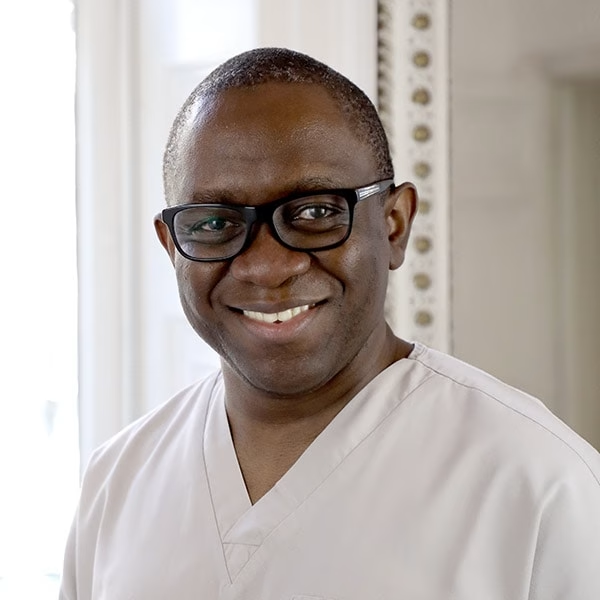
Children's care is provided by our dentists, with the practice led by Dr Ope Sodeinde, GDC-registered specialist periodontist (GDC No. 104071). Where an injured tooth needs root canal treatment, Dr Neha Patel, specialist in endodontics (GDC No. 150517), can be involved.
Leave your number and we will call you back. Nothing is booked until you say so.
Seeing your child in pain or with a chipped tooth is overwhelming, and many parents also feel guilty about the accident. We keep the visit calm and focus on your child, reducing distress as far as we can. We assess each injury and decide the best path, which may later include fissure sealants to protect vulnerable areas or early orthodontic treatment if the trauma has affected the alignment of developing teeth. Whether you are moving from NHS care or already see us privately, the immediate need comes first.
We assess the damage to the tooth and surrounding gum and identify anything that could complicate healing. We provide care for anxious children so the examination itself is not another ordeal.
Depending on the injury, we may splint a loosened tooth or repair a fracture. Some cases need children's fillings to rebuild the tooth. We use local anaesthetic for any procedure that would otherwise hurt.
Injured teeth can react weeks or months later. We schedule follow-up visits to check the tooth is still alive and to catch any delayed problems early.
We give you guidance on protecting the area from further knocks, and we watch the adult teeth to make sure the injury has not affected how they come through.
We repair damaged teeth with composite resin and conservative dental bonding, managed by our clinical team.
After an injury, ongoing care matters: children's dental exams and cleanings, fluoride treatments, and dental hygiene for children and teens all help protect the repaired tooth.
We handle childhood dental injuries carefully and without hurry, which also helps with the anxiety that often follows an accident. We also provide tongue and lip tie treatment for children who need it.
Costs depend on the injury and the treatment required. We give a full breakdown of fees at the first visit. For urgent injuries, see our emergency dental care page.
It depends on whether the tooth can be saved. Some injuries are dealt with in a single visit; others need a phased approach while the jaw is still growing. We set out the timeline at the first appointment.
We use local anaesthetic for anything that would hurt, and go at your child's pace, so that a bad accident does not turn into a lasting fear of the dentist.
Some repairs protect the tooth for years; others are interim. Where a baby tooth is damaged, we may use silver diamine fluoride to stabilise it. Our dentists assess each case for the most durable option.
Read what happens at your child's dental consultation and how to book to arrange an assessment of the injury.
Arrange a clinical assessment.
020 7589 7792
Once the injury is stable, our preventive and restorative options at Primrose Hill include fluoride treatments and fissure sealants to protect enamel.
After the assessment you receive a written plan and an itemised quote that is yours to keep. Arrange your assessment with the team to confirm the treatment and costs; payment options can be discussed with our staff.
020 7589 7792
Real, verified Google reviews from patients of London Dental Specialists.
Your details are used to arrange your appointment and for nothing else.
111 Regent's Park Road, Primrose Hill, London NW1 8UR
Use our contact page if you would rather ask something than book.
