Family Friendly & Specialty Dentists in London, UK

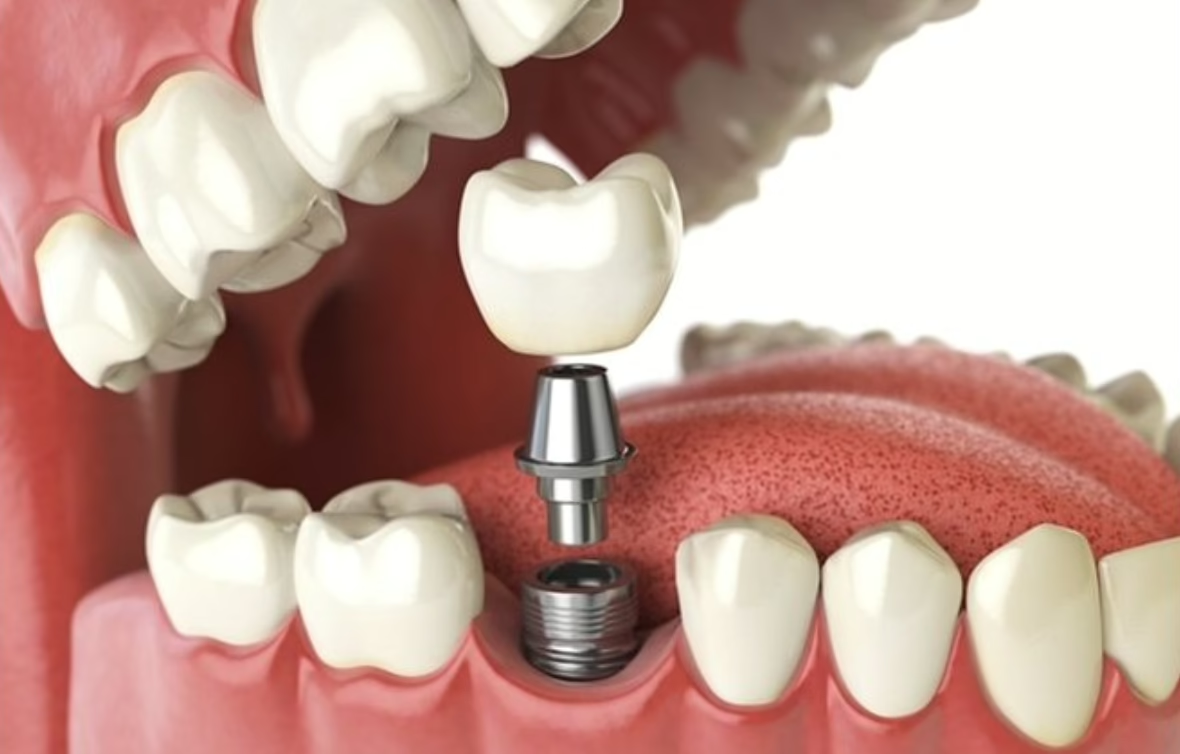
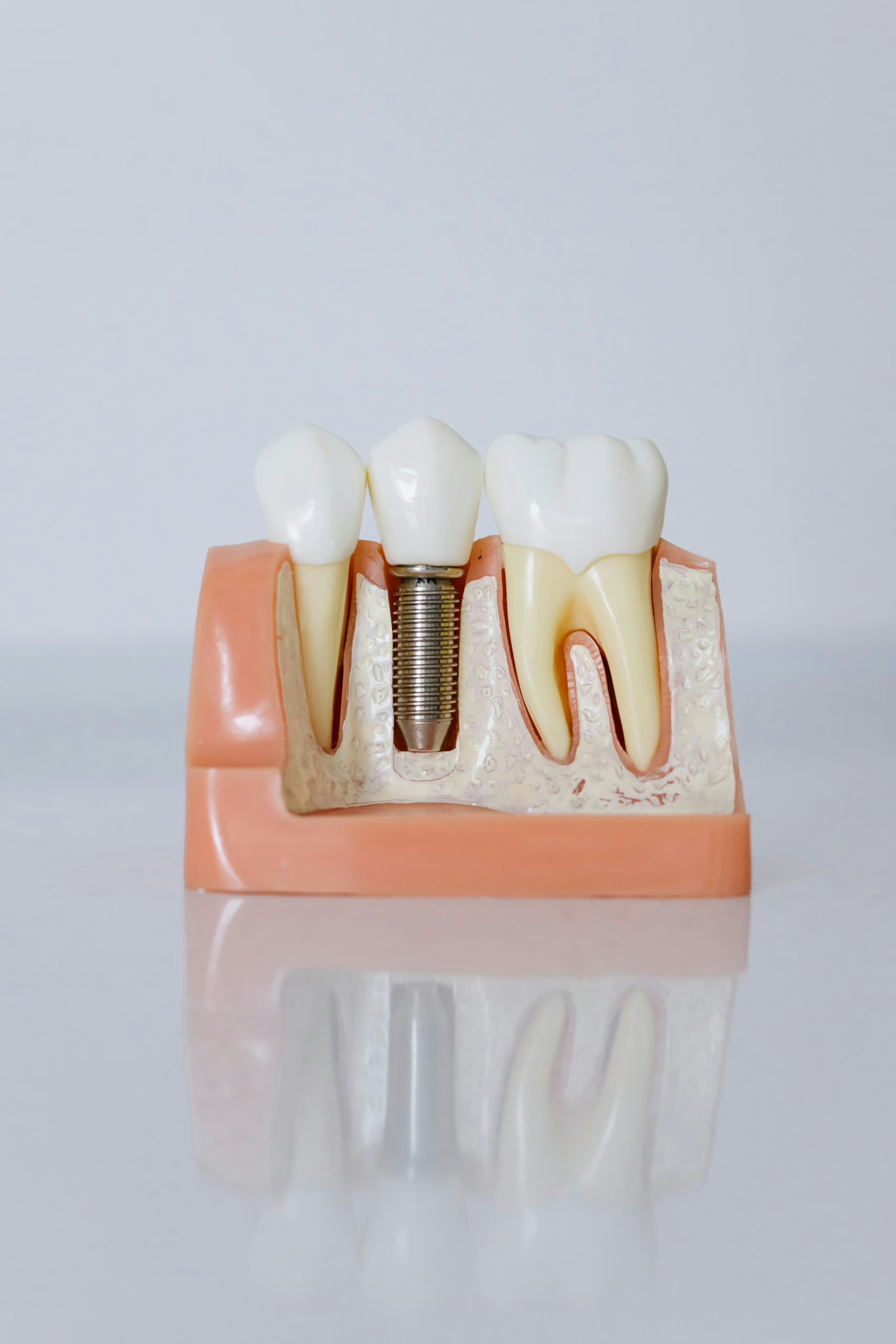
A dental implant replaces a missing tooth through three essential components working in harmony. The implant fixture, made from biocompatible titanium or zirconia, serves as an artificial tooth root anchored directly into the jawbone. An abutment then bridges this foundation to a custom-crafted prosthetic crown, which restores both function and appearance. Together, these parts create a durable solution mimicking natural teeth. Understanding how each component integrates reveals the sophisticated engineering behind this restorative procedure.
When a tooth is lost, the body loses more than just the visible crown—it loses the root that anchored it to the jawbone.
The implant fixture restores this critical function as an artificial tooth root, typically crafted from titanium or zirconia. This small screw is surgically embedded directly into the bone, where it initiates osseointegration—a biological process lasting two to six months.
The implant fixture serves as an artificial tooth root, initiating osseointegration—a biological bonding process lasting two to six months.
During this healing period, the jawbone bonds intimately with the implant fixture, creating stability comparable to natural teeth.
Advanced surface treatments like plasma spraying enhance this integration, promoting faster healing. At specialized dental practices in London, advanced imaging technology enables precise planning and placement of implant fixtures tailored to individual bone quality and anatomy.
Available in diameters ranging from three to six millimetres, dental implants adapt to individual bone quality and needs, providing durable, reliable support for replacement teeth.
After the implant fixture integrates with the jawbone, an abutment serves as the essential bridge connecting the artificial root to the visible crown above.
This connector requires a second surgical procedure to attach it through the gumline, followed by approximately two weeks of healing whilst the gum tissue re-establishes itself around the new component.
During this recovery period, the dental team takes fresh impressions to fabricate a custom crown fitted to the patient's abutment and bite.
This custom crown is designed to restore the patient's ability to eat, speak, and smile confidently, completing the full mouth restoration process.
The abutment functions as the critical bridge between two essential components of a dental implant: the implant post embedded in the jawbone and the visible restoration. Positioned above the gum line, the abutment remains hidden beneath the final dental crown, preserving the natural appearance of the smile.
A minor surgical procedure reopens the gums after osseointegration to attach the abutment securely. The gum tissue then requires approximately two weeks to heal and adapt around this connector.
Proper positioning and stability of the abutment are important to the implant's longevity. This meticulous placement supports the restoration's function whilst maintaining structural integrity and aesthetic appeal.
Once the implant post has fully integrated with the jawbone—a process typically requiring three to six months—a second minor surgical procedure becomes necessary to attach the abutment.
This attachment process involves several critical steps:
The abutment serves as the essential bridge connecting the implant to the visible crown or bridge.
Positioned above the gum line, it must be precisely placed and fitted to support long-term treatment.
Abutments are customised to match each patient's unique anatomy and aesthetic preferences, ensuring optimal results and a seamless integration with the final restoration.
With the implant post now firmly bonded to the jawbone, attention shifts to the component that will bridge the gap between buried fixture and visible tooth—the abutment. This connector emerges above the gum line, serving as the critical interface for the final restoration.
Following surgical attachment, the gums typically require approximately two weeks to heal. During this period, the tissue stabilises around the abutment, supporting proper integration within the dental implant system.
Once healing concludes, new impressions are captured to support precise alignment. These measurements guide the creation of a custom crown tailored to the individual's specific anatomy and aesthetic requirements.
The abutment's exact angle and positioning directly influence both the stability and appearance of the final restoration, making this preparation phase fundamental to the treatment process.
Every dental implant relies on a single visible component to complete its purpose: the prosthetic crown. This custom-crafted restoration replicates the appearance and function of natural teeth, seamlessly blending into the patient's smile.
The prosthetic crown offers several key advantages:
For dental implants placed successfully, the crown serves as the final restoration that patients see and use daily.
Proper oral hygiene and professional monitoring help prevent complications like peri-implant disease, supporting the implant as a lasting solution for smile restoration.
A dental implant's success depends entirely on the seamless coordination of three distinct components that function as an integrated system.
The implant post, crafted from titanium, anchors itself within the jawbone through osseointegration, establishing a foundation as stable as a natural tooth root. Once this biological bond strengthens over several months, the abutment is attached, serving as the critical connector between the buried implant post and the visible restoration above the gum line.
The titanium implant post anchors securely in jawbone through osseointegration, establishing a stable foundation comparable to natural tooth roots.
Finally, the custom-designed restoration—typically a dental crown—completes this assembly, delivering both functionality and aesthetic appeal.
Together, these three parts help preserve jawbone density, maintain facial structure, and create a durable tooth replacement that can restore oral health. With proper post-treatment care, your dental implant can last a lifetime, making it a worthwhile long-term investment in your oral health and confidence.
The three-part system of a dental implant only functions as intended when constructed from materials that the body recognises and accepts. Biocompatible substances form the foundation of dental implants, enabling integration with surrounding tissues.
The primary materials include:
Surface treatments like sandblasting and acid-etching increase roughness, promoting osseointegration and stability. At our London clinic, patients can choose between titanium or zirconia implants depending on their aesthetic preferences and clinical requirements.
Modern dental implants utilise these materials and techniques to support biocompatibility, with the aim of reducing complications whilst supporting the implant's functional lifespan.
The implant placement process unfolds through three distinct phases, beginning with an extensive initial assessment where dental professionals evaluate the patient's bone structure and overall oral health.
Following this planning stage, the surgical phase involves extracting damaged teeth and positioning the implant post into the prepared jawbone under local anaesthetic.
Finally, the osseointegration period and abutment placement represent the critical healing phases where the implant fuses with bone before the custom restoration is attached. This fusion process typically occurs over 3-6 months and is essential for the long-term stability and success of the implant.
Before any implant can be placed, a thorough evaluation must establish the foundation for treatment. The initial appraisal begins with a detailed dental examination and advanced imaging such as X-rays or CBCT scans to analyse jawbone condition and identify potential considerations.
This critical phase includes:
Based on these findings, clinicians determine the number of teeth requiring replacement and ideal implant positioning.
This meticulous planning supports the osseointegration process, allowing the implant to integrate with the jawbone during the healing period that follows surgical placement, which typically ranges from 2-6 months.
Once the assessment phase confirms suitable bone conditions and treatment planning is complete, the patient enters the surgical phase where the implant post is placed into the jawbone.
During this first surgical stage, the dentist removes any damaged tooth and carefully prepares the bone site. A titanium implant post is then inserted into the prepared socket. This begins the critical osseointegration process, where bone naturally fuses with the implant over 2-6 months, creating a stable foundation.
Following successful integration, a minor second surgery places the abutment—the connector piece linking the implant to the final crown.
After gum healing, impressions are taken to craft a custom restoration. Regular dental check-ups throughout recovery monitor healing and implant stability.
Stability through fusion—this is the foundation of successful dental implants. Osseointegration represents a critical biological process where the implant post bonds with the jawbone over several months, creating a strong foundation.
Once osseointegration achieves completion, the abutment placement phase begins:
This meticulous process demonstrates why patience matters. The entire timeline spans months, yet the investment can yield excellent results for suitable candidates.
Patient compliance throughout healing supports optimal outcomes and long-term implant stability.
How does a dental implant retain its strength and function for decades? The answer lies in diligent maintenance.
Regular brushing and flossing prevent peri-implant diseases that threaten implant longevity. Routine dental check-ups every six months allow professionals to monitor health and identify potential concerns early.
Regular brushing and flossing prevent peri-implant diseases, while routine six-month check-ups help identify concerns early.
Beyond oral hygiene, lifestyle choices greatly impact outcomes. Tobacco use may compromise the healing process and increase complication risks. A balanced diet rich in vitamins and minerals strengthens gums and supports tissue integration around the implant.
Professional cleaning and adjustments during scheduled follow-ups, as part of personalized aftercare instructions, ensure your implant remains in optimal condition throughout its lifespan.
Patients should remain vigilant about warning signs—mobility, pain, or sensitivity—and communicate promptly with dental professionals.
This proactive approach helps maintain dental implant function, supporting how patients eat, speak, and smile with confidence.
A dental implant system comprises three essential components working in harmony.
The implant post, typically titanium or zirconia, functions as an artificial tooth root surgically anchored into the jawbone.
Above the gum line sits the abutment, a connector piece linking the post to the visible restoration.
Finally, the dental crown—crafted to match natural teeth—completes the system, providing both function and aesthetic appeal through successful osseointegration.
The 3/2 rule establishes that for every 2mm of implant diameter, at least 3mm of surrounding bone must exist for proper stability and integration.
This guideline helps ensure sufficient bone volume for osseointegration whilst minimising complications.
The 3x3 Rule establishes critical bone requirements for dental implants: a minimum of 3 millimetres of bone height above the implant platform and 3 millimetres of bone thickness surrounding it.
This standard supports proper osseointegration and long-term stability. Adequate bone volume is important for implant success and helps reduce complications such as peri-implantitis.
Clinicians employ advanced imaging, particularly CBCT scans, to assess bone volume before proceeding with placement, especially in immediate post-extraction scenarios.
To explain dental implants effectively, one describes them as artificial tooth systems mimicking natural teeth.
The titanium post functions as a replacement root, surgically anchored into jawbone through osseointegration. An abutment connects this foundation to the visible crown restoration.
This three-part structure creates a durable, lifelike replacement. The explanation should emphasise the biological integration process and aesthetic results, making the concept accessible to patients considering this dental solution.
Dental implants represent a sophisticated integration of engineering and biology. By understanding how the fixture anchors into bone, the abutment bridges components, and the crown restores appearance, patients gain insight into modern restorative dentistry. When properly maintained through diligent oral hygiene and regular dental visits, implants function as reliable, long-lasting replacements for natural teeth, offering both functional restoration and aesthetic renewal.