Family Friendly & Specialty Dentists in London, UK
There are billions of bacteria in your mouth, with some estimates even putting that number at 20 billion on average! As a dentist, I’m always stressing the importance of brushing your teeth to my patients, but it’s safe to say that this figure speaks for itself.
One of the latest crazes in oral hygiene is the water flosser. Water flossers have been around for a long time – in fact, the first “oral irrigator” was invented in 1962! Since then, we’ve seen them look increasingly more impressive as technology advances. But are they really all that great?
The short answer is no. Water flossers are essentially just devices that shoot jets of water. They’re marketed as an alternative to interdental cleaning, but the problem with this is that they’re pretty useless when it comes to interdental cleaning of any kind!
In 2010 the University of Michigan conducted a study where they grew some bacterial biofilm in lab conditions; a biofilm is a layer of bacteria that accumulates inside or on your body. An example of dental biofilm is plaque.
The researchers wanted to see what happened to the biofilm when subjecting it to the jet from a water flosser. Under control conditions, they measured the amount of force – or water pressure – that was required from a water flosser to disrupt, disorganise, or remove entirely the community of bacteria (the biofilm) in the sample.
As a periodontist, part of my job is disrupting this bacterial biofilm around the teeth. It’s not necessary to remove it completely – effective disruption is enough to keep your mouth healthy and free from plaque.
However, the study showed that the water pressure from the water flosser required to effectively disrupt the biofilm would cause extreme, intolerable pain, which tells us that the pressure within water flossers is not high enough to effectively disorganise the biofilm for any kind of long-term and lasting positive effects.
The best way to prevent gum disease around dental implants or teeth is with the humble toothbrush! It may surprise you to learn that most people – myself included before I began my career path – don’t know how to use a toothbrush properly. It’s easy enough: hold your toothbrush at a 45-degree angle towards the gum line and brush in small circular motions.
If you consistently use them correctly and don’t cause any damage to the gums or enamel, toothbrushes work really well! It’s also important that we brush for the recommended amount of time – there is mountains of evidence that proves brushing your teeth for less than two minutes a day can have negative consequences. I spend a lot of time thinking about teeth, and I am the first to admit I still struggle with this sometimes!
Electric toothbrushes with a timer, such as those made by Oral B, are great for holding yourself accountable and making sure you’re hitting that two minute mark.
To boost your oral hygiene even further, I recommend using cylindrical TePe brushes. These are great as opposed to the ones with tapered shapes because they clean your teeth properly on both sides. When it comes to interdental brushes, you might be one of many people who think your teeth aren’t wide enough to accept the brush.
In fact, there are many different sizes of interdental brushes, and it’s really important that you use them correctly. In almost all cases I find that with a bit of education, people are able to clean their teeth well. At London Dental Specialists, we instruct our patients to insert the brush ensuring that there is a snug fit. There should be some resistance when you insert each brush and gently between the teeth (if you find you’re having to force it, choose a smaller size) and move the full length of the brush back and forth once a few times. Adding this to your routine is going to help prevent plaque build up and remove bits of food from between the teeth.
The analogy I use when I speak with my patients compares your teeth to the tiles in your bathroom. Allow me to explain: when you have finished cleaning your bathroom tiles, one way to check that they’re properly clean is to do the “squeak test”. If you run your finger along the tile and it squeaks, you can rest assured that you’ve done your job well – that the bathroom is squeaky-clean! This is because you have successfully disrupted the bacterial community on the tile.
Now, it’s pretty obvious that this result would not be achievable if you were to simply spray the tile with cleaner. You have to give the tile a really good scrub with a sponge – it requires a degree of elbow grease. The same thing is true of your teeth when it comes to brushing. This is also a great example of why water flossers don’t work. They are the equivalent of just spraying your cleaner onto the tiles and hoping for the best.
After 18 years in the dental industry, my motto is always the same: simple is best.
To all my patients I only recommend what I use personally. I believe really passionately in keeping things simple, especially when it comes to the health of your mouth. There is a huge amount of fear-marketing out there with dental hygiene tools, and it can be really scary to think that you’re not doing enough to ward off gum disease or bad breath.
In reality, however, your mouth is designed to keep itself clean. And as long as you’re brushing properly for at least two minutes a day and using simple techniques like interdental brushing, your smile will be beautiful and healthy.
If you’d like to talk more about creating or maintaining a beautiful and healthy smile please complete the form below. We’re a multidisciplinary practice equipped to treat any concerns you might have with technical expertise and, most importantly, a smile. It couldn’t be easier to book a free virtual consultation on our website!
Teeth whitening is far from a new concept, but these days it seems to have become a behemoth of its own, turning into a status symbol of sorts.
It seems we can track this new craze to a common culprit: the media. The rise of pearly white smiles online and in adverts has made people feel obliged to seek whiter and whiter teeth no matter the cost.
There is an overwhelming number of options for teeth whitening kits and services online. Usually, the marketing for these products seems pretty great, with them all claiming to be the UK’s #1 kit, offering all sorts of benefits with none of the risks.
But heed this warning: whitening products can be extremely harmful and cause lasting damage to your teeth. It’s really important you choose the right provider – but how? The answer lies in understanding what teeth whitening actually involves.
Hydrogen Peroxide (or Carbamide Peroxide) is a natural bleaching agent that works by breaking down the molecules in your teeth that cause staining. Used safely (by which I mean prescribed by a dentist), it can be a great way of achieving that pearly white smile.
Broadly speaking there are two types of teeth whitening kits: those prescribed by dentists, and those available online or in the supermarket.
With the latter two I suggest you exercise extreme caution. The EU passed new legislation in 2007 concluding that a limit of 0.1 per cent hydrogen peroxide is safe for products sold directly to consumers. Products containing more than this (up to 6 per cent) should be administered by dentists only.
Research suggests that the level required for effective whitening is higher than 0.1 per cent, meaning it can only be prescribed by dentists. I use prescribed teeth whitening kits myself and the results are fantastic, safe, and lasting. It doesn’t take long to read the ingredients list, but it could take a long time to fix damage caused by using products that are too strong for your teeth.
If you were to use a kit that wasn’t prescribed by a dentist but had a peroxide concentration higher than 0.1 per cent, you could risk burning your gums. Whilst this is something specialist dentists like myself can fix, prevention is always better than cure.
You might think such kits are easy to avoid, but the news is full of horror stories. In fact, Which? tested 36 teeth whitening kits and found that 21 of them contained levels of hydrogen peroxide that exceeded the legal limit.
The vast majority of whitening toothpastes are completely useless – not to mention ridiculously expensive.
Some whitening toothpastes can only be prescribed by dentists, and it is these that are the exception to the rule. Most people, however, don’t need to worry about this. As long as toothpaste has enough fluoride in it (1,400 parts per million fluoride), the brand and the price tag are irrelevant. It’s yet another marketing tactic to encourage people to think they need to spend ridiculous amounts of money to achieve white teeth. You don’t!
I’ve said it before and I’ll say it again: simple is best. If you’re keeping your mouth healthy and as bacteria-free as possible, you really don’t need to concern yourself – or your wallet – with fads and scams.
If you do have any concerns about your oral health, please complete the form below and one of the team will contact you by the next working day. We’re able to offer you reassurance and advice for all your dental worries and we’d be happy to hear from you.
Dentophobia, or odontophobia, is a fear of the dentist; and it affects a whopping 53 per cent of the UK public! It really is no surprise when we consider the media’s portrayal of dentists: needle-wielding psychopaths with murderous intent!
Dentistry in the 50s was all about extracting teeth. Dentistry in the 60s was still very treatment based, without much thought for preventative measures. It was in the 70s that we started to see more revolutionary methods and technological advancements, but even then dentistry was rarely a painless experience. This could be why fear-based conversations around dentistry have continued, with parents telling their children all sorts of horror stories about their own dental nightmares.
We all know that dentistry has progressed and that life isn’t like the movies, but it’s undeniable that we’re taught from a very young age to fear the dentist, when that needn’t be the case at all! A truly great dentist knows that a vital part of any procedure is the care, attention, and reassurance they give to their patients.
Wouldn’t it be great if you could visit a dentist with no gnawing anxiety in your stomach? If you truly cannot overcome your fear of the dentist, anaesthetic is a fantastic – and safe – option to calm your nerves and enable your provider to do what they do best: look after you.
For some patients, their anxiety around going to the dentist might be so extreme that conscious sedation is a really necessary for the required work to be carried out.
For patients who are scared of the pain associated with procedures, local anaesthetic in the mouth works fantastically. Intravenous sedation is when a strong Valium-type drug is injected via the veins. It has the benefits of the patient being put to sleep completely but does not pose the same risks as general anaesthetic. When we’re talking about the “risks” of general anaesthetic, though, it’s important to bear in mind that there is a one in 350,000 chance that a patient won’t wake up. It is extremely rare – so rare, in fact, that I myself would confidently undergo general anaesthetic in a heartbeat should I need to.
When patients are put to sleep via intravenous sedation, it is absolutely crucial that the healthcare provider treat those patients with the same respect they would want their family members to be treated with. That’s our philosophy here at London Dental Specialists, and my team and I take the trust and responsibility that patients place in our hands extremely seriously.
Many patients are not only fearful of the procedure itself, but of their recovery post-surgery. For my team and I, one of the crucial things we’re thinking about throughout a patient’s care is not just pain management during a procedure, but also afterwards when the anaesthetic wears off. Over the years, we’ve developed a pain-killing regime post-surgery that really works.
Some further things you can do post-surgery to alleviate pain and anxiety are:
Our upcoming blog posts are going to be full of tips and tricks to help you maintain the health of your mouth, so whether you have a fear of the dentist or not, you can focus on prevention over treatment. It’s still important to visit your dentist regularly, though, and if your provider is unable to reassure your worries and calm your anxiety, you’re likely visiting the wrong practice.
At London Dental Specialists, we exercise diligence in everything we do and treat all our patients with empathy, understanding, and respect, so you can rest assured that you’re in safe hands. Please complete the form below and one of the team will contact you by the next working day. If you’d like to get in touch, please complete the form below and the team will contact you within 24 hours.
Finding the perfect dental implant clinic in London can be really daunting. This guide will arm you with the knowledge to make an informed decision.
Convenience is key, but a central location may also denote a clinic's prestige and reputation.
The only way you can be sure that the person treating you has the required expertise is to make sure that they are on the General Dental Council register of specialists in periodontics, prosthodontics or oral surgery.
A clinic with the latest dental implant technology can offer you a smoother, more efficient treatment experience. After all, you wouldn't want to navigate London in a horse-drawn carriage, would you?
Genuine reviews from satisfied patients can provide invaluable insights into a clinic's quality of care, service, and results. Google reviews are the most unadulterated in my opinion.
It is essential to find a clinic that offers reasonable pricing without any hidden costs whilst ensuring you do not compromise on quality. Also look for warranties on treatment.
Finding the ideal dental implant clinic in London doesn't have to be as nerve-wracking as a cricket match between England and Australia. Simply fill out the form below, and we'll send you a personalised list of top dental implant clinics in London to get you one step closer to that winning smile!
Cosmetic dentistry is highly sought after in London. But with a myriad of options at your disposal, how can you determine which procedure will deliver the results you crave? Worry not, esteemed reader! Your pursuit of the perfect smile concludes here, as I reveal the top cosmetic dentistry treatments in London and their awe-inspiring outcomes.
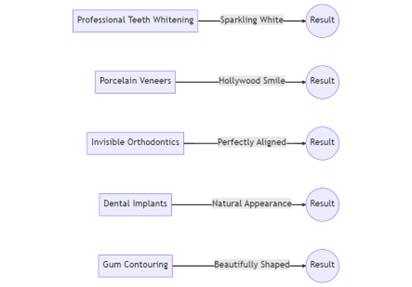
Professional teeth whitening treatments are offered by London's top clinics, to eradicate stubborn stains and dramatically brighten your smile. And the best part? You'll witness results in as little as 2 weeks! Now that's something worth smiling about.
Porcelain veneers are ultra-thin, custom-made shells over the front surface of your teeth to create a flawless and uniform appearance. Porcelain veneers can address various dental imperfections, such as chipped, misshapen, or discoloured teeth, and can even close minor gaps. So, if you've been yearning for a dazzling Hollywood smile, veneers might just be your ticket to red carpet glory (click here to learn more).
Cosmetic bonding, also known as dental bonding is a versatile and cost-effective cosmetic dentistry procedure that can dramatically enhance the appearance of your smile. This treatment involves the application of a tooth-coloured resin material to the surface of the tooth, which is then sculpted, hardened, and polished to create a seamless, natural-looking finish.
Cosmetic bonding can be used to correct a variety of dental imperfections, such as chipped or cracked teeth, discolouration, gaps, and even misshapen teeth. One of the significant advantages of cosmetic bonding is that it can be completed in a single visit, making it a popular choice for those seeking a quick and affordable smile makeover (click here to learn more).
Invisible orthodontics is the ideal option for treating crooked or misaligned teeth. From nearly imperceptible clear aligners like Invisalign and Spark to discreet lingual braces (like Incognito), London offers an abundance of orthodontic solutions tailored to each individual's needs and preferences. Bid farewell to clunky, unsightly braces; today's orthodontic options are sleek, inconspicuous, and highly efficient in straightening your teeth to perfection. With a little patience and dedication, you'll soon be beaming with pride and flaunting your beautifully aligned smile (click here to learn more).
Dental implants provide a permanent and natural-looking replacement for your missing teeth. These titanium posts are implanted into the jawbone, and once healed, a custom-made crown is attached to replace the missing tooth. Not only do dental implants restore your smile, but they also preserve your facial structure and prevent bone loss. If you're seeking a long-lasting solution to fill those gaps, look no further than dental implants (click here to learn more).
Gum recession surgery, also known as gingival grafting, is a cosmetic dentistry procedure that can effectively treat gum recession and enhance the aesthetics of your smile (click here to learn more).
During gum recession surgery, a periodontist will graft healthy gum tissue from another part of your mouth or use a tissue bank to cover the exposed tooth root. This procedure not only improves the appearance of your smile but also protects your teeth from sensitivity, decay, and further gum recession.
Last but certainly not least, gum contouring can work wonders for those who feel self-conscious about their "gummy" smile. This procedure involves reshaping and sculpting the gum line to reveal more of the tooth's surface, creating a balanced and visually appealing smile. Gum contouring can produce truly remarkable results in the hands of a skilled specialist and will ensure you are never afraid to smile again.
And there you have it! The top cosmetic dentistry treatments in London and the jaw-dropping results they can achieve. Now that you're well-informed, why not take the first step towards the smile of your dreams? Go on, fill out the form below and unlock the true power of your beautiful and healthy smile!
Dental implants are like a modern-day magic trick. Simply put, they're artificial tooth roots that serve as a foundation for replacement teeth. Losing a tooth can be a real bummer, but dental implants offer a stable, long-lasting solution that'll have you grinning from ear to ear.
There are 6 main types of dental implants, each with its own unique set of features and benefits.
Endosteal implants are the most common type of dental implant, and for good reason. These implants are typically made of titanium, shaped like tiny screws, and inserted directly into the jawbone. They're a favourite among dentists and patients alike, thanks to their high success rate and compatibility with various jaw structures. If you have a healthy jawbone and are looking for a reliable, tried-and-tested implant, endosteal implants might just be your new best friend.
Subperiosteal implants come to the rescue when your jawbone is too shallow for endosteal implants. These implants consist of a metal framework that sits on top of the jawbone, beneath the gum tissue. While not as common as endosteal implants, they're a fantastic option for those who may not be suitable candidates for traditional dental implant procedures (read more here).
Zygomatic implants are anchored in the zygomatic bone rather than the maxilla in patients who have insufficient maxillary bone volume. While the procedure is more complex, it could be your saving grace if other options are off the table. They are also sometimes the only option for patients with certain types of cancer and after road traffic accidents.
Pterygoid implants are used in conjunction with zygomatic implants in patients that have no bone left. These implants are anchored in the medial pterygoid plate. They are typically required when we aim to provide a full set (14) of upper teeth.
Zirconia (white in colour) implants are the newbies in the dental world, but they've been making quite a splash. They, too, are biocompatible, and their white colouration makes them less conspicuous than their titanium counterparts. Perfect for those who prefer to avoid the use of metal in their mouth. They are not as tried and tested as the endosteal dental implants.
Same-day dental implants live up to their name and provide implants and teeth in a single day!! They therefore provide the ultimate convenience for individuals who desire a new smile tout de suite.
This decision ultimately depends on your individual oral health, bone structure, and personal preferences. A comprehensive examination by a specialist dentist is crucial for determining which type of implant suits you best. They'll assess your jawbone's quality and density, as well as any potential risk factors, before presenting you with the most suitable options.
So, what are you waiting for? If you're ready to take the plunge and invest in a stunning, implant-supported smile, don't hesitate! Fill out the form below, and one of our dental implant experts will be in touch faster than you can say, "Abraca-dental-implant!"
Congratulations on completing your cosmetic dentistry treatment in London. Here are some tips and tricks on how to keep your teeth looking great for years to come (read more).
Good oral hygiene is the foundation of a healthy mouth, and it's especially important after cosmetic dentistry treatment. Your teeth may be more vulnerable to decay and damage, so it's essential to maintain a regular brushing and flossing routine.
It's recommended that you brush your teeth twice a day for at least two minutes each time, using a fluoride toothpaste. Make sure you brush all surfaces of your teeth, including the front, back, and chewing surfaces. Don't forget to brush your tongue, too - it can harbour bacteria that contribute to bad breath.
Flossing is just as important as brushing, as it removes plaque and food particles from between your teeth and gums. Floss at least once a day, taking care to reach all the way to the gum line.
Certain foods and drinks can stain or damage your teeth, so it's best to avoid or limit them (read more). These include:
If you do consume these items, rinse your mouth with water afterwards to help minimize staining. You may also want to consider using a straw when drinking acidic beverages, as this can help reduce their contact with your teeth.
Cosmetic dentistry treatments can make your teeth more susceptible to damage, so it's important to take steps to protect them. Here are some tips:
Regular check-ups with your dentist are crucial to maintaining your oral health and your new smile. During these appointments, your dentist can check for any signs of decay or damage and provide treatment as needed. They can also give you advice on how to maintain your oral hygiene and protect your teeth from damage (read more).
Don't wait until it's too late to take care of your teeth! Fill out the form below to schedule a consultation with one of our experienced cosmetic hygienists. We'll help you achieve the smile of your dreams and keep it looking great for years to come.
Discover the secrets to unlock the doors of the labyrinthine National Health Service and secure the orthodontic care you crave by following the steps below:
It all starts with finding a General Dental Practitioner (GDP). Your journey to orthodontic nirvana begins by registering with a local GDP. Word of mouth, online reviews, or a simple search on the NHS website will provide you with the names of suitable practitioners in your area. Once you've registered, it's time to make an appointment. The waiting time is usually 4-12 weeks. You can usually get seen quicker in private practice.
Upon arrival at your appointment, you'll undergo a thorough dental examination, where your GDP will assess your orthodontic needs. Be prepared for probing questions about your dental history, and perhaps even an X-ray or two. If your GDP determines that orthodontic treatment is necessary, they will refer you to an NHS orthodontist.
This is where things can get tricky. There are two types of NHS orthodontic referrals: the IOTN (Index of Orthodontic Treatment Need) and the AC (Aesthetic Component). The IOTN focuses on the severity of your dental problem, while the AC is all about appearances (read more here). If your dental issues fall into the higher IOTN grades, you'll be prioritised for NHS orthodontic treatment. However, if your problems are deemed more cosmetic, you may have to consider private treatment.
Once your referral has been submitted, you'll likely face a waiting period. In London, waiting times can vary greatly between boroughs, with some patients waiting several months or even years for treatment. Fret not, though! Use this time to brush up on your dental hygiene routine and prepare for your orthodontic adventure (read more here).
When your moment of glory finally arrives, you'll meet with an NHS orthodontist who will assess your specific needs and develop a treatment plan. This is your opportunity to ask questions and ensure you're fully informed about the process. Remember, knowledge is power, especially when it comes to your teeth!
If you're deemed eligible for NHS orthodontic treatment, congratulations! You'll soon embark on a journey to a straighter, healthier smile. If not, don't lose heart. Remember that perfect alignment of your child’s teeth is central to them having a beautiful and healthy smile for the rest of their life. Just fill the form below and our experienced specialist orthodontist will be very happy to see your child (read about treatment costs).
Now that you're armed with the knowledge to navigate the NHS's orthodontic offerings in London, why not put that newfound wisdom to good use? Go forth and conquer the healthcare system, but before you do, don't forget to fill in the form below. I promise it's easier than navigating the Tube during rush hour!
You might think that orthodontics is reserved for teenagers with a mouthful of metal, but I'm here to set the record straight. As a dentist, I've seen first-hand the remarkable benefits of early orthodontic intervention for children in London. So buckle up, my neighbours (Chalk Farm, Belsize Park and St John’s Wood), and prepare to be dazzled by the wondrous world of orthodontics (read more about orthodontic options)!
Addressing orthodontic issues early can lead to a healthier and happier smile for your child. Studies have shown that early intervention can:
When I just graduated from dental school, I remember having this discussion with 8-year old Emily and her parents. She had a pronounced overbite. Her parents were hesitant to start treatment, thinking she was too young. But, after some gentle persuasion, they agreed to have treatment with our local orthodontist. To their delight, Emily's treatment not only corrected her overbite but also significantly improved her facial symmetry. The result? A confident young lady with a dazzling smile, all thanks to early orthodontic intervention.
By addressing issues at a young age, we can save you precious time and effort later on. So, give your child the gift of a beautiful smile and free up your schedule for more exciting activities – like visiting the iconic Camden Market or catching a show at the Round House!
Embarking on the orthodontic adventure can be a daunting experience for both parents and children. Fear not, for our team of experienced professionals is here to guide you every step of the way. With state-of-the-art technology and a compassionate approach, we'll make the journey smooth, enjoyable, and downright fun!
With all the compelling reasons to opt for early orthodontic intervention, it's hard not to be eager to jump on board. So, why not take that leap and invest in your child's future smile? To get started, simply fill in the form below, and we'll be in touch to arrange a consultation.
Remember, the early bird catches the worm – or in this case, the perfect smile!
At London Dental Specialists, we're on a mission to provide you with a beautiful, healthy smile that you can wear with pride. We know that the key to achieving this goal lies in our comprehensive dental health reviews and regular hygienist visits. Let us take you on a journey to explore the unparalleled benefits of these essential dental services. Hold on to your toothbrushes, folks – we're about to dive deep into the world of oral health!
Dental check-ups are like a treasure map to the land of healthy smiles. It helps us identify any potential problems lurking beneath the surface, ensuring that we can intervene before they escalate into costly treatments. During your review, we'll address any concerns you may have and provide expert advice on maintaining your pearly whites.
Our skilled dental hygienists play a vital role in maintaining your oral health. They'll take a thorough look at your interdental brushes, ensuring they're still the right size as gum shapes change frequently. They'll also examine your diet, unearthing hidden sugars that could wreak havoc on your teeth. Moreover, they'll assess your trusty toothbrush – be it electric or manual – to confirm it's upholding its end of the bargain.
As a dentist myself, I recall a time when I discovered that my own electric toothbrush wasn't working as efficiently as I thought. It was a humbling moment that reminded me of the importance of regular dental check-ups. Even dentists need dentists, folks!
At London Dental Specialists, we understand that every patient is unique. The frequency of your visits will depend on your personal risk profile, which considers factors such as dental implants, history of gum disease or gum grafts, and more. For many patients, biannual hygienist visits and annual dental health reviews are the minimum.
Don't let oral health woes rain on your parade. Complete the form below and our delightful reception team will arrange a convenient appointment time for you. Remember, a healthy smile is just a form submission away – don't delay, seize the day!
