Family Friendly & Specialty Dentists in London, UK
In this article, we will compare porcelain veneers and composite bonding to help you determine which is right for you. As a dentist with years of experience, I have seen countless patients who are unhappy with their smile. Whether it’s due to discoloration, chipped or crooked teeth, or other imperfections, many people feel self-conscious about their teeth. Fortunately, there are several options available to enhance your smile.
Porcelain veneers are thin shells of porcelain made to fit over the front surface of your teeth. They are designed to improve the appearance of teeth that are discoloured, chipped, or misshapen. Porcelain veneers are considered to be a long-lasting solution to cosmetic dental problems.
Composite bonding is a procedure in which a tooth-coloured resin material is applied to the surface of the teeth. The material is shaped and moulded to match the appearance of the surrounding teeth and is then hardened using a special light. This procedure is often used to improve the appearance of chipped, cracked or discoloured teeth.
When it comes to deciding between porcelain veneers and composite bonding, there are a few things to consider.
Porcelain veneers are considered to be the gold standard in cosmetic dental procedures, as they provide a very natural-looking and long-lasting solution. They are custom-made to fit your teeth and are designed to look and feel like natural teeth. Composite bonding can also provide excellent results, but the material used is not as strong as porcelain and may not last as long.
Porcelain veneers are known for their durability and can last anywhere from 10-15 years or even longer with proper care. However, composite bonding is not as durable and will need to be replaced every 5-7 years.
Porcelain veneers are generally more expensive than composite bonding, but the long-lasting nature of porcelain veneers may make them a more cost-effective option over time.
The procedure for both porcelain veneers and composite bonding is relatively similar. The main difference is that porcelain veneers require the removal of a small amount of tooth enamel to make room for the veneer. Composite bonding does not require the removal of enamel, but may require more frequent touch-ups and repairs.
If you are looking for a long-lasting, natural-looking solution, porcelain veneers may be the right choice. However, if you are looking for a less expensive option that can be easily repaired, composite bonding may be a better fit.
In conclusion, both porcelain veneers and composite bonding are excellent options for improving the appearance of your smile. When deciding which option is right for you, it’s important to consider factors such as appearance, durability, cost, and the procedure itself. By working with a qualified cosmetic dentist, you can determine which procedure will provide you with the best possible results.
If you have any questions for us, please complete this form and one of the team will be in touch by the next working day.
We will compare metal and ceramic braces in this article and to help you decide which one is right for you.
Metal braces are the traditional type of braces that have been used for many years. They are made of high-grade stainless steel and consist of brackets, wires, and elastic bands. Metal braces are highly effective in straightening teeth and correcting bite issues. They are suitable for patients of all ages.
One of the most significant advantages of metal braces is their strength and durability. They can withstand a lot of pressure and can effectively move teeth into the desired position. Metal braces are also more affordable (see our article on costs of teeth straightening) than ceramic braces, making them a popular choice for many patients.
The biggest drawback of metal braces is their appearance. Some patients feel self-conscious about the metal brackets and wires and may avoid smiling or laughing in public. Another disadvantage is that metal braces can cause discomfort and irritation to the cheeks and lips, especially in the early stages of treatment.
Ceramic braces are similar in design to metal braces, but they are made of clear or tooth-coloured materials that blend in with the teeth. This makes them less noticeable and a popular choice for patients who want a more discreet orthodontic treatment.
The main advantage of ceramic braces is their appearance (see our article on teeth straightening features and problems- They are less noticeable than metal braces, making them a popular choice for patients who want to maintain a natural-looking smile during treatment. Ceramic braces are also more comfortable than metal braces, as they are smoother and do not irritate the cheeks and lips as much.
The main disadvantage of ceramic braces is their fragility. They are not as strong as metal braces and can chip or break if improperly handled. Ceramic braces are also more expensive than metal braces, which can be a deciding factor for some patients.
The decision between metal and ceramic braces ultimately comes down to personal preference and your individual orthodontic needs. If you are looking for an affordable and effective orthodontic treatment, metal braces may be your best option. Ceramic braces may be the way to go if you are looking for a more discreet treatment and are willing to invest in the extra cost.
To further help you understand the differences between metal and ceramic braces, we have created a visual comparison chart:
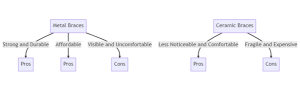
By providing you with this guide and comparison chart, we hope to have made your decision-making process more accessible and more informed. We encourage you to ask questions, seek advice, and take the time to make the best decision for you and your unique needs.
Please complete the form below for further information.
In this article, we'll compare lingual braces and clear aligners and help you decide which one is right for you.
Lingual braces are similar to traditional braces but are placed on the back of your teeth instead of the front. This makes them virtually invisible from the outside, which is an excellent option for people who want to straighten their teeth discreetly. Lingual braces are custom-made for each patient, which can make them more comfortable than traditional braces. We tend to use Incognito.
Clear aligners are removable, clear plastic trays that fit over your teeth. They apply pressure to your teeth in a controlled manner, gradually moving them into the desired position. Clear aligners are also virtually invisible, which makes them an excellent option for people who want to straighten their teeth without anyone knowing. We tend to use Spark and Invisalign.
Lingual braces have some advantages. They are virtually invisible, making them a great option for people concerned about their appearance. You also do not need to remember to wear them, which is fantastic (they are fixed and discreet). They are also custom-made for each patient, which means that they can be more comfortable than traditional lingual braces. However, lingual braces can be more challenging to clean than conventional braces, which can be a disadvantage (see our article on teeth straightening problems). They can also be more expensive (see our article on orthodontic treatment costs).
Clear aligners also have their advantages and disadvantages. They are virtually invisible, which makes them an excellent option for people who are concerned about their appearance. They are also removable, meaning you can take them out when you eat, brush your teeth, or floss. However, clear aligners can be more expensive than traditional braces, which is a disadvantage (see our article on costs of orthodontic treatment). They may also not be the best option for people with severe malocclusions (see article on teeth straightening problems)
The answer to this question depends on a number of factors, including the severity of your teeth alignment problem, your budget, and your personal preferences. If you want a treatment that is virtually invisible and custom-made for you, lingual braces may be the best option. On the other hand, if you want a treatment that is removable and more comfortable, clear aligners may be the best option. It's important to consult with your dentist to determine which option is best for you, but please be aware that if you are unable to commit to wearing clear aligners for 22 hours a day every day for 6-12 months, they will not work for you.
Please complete the short form below and one of our friendly team will contact you within 24 hours.
Many people prefer ceramic braces or clear aligners for teeth straightening because of their subtlety. But which one should you choose? Let’s compare ceramic braces and clear aligners to help you make an informed decision.
Ceramic braces are similar to traditional metal braces, but instead of metal brackets, they use clear or tooth-coloured brackets that blend in with your teeth. The wires that connect the brackets are also less noticeable, and some brands even offer wires that match the colour of your teeth. This makes ceramic braces a great option for people who want a more subtle look.
One advantage of ceramic braces is their durability (we tend to use 3M clarity brackets). They are made from strong materials and can withstand the wear and tear of daily life. They are also an effective way to correct a wide range of dental issues, including crowding, spacing, and bite problems.
However, ceramic braces do have some downsides. They can be more expensive than traditional metal braces, and they require more frequent adjustments. Additionally, the clear brackets can stain easily if you don’t take good care of them. You’ll need to brush and floss regularly and avoid foods and drinks that can stain your teeth, such as coffee, tea, and red wine.
Clear aligners are a newer option that have gained popularity in recent years. They are made from a clear plastic material that fits over your teeth and gradually shifts them into the desired position. You wear each set of aligners for a few weeks and then switch to the next set in the series. We tend to use Spark and Invisalign.
One advantage of clear aligners is their removability. You can take them out to eat and brush your teeth, which makes oral hygiene easier. They are also virtually invisible, so you can straighten your teeth without anyone knowing.
Clear aligners are a great option for people with mild to moderate dental issues. They can correct crooked teeth, spacing issues, and minor bite problems. However, they may not be as effective for more complex issues, such as severe crowding or bite problems.
Clear aligners also require a high level of compliance. You’ll need to wear them for at least 22 hours a day to get the best results. If you don’t wear them consistently, your treatment may take longer than expected.
Both ceramic braces and clear aligners have their advantages and disadvantages. The right option for you depends on your individual needs and preferences.
If you want a discreet look and have a wide range of dental issues, ceramic braces may be the best option for you. They are durable, effective, and blend in with your teeth.
If you prefer a more flexible and removable option and have mild to moderate dental issues, clear aligners may be the way to go. They are virtually invisible, and you can take them out for eating and oral hygiene.
Ultimately, the best way to determine which option is right for you is to schedule a consultation with your orthodontist. They can evaluate your dental issues and help you choose the best treatment plan.
Conclusion
Choosing between ceramic braces and clear aligners can be a difficult decision. Both options have their advantages and disadvantages, and the right choice depends on your individual needs and preferences. Consider the durability, cost, and maintenance of each option, and consult with your dentist to determine the best treatment plan for you.
As a dentist, I’ve seen first-hand the benefits of both ceramic braces and clear aligners. With the right treatment plan, you can achieve a beautiful, healthy smile that lasts a lifetime. If you have any questions for me, please complete this short form and one of the team will contact you within 24 hours.
Root canal treatment is a standard dental procedure used to treat infections and inflammation in a tooth's pulp (nerve). There are three main types of root canal treatment: traditional root canal treatment, periradicular surgery, and regenerative root canal treatment. Each has its own set of problems, and it's essential to understand the risks associated with each type.
Traditional root canal treatment involves the removal of infected or inflamed pulp from the tooth, cleaning and shaping the root canal and filling it with a dental material. One of the main problems associated with this type of treatment is the risk of reinfection. If the filling material or sealing is compromised, bacteria can re-enter the tooth and cause another infection. This risk is minimised if you seek the care of a root canal specialist (endodontist).
Periradicular surgery is a more advanced form of traditional root canal treatment, using magnification and specialised instruments to remove infected or inflamed tissue. This type of treatment can help reduce the risk of reinfection. However, it's still possible for bacteria to enter the tooth if the seal is compromised. This risk is minimised if you seek the care of a root canal specialist (endodontist).
Regenerative root canal treatment is a newer treatment that aims to restore the pulp tissue and regenerate new, healthy tissue in the tooth. While this type of treatment is promising, it tends to be carried out by root canal specialists. This is because they are the ones to carry out this treatment that aims to keep the tooth alive. For this to be possible, you must consult a specialist as soon as you start experiencing any symptoms (pain/sensitivity to hot and cold etc.).
Another problem is the risk of root fractures. The removal of the pulp tissue can weaken the tooth, making it more susceptible to fracture. A crown is usually needed to help strengthen the tooth and prevent further damage.
An allergy to the materials used in the filling is a rare occurrence, but it's essential to be aware of the potential risk.
Thank you for taking the time to learn more about root canal treatments. If you're experiencing pain, sensitivity, or other symptoms that may indicate the need for a root canal, don't wait to seek treatment.
Our experienced dental team is here to help. We're ready to assist you if you want to request more information or schedule an appointment. Complete the form below and one of our friendly staff members will contact you very soon.
Composite bonding is a cosmetic dental procedure involves the application of a tooth-coloured resin to improve the appearance of teeth. While composite bonding can be an effective way to enhance your smile, there are also some risks associated with the procedure that patients should be aware of before making a decision.
Composite bonding is a dental procedure involving applying a composite resin material to the surface of a tooth. The resin is shaped and polished to create a natural-looking tooth surface that can improve the tooth's appearance. Composite bonding can treat a wide range of dental issues, including discoloured teeth, chipped or cracked teeth, gaps between teeth, and misshapen teeth. In addition, the procedure is relatively quick and non-invasive, making it a popular choice for patients who want to improve their smile without undergoing more extensive dental work.
One of the main advantages of composite bonding is that it is a relatively quick and painless procedure that can be completed in a single visit to the dentist. In addition, in most cases, the operation can be completed without anaesthesia, making it a more comfortable option for patients. Composite bonding is also a cost-effective way to improve the appearance of your teeth, particularly when compared to more extensive cosmetic dental procedures like veneers or crowns.
Another benefit of composite bonding is that the composite resin material is versatile and can be used to address a range of cosmetic dental issues. For example, the resin can be shaded to match the colour of your natural teeth, making it virtually indistinguishable from your real teeth. This means that composite bonding can be an effective way to address a range of cosmetic concerns without the need for more extensive dental work.
One of the main risks is that composite bonding can be more prone to staining and discolouration than natural teeth. To prevent staining, patients who undergo composite bonding may need to avoid certain foods and drinks, such as coffee, tea, and red wine.
Another risk of composite bonding is that the composite resin material is less robust than natural tooth enamel or porcelain and can be more prone to chipping and breaking. Therefore, composite bonding patients may need extra care when biting and chewing to avoid damaging the bonded tooth. Additionally, when the composite resin material does chip or break, it must be repaired or replaced. The cost in time and money could add up to the cost of the alternative: porcelain veneers.
In summary, composite bonding is a cosmetic dental procedure involving applying a tooth-coloured resin to improve the appearance of teeth. While the procedure can be effective, some risks are associated with it, including staining, chipping and the essential requirement of annual maintenance. By discussing the procedure with your dentist/dental therapist and taking steps to prevent staining and damage, you can minimize the risks and achieve a beautiful, natural-looking smile.
Please complete the form below and one of the team will contact you within 24 hours.
While porcelain veneers can undoubtedly give you a beautiful smile, they also have potential problems. My previous article covered the costs of porcelain veneers and this article discusses common issues with porcelain veneers and what you should consider before getting them.
Porcelain veneers are thin porcelain shells glued to the front of your teeth and as a result, they can improve the appearance of teeth that are discoloured, chipped, or misshapen. Veneers are custom-made for each patient and are designed to look natural and match the colour of your other teeth.
You may experience increased sensitivity to hot and cold temperatures after fitting the veneers. This sensitivity can be caused by removing all the enamel during the preparation for the veneers. This problem is virtually eliminated if the teeth are straightened beforehand.
Porcelain veneers can also increase your risk of tooth decay. The bond between the veneer and the tooth is strong but not invincible. If bacteria get between the veneer and the tooth, it can cause decay. This problem is virtually eliminated if the teeth are straightened beforehand. It would be best to visit your dentist/dental therapist every year.
Porcelain veneers can still chip or crack when you bite down on something hard or grind your teeth. If a veneer chips or cracks, it will need to be replaced. This risk is reduced by:
Porcelain veneers can still become discoloured over 15-25 years. This will happen if you consume foods or drinks that stain, such as coffee or red wine. If this happens, the veneers may need to be replaced.
Before getting porcelain veneers, there are a few things you should consider:
Porcelain veneers are more expensive (£1000-£2500) than composite bonding because they are much more durable and far more stain resistant. This is because they are custom-made in a dental laboratory using porcelain instead of composite.
Getting porcelain veneers is a multi-step process that requires the preparation of your teeth and multiple appointments with your dentist. Therefore, you should be prepared for the time and effort involved in the process.
Porcelain veneers are not a permanent solution and will need to be replaced at some point. However, they are likely to last a minimum of 3 times as long as composite bonding and require much less maintenance. Therefore, you should be prepared for the long-term care and cost of replacing them.
As a specialist dentist, I have seen many patients who have had problematic porcelain veneers. One patient, in particular, stands out to me. She came to me after experiencing sensitivity and pain with her veneers. You can read more about her treatment here.
Porcelain veneers can give you a beautiful smile but also have potential problems. Before getting veneers, it's essential to consider the cost, the procedure, and the long-term maintenance. If you decide to get veneers, maintain good oral hygiene and visit your dental hygienist/therapist every 4-6 months to prevent decay and other issues. Please complete the form below for further information OR to request a free virtual consultation.
While dental implants are generally a safe and effective solution for replacing missing teeth, there are some potential complications that patients should be aware of. In this article, I'll provide a comprehensive overview of the most common dental implant problems and how to avoid them.
Endosseous implant failure can occur for several reasons, including poor oral hygiene, implant misalignment, and insufficient bone density to support the implant. In addition, medical problems like diabetes, bone problems and some cancer treatments also increase the risk of implant failure. If an implant fails, it may need to be removed, and the patient may require additional surgery to replace it. To prevent implant failure, answering all the assessment questions honestly and following your dentist's post-operative care instructions carefully, including regular brushing and flossing and attending follow-up appointments, is crucial.
Peri-implantitis is essentially periodontitis around a dental implant. This can cause the implant to become loose or fail altogether. In addition, patients with peri-implantitis may experience pain, bleeding, and swelling in the gums around the implant. To prevent peri-implantitis, it's vital to maintain good oral hygiene and attend follow-up appointments with your dental hygienist/therapist every three months.
Implant loosening and fracture is rare and can occur when the implant becomes overloaded or damaged due to trauma. In some cases, a fractured implant may need to be removed and replaced. To prevent implant loosening and fracture, avoiding activities that may damage the implant, such as chewing on hard objects or using the teeth to open packages, is crucial. You also need to check that your dentist is confident in adjusting the bite so that the biting contacts are spread over multiple teeth. This prevents overloading.
Nerve damage is a rare but potentially severe complication of dental implant surgery. This can occur if the implant is placed too close to a nerve, causing pain, numbness, or tingling in the area. This commonly affects areas supplied by the inferior alveolar dental nerve and therefore the symptoms describe tend to occur in the lower jaw. To prevent nerve damage, choosing a qualified and experienced dentist who can carefully plan and execute the implant surgery is essential. Specialists in periodontics, prosthodontics and oral surgery have had their expertise verified by the dental regulator (General Dental Council). It is also necessary to have treatment at the earliest opportunity because delays will increase the risk irrespective of the dentist's expertise.
Gum recession and bone loss around the implant can occur if the gum is thin before the implant is placed, the implant is improperly placed or if the patient has poor oral hygiene. This can cause the implant to become loose or fail altogether. To prevent gum recession and bone loss around the implant, it is important to accept a gum graft during the treatment, maintain good oral hygiene and attend regular follow-up appointments with your dental hygienist/therapist.
In rare cases, the body may reject a dental implant, leading to implant failure. This can occur if the patient has an allergy to the materials used in the implant or if the implant is not placed correctly. To prevent implant rejection, it's crucial to choose a qualified and experienced dentist who can carefully plan and execute the implant surgery with a trusted implant brand like Straumann and Neodent.
Conclusion
Overall, dental implants are a safe and effective solution for replacing missing teeth. However, there are some potential complications that patients should be aware of, including implant failure, infection, peri-implantitis, implant loosening and fracture, nerve damage, gum recession and bone loss around the implant, and implant rejection.
If you have any questions, please complete the form below and one of the team will contact you within 24 hours.
In this article, we'll explore the potential issues associated with different teeth straightening options so that you can make an informed decision about your orthodontic treatment.
Choosing the correct teeth straightening option can be challenging, and it's important to be aware of each option's potential problems and risks. While there are benefits to each treatment, it's essential to weigh these against the potential issues to determine the best choice for your individual needs.
For further information, please complete the form below and one of the team will be in touch within 24 hours.
Gingival grafting is an increasingly popular, highly effective surgical treatment for gum recession in London. While subepithelial connective tissue grafts can effectively restore a patient's gum line and prevent further damage, there are some potential issues that patients should be aware of. This article will discuss the common problems associated with gum recession treatments and what patients can do to minimise the risks.
This is most common problem associated with gum recession treatments in Primrose Hill. While the procedures are not painful, patients may experience discomfort during recovery. This discomfort can be managed with over-the-counter pain medications and by following our post-operative instructions. In a small minority of cases, the first line of drugs we provide does not work; in those cases, we will prescribe more potent painkillers.
Swelling and bleeding is also a common side effect of gingival grafting amongst patients in Camden. Patients may experience these symptoms for a few days after the procedure, but they should subside on their own. Sometimes, your periodontist may recommend using a cold compress to reduce swelling or special mouthwash to control bleeding.
Any time a surgical procedure is performed in Primrose Hill, there is a risk of infection. To minimise this risk, it is essential to follow your periodontist's post-operative instructions carefully. This may include using special mouthwashes or taking antibiotics as prescribed. In addition, if you experience any signs of infection, such as fever or excessive pain, be sure to contact your dentist immediately.
Patients may experience sensitivity to hot or cold temperatures and certain foods and beverages. While this sensitivity usually disappears, your dentist may recommend using a special toothpaste or mouthwash to help manage the symptoms.
While scarring and slow healing is rare in central London, it can occur. If you are concerned about scarring or healing time, discuss these issues with your Primrose Hill periodontist before undergoing any treatment.
Overall, gum recession treatments can be highly effective in restoring a patient's gum line and preventing further damage. However, there are some potential issues that patients should be aware of. By following your periodontist's post-operative instructions carefully and taking steps to manage any symptoms, you can minimise the risks associated with these treatments.
So why not follow this patient’s example and complete this form to either request more information or book an appointment for an initial consultation.
