Family Friendly & Specialty Dentists in London, UK

Worried about pain from dental implants? Dr Ope Sodeinde explains what you'll actually feel, sedation options, and recovery at this London clinic.
If you've been putting off implants because you're picturing drilling into bone while fully awake, that fear is understandable: but it isn't what actually happens. Most people who reach this point have either been told they need an implant and are quietly dreading the appointment, or they've lived with a loose, failing tooth for so long that the discomfort of waiting has become worse than the procedure they're avoiding. Either way, the gap between what you imagine and what you'll actually feel is usually the biggest source of anxiety.
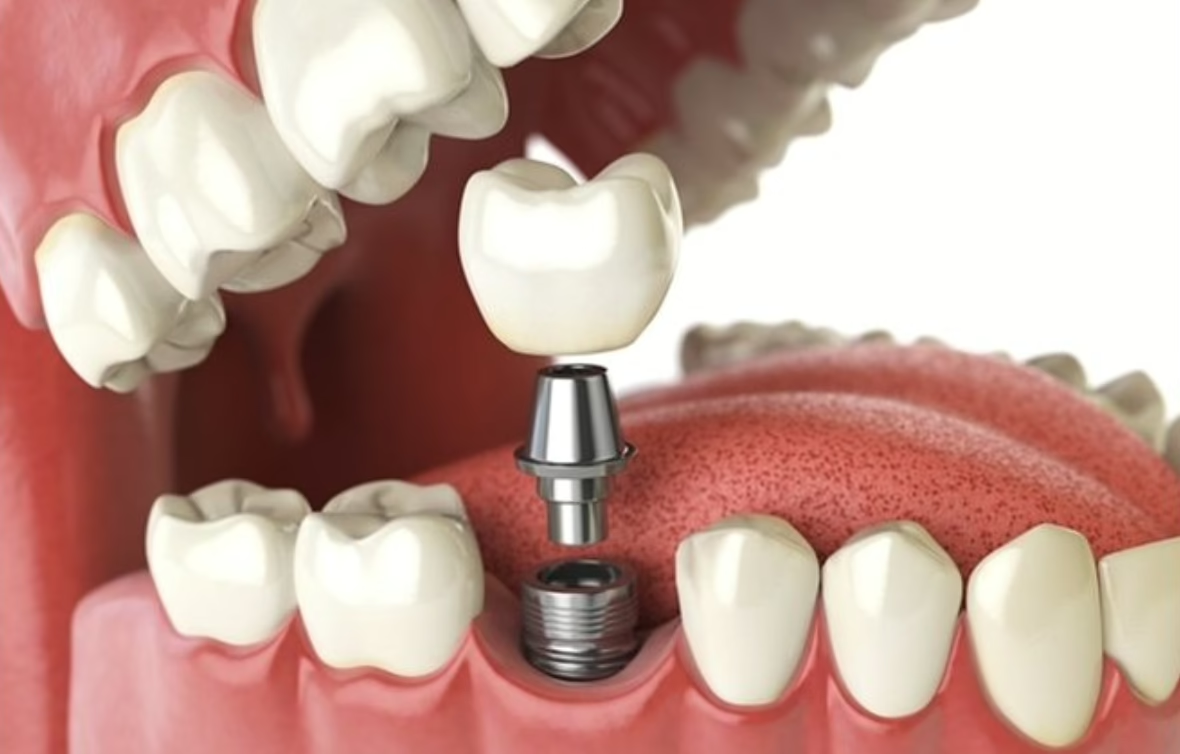
Once the local anaesthetic is in, you shouldn't feel the drill, the implant going into the bone, or any sharp pain at all: just pressure and vibration, a bit like someone leaning on your jaw. That's because the anaesthetic blocks the nerve signals in the area completely, not just dulls them, so what registers as "pain" simply doesn't reach your brain during placement. The sensation most people describe afterwards isn't agony but a dull ache for a day or two, similar to what you'd get after a tooth extraction.
At London Dental Specialists, this is why the process starts with a clinical assessment rather than jumping straight to surgery: the suitability of your jawbone and gum health is examined first, and a plan is set out before anything is placed. For patients who feel anxious about dental treatment generally, not just pain, sedation is offered alongside the local anaesthetic: the practice lists inhalation sedation (laughing gas) at £350/hour for gentle relaxation suited to shorter procedures, and intravenous sedation at £550/hour for deeper relaxation during longer treatment. Someone replacing a single missing molar under local anaesthetic alone is a very different experience from someone needing a bone graft and sedation beforehand, which is why the assessment stage matters: it's where that distinction gets made for your specific mouth, not a generic script. This approach ensures that your treatment plan is tailored to your individual needs.
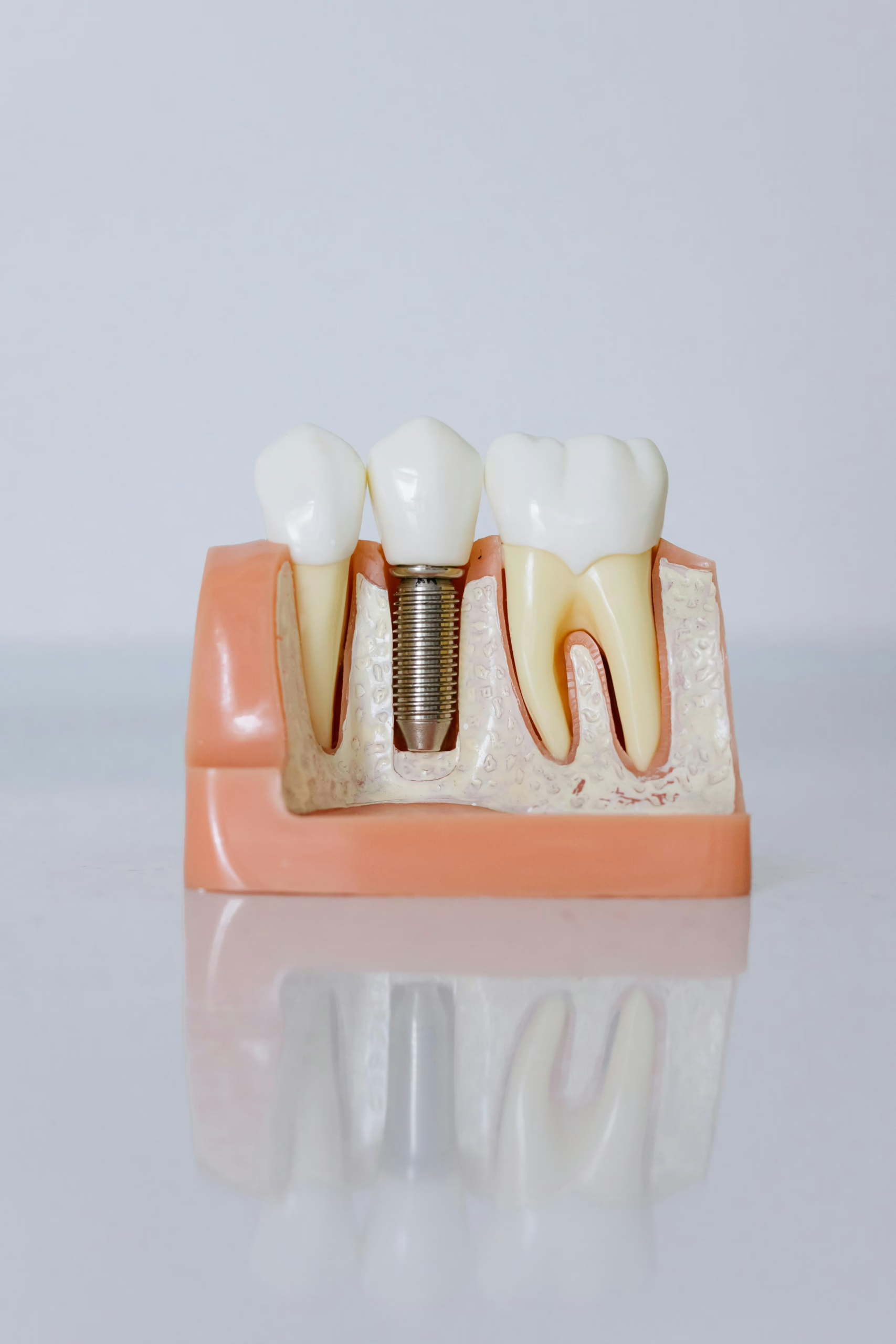
It's also worth separating the ache that's expected from the ache that isn't. A mild, occasional soreness around the implant site in the days after surgery is normal and settles on its own; it is not the same as ongoing or worsening pain, swelling, or a sense that something feels wrong weeks or months later, which is a reason to get it checked rather than wait it out. If anything about your situation involves bone loss, grafting, or a more complex case, that's exactly what the clinical assessment and imaging are there to map out before treatment starts: you can read more about the broader process on the dental implants in London page.
Most patients sit in the chair expecting the worst and are surprised when the local anaesthetic is the only thing they feel going in. For anyone who still wants an extra layer of calm, or who needs more than one implant placed in a longer session, there are sedation options for implant surgery that sit alongside the standard local anaesthetic rather than replacing it. The comparison below sets out what each does, who it tends to suit, and what it costs, so you can see where a low-anxiety, lower-cost path fits before you commit to anything.
| Option | What it does | Best suited for | Fee |
|---|---|---|---|
| Local anaesthetic only | Numbs the implant site; you're awake and aware throughout | Patients with mild or no dental anxiety, single implants | Included in the implant fee |
| Inhalation sedation (laughing gas) | Produces gentle relaxation that wears off quickly after the mask is removed | Shorter procedures, mild to moderate nerves | £350/hour |
| Intravenous (IV) sedation | Deep relaxation while you remain conscious, administered via IV | Longer treatments, multiple implants, higher anxiety | £550/hour |
Because the fee for sedation is charged on top of the implant itself, it's worth checking which level of calm actually matches what's happening in your mouth. A single tooth implant placed under local anaesthetic alone, for instance, is a short appointment for most people, so the hourly sedation fees may not be necessary at all. If you're replacing several teeth, or you know anxiety has kept you from booking in before, it helps to weigh procedure length and personal nerves together before choosing.
You can work through how procedure length and anxiety level point toward one of these options below.
Whichever path it points to, the choice isn't locked in until you've discussed it at your consultation, where the clinical assessment of your jawbone and gums also determines whether grafting or other preparation is needed first. That appointment is the right place to match the sedation level to the actual work involved, rather than guessing in advance, and it's also where any questions about recovery and what the days afterward look like get answered directly.
Day one looks worse than it feels: a bit of swelling along the gum line, maybe some bruising toward the jaw, and a dull ache that paracetamol or ibuprofen usually keeps well under control. Most people are surprised that it's less uncomfortable than a tooth extraction, and the shape of recovery is predictable enough to plan around once you know the pattern.
Knowing what each stage should feel like makes it easier to tell ordinary healing from something that needs attention, which is exactly what good dental treatment aftercare guides are there to help with. Understanding these recovery stages is key to a smooth healing process.
Patients almost always brace themselves for the implant and barely think twice about the extraction beforehand, when in practice it's usually the other way round. Both procedures are carried out under local anaesthetic, so neither should involve sharp pain at the time, but the discomfort that follows tends to feel different in character and duration, which is why dental implants are worth comparing directly against extractions.
| Procedure | What causes discomfort | Typical recovery feel |
|---|---|---|
| Single tooth implant placement | Drilling into bone to seat the titanium post; pressure and vibration during surgery, soreness as anaesthetic wears off | Dull ache and tenderness for a few days, swelling peaking in the first 24–48 hours |
| Standard tooth extraction | Loosening and lifting a tooth from its socket; more force applied to surrounding gum and bone | Throbbing socket pain, often sharper in the first day or two, with a longer settling-in period for the gum to close over |
Many people expect the implant to be the harder of the two, but because the bone the implant sits in has a different nerve supply to the gum socket disturbed in an extraction, the aftermath is often milder than the extraction many are dreading. This lines up with what's commonly reported: discomfort after implant surgery is frequently described as less than what the same person remembers from having a tooth pulled.
If you want to see how these two experiences differ side by side before deciding what's worrying you most, flipping through a few comparisons can help you separate the parts of the process that actually cause discomfort from the parts that just sound unpleasant.
Once you've worked through that, the practical takeaway is that a tooth already causing pain, loose, infected, or aching, is usually harder on you before it comes out than the implant that eventually replaces it. If a tooth is heading toward extraction and you're assessing whether to move straight to planning its replacement, a clinical assessment can map out what the extraction and the implant stage would each involve for your specific case, rather than you weighing the two in the abstract.
Use this comparison to recalibrate which stage deserves your worry, not to predict your exact experience, since bone quality, anxiety levels and whether infection is present all shift where the discomfort actually lands.
Someone having a single implant placed into healthy jawbone at the front of the mouth is simply not in the same boat as someone needing a bone graft and three implants at the back after years of smoking. Several variables shape where any individual case sits on that spectrum, and knowing them, along with the implant procedure step by step, helps you judge what your own experience is likely to involve rather than comparing yourself to someone else's story.
None of this means complex cases are unmanageable; it simply means the discomfort scales with the amount of surgical work involved, not with the fact that an implant is being placed at all. If your case involves grafting, multiple implants, or other complicating factors, a clinical assessment is where those specifics get mapped against your own bone and gum anatomy before any treatment is planned.
A dull ache that eases a little more each day is healing; a throb that's getting worse on day four, or swelling that's spreading into your cheek rather than settling, is your cue to ring the practice. The same logic applies to temperature: mild warmth around the gum in the first 48 hours is part of the body's normal response, but a fever, a bad taste that won't clear with rinsing, or pus at the implant site are not things to wait out. If you've had antibiotics prescribed before and the pain pattern this time feels different, sharper, pulsing, or waking you at night rather than just present when you prod the area, that difference is worth mentioning when you call, since it helps the practice judge whether you need to be seen that day.
It's worth saying plainly: most healing follows the pattern already described, and a phone call that ends in reassurance is a normal, useful outcome, not a false alarm. One scenario worth knowing about is a tooth that's gone loose or painful in the run-up to extraction and implant treatment: some patients describe the natural tooth becoming increasingly uncomfortable in the days before their appointment, only for the actual procedure and aftermath to settle faster than expected once the problem tooth is dealt with. That's a reminder that pain building beforehand, around a failing tooth, is a different picture from pain building after a well-placed implant.
Before you pick up the phone, it helps to check your own timeline against the pattern of normal recovery rather than relying on memory alone.
What matters most is the direction your symptoms are moving, not just how they feel on any single day. A persistent dull ache that shows up occasionally a month after treatment, without swelling or fever, is a different conversation from acute pain in the first week: the former is still worth mentioning at a routine check, the latter warrants a same-week call.
Here are the questions we get asked most often, sitting across the desk from someone weighing up whether to go ahead.
Most patients find the healing days after surgery more noticeable than the procedure itself, since the implant site is numb throughout placement. Any discomfort tends to peak in the first 24–48 hours as swelling settles, then eases steadily. The surgical steps that involve more bone work, such as placing a graft alongside the implant, are usually the part that leaves the most soreness afterwards, simply because more tissue has been handled.
A single tooth implant placed into healthy bone is generally one of the more straightforward implant procedures, and patients tend to describe the aftermath as manageable soreness rather than severe pain. It's a different experience from replacing several teeth or rebuilding a full arch, where more sites are involved and recovery can feel more demanding.
Beyond the healing period, the main trade-offs are the time involved, treatment runs across several visits while the implant fuses with the bone, and the fact that not everyone has enough bone to place an implant straight away, which is why grafting is sometimes needed first. These factors are assessed and explained at a clinical examination before any treatment is agreed.
An implant's longevity depends largely on the health of the bone and gum around it, which is why daily cleaning and regular reviews matter over the years. London Dental Specialists backs its implant work with a 10-year implant warranty, reflecting confidence in how the treatment is planned and placed.
Occasional mild sensitivity in the weeks after placement can still be part of normal settling, particularly while the gum tissue finishes healing around the restoration. It shouldn't be constant or worsening: a dull, occasional ache is different from a throbbing or escalating pain, which is the kind of change worth getting checked.
If you've read this far wondering whether the discomfort is worth it, the honest answer is that the anxiety beforehand was worse than the procedure itself. That pattern holds whether someone is replacing a single front tooth that's been loose and sore for weeks, or coming in after years of putting off a gap at the back of the mouth. The Dental Implants Consultation is the step that turns that general worry into a specific plan: a GDC-registered specialist examines your jawbone and gum health, reviews imaging where needed, and talks you through what your particular case involves: including whether sedation is appropriate if dental anxiety is part of what's held you back.
There's no single script for what happens next, because it depends on your bone, your gums and which tooth or teeth need replacing. Someone with healthy bone at the front of the mouth is looking at a more straightforward path than someone who's been without a back tooth for a long time and may need grafting first; the consultation is where that distinction gets made, based on your anatomy rather than guesswork. You'll leave with a written plan and fee breakdown rather than a vague estimate, so you know what each stage involves before you commit to anything.
If what's stopped you so far is less about the clinical detail and more about nerves, the kind of dread people describe before finally booking, having lived with a painful, loose tooth far longer than they needed to, that's worth saying at the consultation itself. It's a clinical conversation, not a judgement, and it's the same conversation whether you're asking about a single implant or a fuller restoration. The next step is simply booking that appointment at our Primrose Hill practice and letting the assessment answer the questions this article couldn't fully answer for your specific mouth.
Not sure where to start?
Book a Dental Implants consultation with London Dental Specialists (£245). Call +442075897792 or visit london-dental-specialists.co.uk.
Dr Ope Sodeinde, Principal Dentist & Clinical Director, GDC registration 104071 (Specialist in Periodontics), BDS (Hons), MFDS RCS(Ed), MSc Restorative Dentistry, MClinDent Periodontics, MPerio RCS(Ed)
Principal Dentist & Clinical Director; founder and owner of the practice.