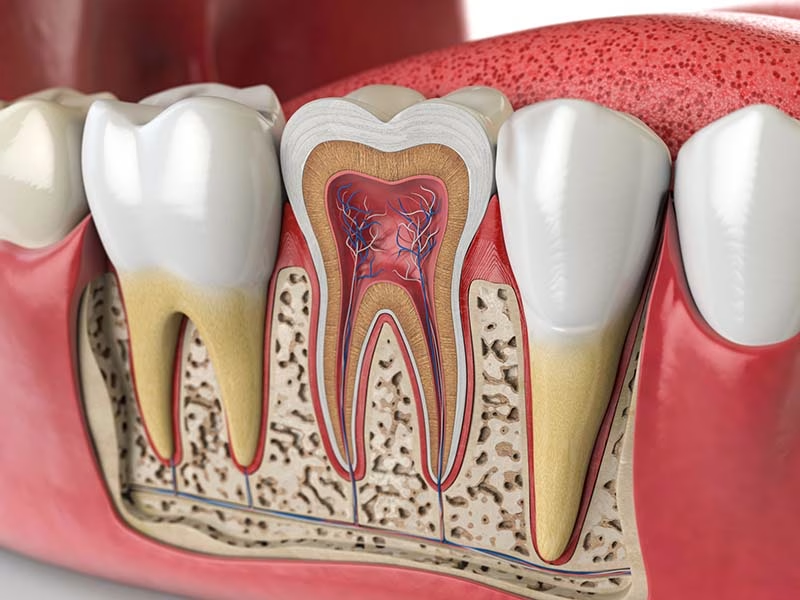
At London Dental Specialists, we understand that facing potential tooth loss can be concerning. Hemisection offers a valuable solution for preserving multi-rooted teeth affected by localised damage. This specialised procedure involves surgically separating a multi-rooted tooth—typically a lower molar—through the furcation, allowing us to remove only the damaged root while preserving the healthy portion. Many patients have questions about this tooth-saving technique, from its indications and benefits to recovery expectations. Our specialists commonly perform hemisection when one root suffers from severe vertical bone loss or when there's complete destruction of the furcation, providing an alternative to complete extraction. Below, we've addressed the most frequently asked questions about this procedure to help you make an informed decision about your dental health.
What is a hemisection of a multi-rooted tooth?
A hemisection is a specialised dental procedure that involves surgically separating a multi-rooted tooth (typically a lower molar) through the furcation area where the roots divide. This allows our specialists at London Dental Specialists to remove one damaged root and its associated crown portion while preserving the healthy remaining structure. This conservative approach aims to save as much natural tooth structure as possible rather than extracting the entire tooth.
What are the main indications for tooth hemisection?
At London Dental Specialists, we may recommend a hemisection procedure in several clinical situations:
- Severe periodontal bone loss affecting only one root
- Extensive furcation involvement that cannot be managed with other treatments
- Vertical root fracture limited to one root
- Failed root canal treatment on one root while others remain healthy
- Severe decay extending below the gumline on one root
- Strategic retention of a portion of a tooth for prosthetic purposes
How is the hemisection procedure performed?
The hemisection procedure at London Dental Specialists typically involves several steps:
- Local anaesthesia is administered for patient comfort
- A small incision is made in the gum tissue to access the tooth roots
- Specialised instruments are used to carefully separate the tooth through the furcation
- The compromised root and its crown portion are removed
- The remaining tooth structure is preserved and reshaped
- The area is thoroughly cleaned and the gum tissue is sutured
- A crown or other restoration is typically placed to restore function
What are the benefits of choosing hemisection over extraction?
Hemisection offers several advantages compared to complete tooth extraction:
- Preservation of natural tooth structure and bone
- Maintenance of proper chewing function
- Prevention of adjacent teeth shifting
- More cost-effective than replacing with implants or bridges
- Shorter treatment time compared to extraction and replacement
- Preservation of the patient's natural smile aesthetics
How long does recovery take after a hemisection procedure?
Most patients at London Dental Specialists experience minimal discomfort following a hemisection procedure. Initial healing of the gum tissue typically occurs within 7-10 days. Complete healing and integration of the remaining tooth structure may take 4-6 weeks. During this time, we recommend following our post-operative care instructions carefully, including gentle oral hygiene practices and avoiding hard foods on the treated area.
What is the success rate of hemisection procedures?
When performed by our experienced specialists at London Dental Specialists, hemisection procedures have a good long-term prognosis. Studies show success rates of approximately 80-85% over 5-10 years with proper maintenance. The success depends on several factors including patient oral hygiene, regular dental check-ups, and the quality of the final restoration placed on the remaining tooth structure.
How do I know if I'm a candidate for hemisection?
Determining if you're a suitable candidate for hemisection requires a comprehensive evaluation by our specialists. Ideal candidates typically have:
- Good overall oral health apart from the affected tooth
- Adequate bone support for the remaining root(s)
- Restorable remaining tooth structure
- Accessible and separable roots
- Commitment to maintaining good oral hygiene
We recommend scheduling a consultation at London Dental Specialists for a thorough assessment of your specific case.
What alternatives exist if hemisection isn't suitable for my case?
If our specialists determine that hemisection isn't the optimal treatment for your situation, we may recommend alternative approaches such as:
- Root amputation (removal of one root without dividing the crown)
- Bicuspidisation (separating the roots but retaining both with individual crowns)
- Extraction and dental implant placement
- Extraction and fixed bridge restoration
- Extraction and removable partial denture
We'll discuss all appropriate options based on your specific clinical needs and preferences.
How should I care for my tooth after a hemisection procedure?
Proper aftercare is essential for the long-term success of your hemisection treatment. Our London Dental Specialists team recommends:
- Maintaining excellent oral hygiene with regular brushing and flossing
- Using interdental brushes or water flossers to clean around the treated area
- Attending regular check-ups and professional cleanings every 3-6 months
- Avoiding excessive forces on the treated tooth (hard foods, teeth grinding)
- Using any prescribed antimicrobial rinses as directed
- Contacting our office promptly if you notice any changes or discomfort
Can’t find the answer to your Hemisection for Multi-Rooted Tooth Preservation questions here? Always feel welcome to
contact us with your Hemisection for Multi-Rooted Tooth Preservation questions and concerns.