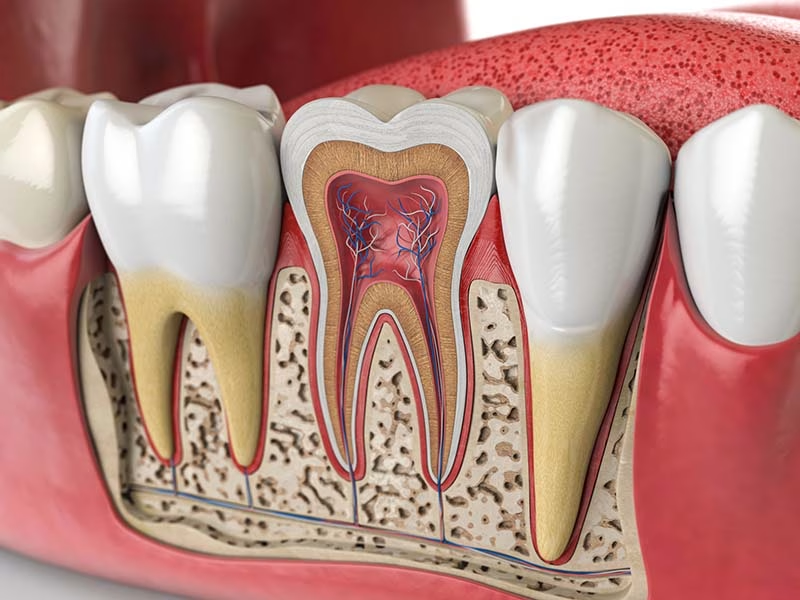
Intentional replantation offers a solution when traditional root canal treatment isn't possible due to inaccessible canals. At London Dental Specialists, we understand considering this procedure raises questions. This technique—extracting a tooth, performing necessary repairs outside the mouth, then returning it to its socket—has evolved from a last resort to a highly predictable treatment with impressive retention rates of 88-93%. It's particularly valuable for teeth with persistent symptoms after standard endodontic therapy or when the canal pathway is complex or blocked. Our specialists carefully evaluate each case to determine if intentional replantation is appropriate for your specific situation, ensuring you understand the procedure, recovery process, and expected outcomes before making your decision.
What is intentional replantation for inaccessible canal treatment?
Intentional replantation is a dental procedure where a tooth is deliberately extracted, treated outside the mouth, and then returned to its socket. This technique is specifically used when conventional root canal treatment cannot access certain areas of the tooth due to complex anatomy, calcifications, or blockages in the canal system. At London Dental Specialists, our endodontists perform this procedure as a way to save teeth that might otherwise require extraction.
When is intentional replantation recommended for inaccessible canals?
Intentional replantation is recommended in several specific situations:
- When conventional root canal treatment has failed to resolve persistent symptoms
- When canals are blocked by calcifications, separated instruments, or other obstructions
- When anatomical challenges make conventional access impossible
- When surgical endodontic approaches are contraindicated due to anatomical limitations
- As an alternative to extraction when the tooth is otherwise restorable
What is the success rate of intentional replantation procedures?
Current research shows intentional replantation has become highly predictable, with retention rates reported between 88% and 93%. At London Dental Specialists, our success rates align with these figures due to our specialists' extensive training and experience. The procedure's success depends on factors including minimal extraction trauma, limited extra-oral time, and proper case selection.
How is the intentional replantation procedure performed?
The intentional replantation procedure involves several precise steps:
- Administration of local anaesthesia
- Careful extraction of the tooth with minimal trauma
- Extra-oral root canal treatment, including cleaning, shaping and filling of the canal system
- Repair of any defects in the root or crown
- Replantation of the tooth back into its socket
- Stabilisation with a splint if necessary
- Follow-up appointments to monitor healing
Is intentional replantation painful?
The procedure is performed under local anaesthesia, ensuring you won't feel pain during treatment. Following the procedure, some discomfort and mild swelling are normal and can be managed with prescribed or over-the-counter pain medication. Most patients report that post-operative discomfort is similar to or less than that experienced after conventional root canal treatment.
What is the recovery time after intentional replantation?
Recovery after intentional replantation typically involves mild discomfort for 2-3 days. Most patients can return to normal activities the day after the procedure. The tooth may feel slightly mobile initially but should stabilise within 1-2 weeks. Complete healing of the periodontal ligament takes approximately 4-8 weeks. During this time, patients are advised to avoid chewing hard foods on the treated tooth.
What are the risks associated with intentional replantation?
While intentional replantation is generally safe, potential risks include:
- Root resorption (gradual loss of root structure)
- Ankylosis (fusion of the tooth to the bone)
- Fracture of the tooth during extraction
- Infection
- Mobility or loss of the replanted tooth
At London Dental Specialists, we thoroughly evaluate each case to minimise these risks and provide comprehensive aftercare to address any complications promptly.
How long can a replanted tooth last?
With proper care and regular dental check-ups, intentionally replanted teeth can last many years or even a lifetime. Studies show that successfully replanted teeth have survival rates of over 85% at 5 years. The longevity depends on factors including the patient's oral hygiene, absence of periodontal disease, and compliance with recommended follow-up care.
Why choose London Dental Specialists for intentional replantation?
London Dental Specialists offers exceptional care for intentional replantation procedures because:
- Our endodontists have advanced training and extensive experience in complex cases
- We utilise state-of-the-art equipment including dental microscopes for precision
- We provide comprehensive treatment planning and thorough case assessment
- Our team offers detailed aftercare instructions and follow-up appointments
- We maintain high success rates through meticulous technique and patient-centred care
Can’t find the answer to your Intentional Replantation for Inaccessible Canal Treatment questions here? Always feel welcome to
contact us with your Intentional Replantation for Inaccessible Canal Treatment questions and concerns.