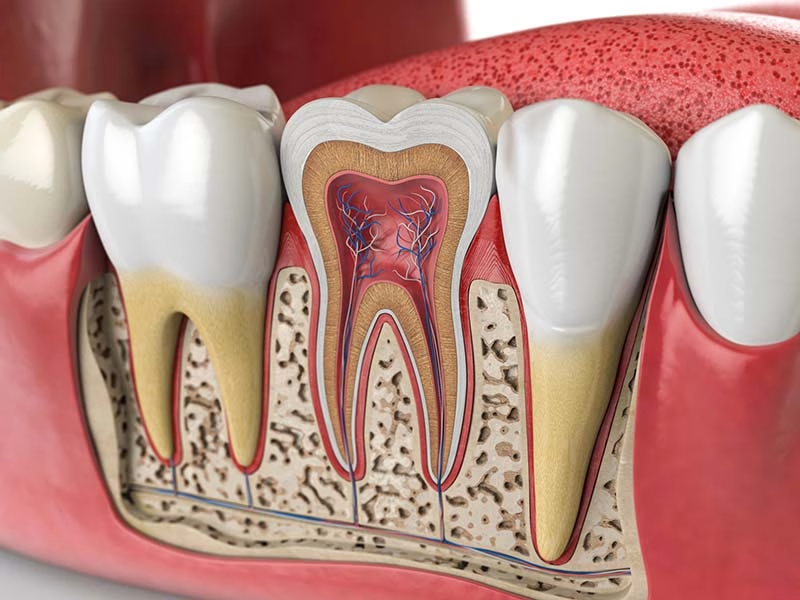
Perforation repair for iatrogenic openings addresses complications that can occur during dental procedures. At London Dental Specialists, we understand the anxiety patients feel when facing unexpected treatment complications. Iatrogenic perforations—unintended openings in the tooth structure or root canal—require prompt, expert attention to preserve tooth function and prevent further damage. Our specialists employ advanced magnification techniques and appropriate repair materials to achieve high success rates, typically around 86%. The repair technique varies based on perforation size and location, often using materials like resin-modified glass ionomers that effectively seal the defect. Below are common questions our patients ask about perforation repair procedures.
What is iatrogenic perforation in dentistry?
Iatrogenic perforation is a complication that can occur during dental treatment, particularly during root canal procedures. It happens when an artificial opening is created in the tooth root or pulp chamber floor due to misalignment of instruments or excessive removal of tooth structure. If left untreated, iatrogenic perforations can adversely affect the prognosis of the tooth, potentially leading to infection and tooth loss.
How does London Dental Specialists diagnose iatrogenic perforations?
At London Dental Specialists, we diagnose iatrogenic perforations using a comprehensive approach that includes:
- High-magnification dental microscopes for enhanced visibility
- Digital radiography to identify the exact location and extent of the perforation
- CBCT (Cone Beam Computed Tomography) scanning for complex cases
- Clinical examination for signs such as sudden bleeding, pain during treatment, or persistent infection
Early and accurate diagnosis is crucial for successful treatment outcomes.
What treatment options does London Dental Specialists offer for iatrogenic perforations?
London Dental Specialists offers several advanced treatment options for iatrogenic perforations, including:
- Mineral Trioxide Aggregate (MTA) repair for excellent biocompatibility and sealing ability
- Biodentine application for faster setting time and improved handling properties
- Resin-modified glass ionomer repairs for specific perforation types
- Surgical repair approaches for cases that cannot be managed non-surgically
The choice of treatment depends on the location, size, and timing of the perforation.
What is the success rate of perforation repairs at London Dental Specialists?
The success rate of perforation repairs at London Dental Specialists is approximately 85-90%, which aligns with the highest standards in the field. Factors affecting success include the location of the perforation, time elapsed before repair, size of the perforation, presence of infection, and the materials and techniques used. Our specialists use optimal magnification and appropriate biocompatible materials to achieve the most favourable outcomes possible.
How long does a perforation repair procedure take?
A perforation repair procedure at London Dental Specialists typically takes between 60 to 90 minutes for a single tooth. However, the duration can vary depending on the complexity of the case, the location of the perforation, and whether additional treatments are required. Our specialists take the necessary time to ensure precise and thorough repair, which is crucial for long-term success.
Is perforation repair painful?
Perforation repair procedures at London Dental Specialists are performed under local anaesthesia, ensuring patients experience minimal to no pain during treatment. Some mild discomfort may be felt after the procedure as the anaesthesia wears off, but this can typically be managed with over-the-counter pain relievers. Our team prioritises patient comfort throughout the entire treatment process.
What is the recovery time after a perforation repair?
Most patients can return to their normal activities immediately after a perforation repair procedure at London Dental Specialists. Mild discomfort or sensitivity may persist for 1-3 days. Complete healing of the tissues around the repaired area typically occurs within 2-4 weeks. During this time, we recommend avoiding chewing hard foods with the treated tooth and maintaining excellent oral hygiene.
How can iatrogenic perforations be prevented?
Prevention of iatrogenic perforations is always preferable to treatment. At London Dental Specialists, we emphasise preventive measures including:
- Thorough pre-operative assessment and planning
- Use of high-magnification dental microscopes during procedures
- Conservative access preparation
- Careful instrument handling and canal navigation
- Ongoing professional development and training for our specialists
These approaches significantly reduce the risk of iatrogenic perforations during dental procedures.
What should I do if I suspect a perforation has occurred during my dental treatment?
If you suspect a perforation has occurred during your dental treatment, you should seek specialist care promptly. Contact London Dental Specialists immediately for an assessment. Early intervention is crucial for successful outcomes. Our team will conduct a thorough examination, provide an accurate diagnosis, and recommend the most appropriate treatment plan. Delaying treatment can lead to infection, bone loss, and potentially tooth loss.
Can’t find the answer to your Perforation Repair for Iatrogenic Openings questions here? Always feel welcome to
contact us with your Perforation Repair for Iatrogenic Openings questions and concerns.