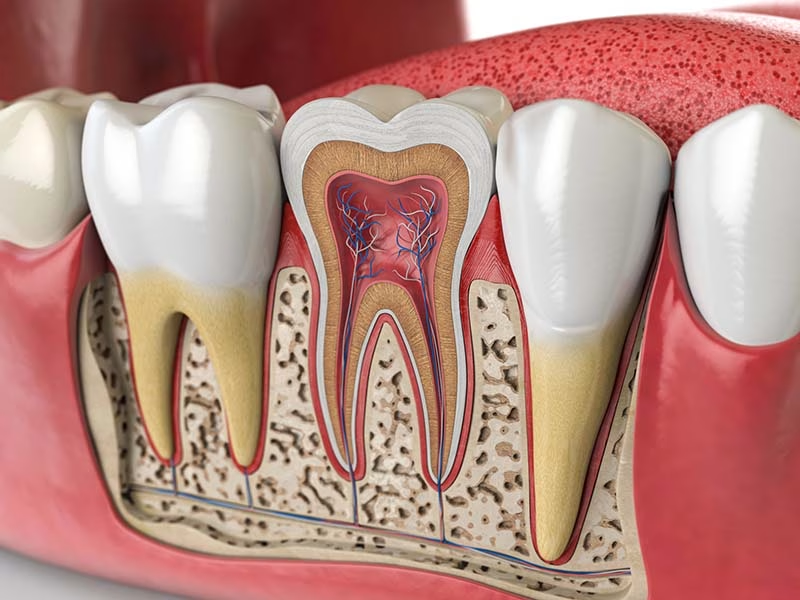
At London Dental Specialists, we understand parents' concerns about immature teeth requiring endodontic treatment. Regenerative endodontics offers a minimally invasive solution for young patients under 18 with developing roots. This innovative approach preserves vital stem cells, stimulates bleeding within the canal, and uses biomaterials to encourage natural root development. Unlike traditional root canal therapy, regenerative procedures can achieve success rates of 50-98% with excellent survival rates of 94-100%. Many parents have questions about this specialised treatment option, from candidacy criteria to expected outcomes. Here, we address the most common queries to help you make informed decisions about your child's dental health.
What is regenerative endodontics for immature teeth?
Regenerative endodontics for immature teeth is a specialised dental procedure that aims to restore the function and continued development of teeth with incomplete root formation. The procedure involves minimally invasive cleaning of the root canal to preserve vital stem cells, stimulation of bleeding to form a blood clot within the canal, and the application of biocompatible materials to promote cell differentiation and tissue regeneration. At London Dental Specialists, this innovative approach helps immature permanent teeth continue their natural root development rather than simply filling the canal with artificial materials.
Who is a good candidate for regenerative endodontic procedures?
The ideal candidates for regenerative endodontic procedures are typically:
- Patients under 18 years of age when root development is still in progress
- Individuals with teeth that have immature roots and open apices
- Patients with teeth affected by trauma, infection, or developmental anomalies
- Cases where conventional root canal treatment might compromise the long-term prognosis of the tooth
Our specialists at London Dental Specialists will thoroughly assess each case to determine if regenerative endodontics is the most appropriate treatment option.
What are the benefits of regenerative endodontics compared to traditional root canal treatment?
Regenerative endodontics offers several advantages over traditional root canal treatment for immature teeth:
- Promotes continued root development and thickening of dentinal walls
- Restores the natural defence mechanisms of the tooth
- Maintains tooth vitality and responsiveness
- Reduces the risk of future root fractures
- Provides a more biological approach to treatment
- Potentially offers better long-term outcomes for immature teeth
At London Dental Specialists, we prioritise these biological approaches when appropriate to ensure optimal dental health outcomes.
What is the success rate of regenerative endodontic treatment?
Regenerative endodontic treatment has demonstrated impressive clinical outcomes. Research indicates overall success rates ranging from 50% to 98%, with survival rates between 94% and 100%. Success is typically measured by resolution of symptoms, continued root development, and restoration of tooth function. At London Dental Specialists, our experienced endodontists utilise the most current techniques and materials to maximise treatment success for each individual patient.
What does the regenerative endodontic procedure involve?
The regenerative endodontic procedure at London Dental Specialists typically involves:
- Thorough diagnosis and treatment planning
- Local anaesthesia administration for patient comfort
- Gentle disinfection of the root canal system using antimicrobial solutions
- Stimulation of bleeding from the periapical tissues into the canal
- Formation of a blood clot that serves as a scaffold for new tissue growth
- Placement of biocompatible materials (such as calcium silicate cements) to seal the canal
- Final restoration of the tooth to protect the regenerative process
The procedure is minimally invasive and designed to preserve the tooth's natural healing potential.
How long does recovery take after regenerative endodontic treatment?
Recovery after regenerative endodontic treatment is generally straightforward. Most patients experience minimal discomfort that can be managed with over-the-counter pain relievers if needed. Initial healing occurs within a few days, but the biological regeneration process continues for months to years. Patients can typically return to normal activities immediately after treatment. Our team at London Dental Specialists provides comprehensive aftercare instructions and schedules appropriate follow-up appointments to monitor the healing and development process.
What alternatives exist if regenerative endodontics isn't suitable?
If regenerative endodontics isn't suitable for a particular case, alternative treatments for immature teeth may include:
- Apexification - a procedure to create an artificial barrier at the root end
- Vital pulp therapy techniques such as partial or complete pulpotomy
- Conventional root canal treatment with special techniques for open apices
- In some cases, extraction and replacement with implants (typically only in older patients)
At London Dental Specialists, we thoroughly evaluate each case and recommend the most appropriate treatment option based on the specific clinical situation and the latest evidence-based practices.
How often will follow-up appointments be needed after regenerative endodontic treatment?
Follow-up appointments are essential to monitor the success of regenerative endodontic treatment. Typically, patients will need to return for evaluation:
- 3-4 weeks after the procedure for initial assessment
- 3 months post-treatment to evaluate early healing
- 6 months post-treatment to assess continued development
- Annually thereafter for at least 2-4 years to monitor complete root formation
At London Dental Specialists, we create personalised follow-up schedules based on each patient's specific needs and healing progress, ensuring optimal outcomes through careful monitoring.
Is regenerative endodontic treatment painful?
Regenerative endodontic treatment at London Dental Specialists is performed under appropriate local anaesthesia, ensuring patients experience minimal discomfort during the procedure. Most patients report little to no pain during treatment. Following the procedure, mild discomfort may be experienced for 1-2 days, which can typically be managed with over-the-counter pain relievers. Our specialists prioritise patient comfort throughout the entire treatment process and provide detailed instructions for post-operative care to minimise any potential discomfort.
Can’t find the answer to your Regenerative Endodontics for Immature Teeth questions here? Always feel welcome to
contact us with your Regenerative Endodontics for Immature Teeth questions and concerns.