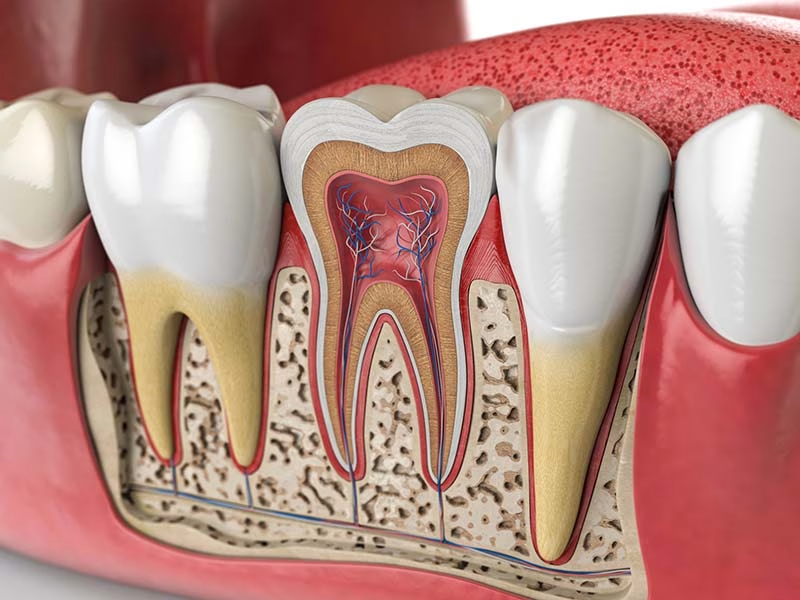
Retrograde filling for apical sealing is a specialised endodontic procedure offered at London Dental Specialists when conventional root canal therapy hasn't been successful. This surgical approach involves creating a small incision in the gum tissue to access the root tip directly, removing the infected tissue, and sealing the canal from the apex using biocompatible materials like MTA (Mineral Trioxide Aggregate). Many patients have questions about this procedure, including what it entails, recovery expectations, and why it might be recommended over retreatment options. Our endodontic specialists understand your concerns about saving your natural tooth and will guide you through each step of this precise microsurgical technique designed to eliminate infection and preserve your dental health for years to come.
What is retrograde filling in endodontics?
Retrograde filling is a specialised endodontic procedure performed when conventional root canal therapy has failed. At London Dental Specialists, our endodontists create a small incision in the gum tissue to access the root tip directly. We then remove the infected tissue at the apex of the root and place a biocompatible filling material to seal the canal from the bottom up. This procedure is typically recommended when a traditional retreatment approach cannot adequately address persistent infection.
When might I need a retrograde filling procedure?
You might need a retrograde filling at London Dental Specialists if:
- Previous root canal treatment has failed
- Anatomical complexities make conventional retreatment difficult
- There is persistent infection at the root tip
- A fractured instrument blocks the canal
- The tooth has a post or crown that would be challenging to remove
- Calcification has blocked the canal
What materials are used for retrograde filling at London Dental Specialists?
At London Dental Specialists, we primarily use Mineral Trioxide Aggregate (MTA) for retrograde fillings due to its superior sealing ability and biocompatibility. Other materials that may be used depending on the specific case include Biodentine, Super EBA cement, and glass ionomer cement. Our specialists select the most appropriate material based on your specific clinical situation to ensure optimal outcomes and longevity.
What is the difference between orthograde and retrograde root filling?
Orthograde filling is the conventional approach where the filling material is placed through the crown of the tooth, working down towards the root tip. Retrograde filling, performed at London Dental Specialists, approaches the root from the opposite direction—accessing the root tip surgically and placing the filling material from the bottom up. Retrograde filling is typically performed when orthograde approaches have failed or are not feasible due to anatomical constraints or obstructions in the canal.
Is retrograde filling painful?
At London Dental Specialists, retrograde filling procedures are performed under local anaesthesia, ensuring you feel no pain during treatment. Some mild discomfort, swelling, or bruising may occur after the procedure as the surgical site heals. Our specialists provide detailed post-operative instructions and appropriate pain management recommendations to ensure your comfort throughout the recovery process.
What is the success rate of retrograde filling procedures?
Retrograde filling procedures at London Dental Specialists have a high success rate of approximately 85-90% when performed by our experienced endodontists. Success rates can vary based on factors such as the complexity of the case, the condition of the surrounding bone, and the presence of other dental issues. Our specialists conduct thorough assessments before recommending this procedure to ensure it's the appropriate treatment for your specific situation.
How long does recovery take after a retrograde filling procedure?
Most patients at London Dental Specialists return to normal activities within 1-2 days after a retrograde filling procedure. Complete healing of the surgical site typically takes 1-2 weeks. During this time, you may experience some mild swelling and discomfort, which can be managed with prescribed or over-the-counter pain medication. The gum tissue usually heals fully within 2 weeks, while bone healing around the root tip continues for several months.
What aftercare is required following a retrograde filling?
After a retrograde filling at London Dental Specialists, we recommend:
- Avoiding hard, crunchy foods for a few days
- Taking prescribed antibiotics and pain medication as directed
- Using ice packs to reduce swelling for the first 24 hours
- Rinsing gently with warm salt water 24 hours after the procedure
- Avoiding smoking and alcohol consumption during the healing period
- Attending all scheduled follow-up appointments
- Maintaining excellent oral hygiene while being gentle around the surgical site
How long does a retrograde filling last?
With proper care and regular dental check-ups at London Dental Specialists, a retrograde filling can last a lifetime. The longevity of the treatment depends on maintaining good oral hygiene, attending regular dental examinations, and addressing any new dental issues promptly. Our specialists provide comprehensive aftercare instructions and recommend periodic reviews to monitor the treated tooth and ensure long-term success.
Can’t find the answer to your Retrograde Filling for Apical Sealing questions here? Always feel welcome to
contact us with your Retrograde Filling for Apical Sealing questions and concerns.