Family Friendly & Specialty Dentists in London, UK

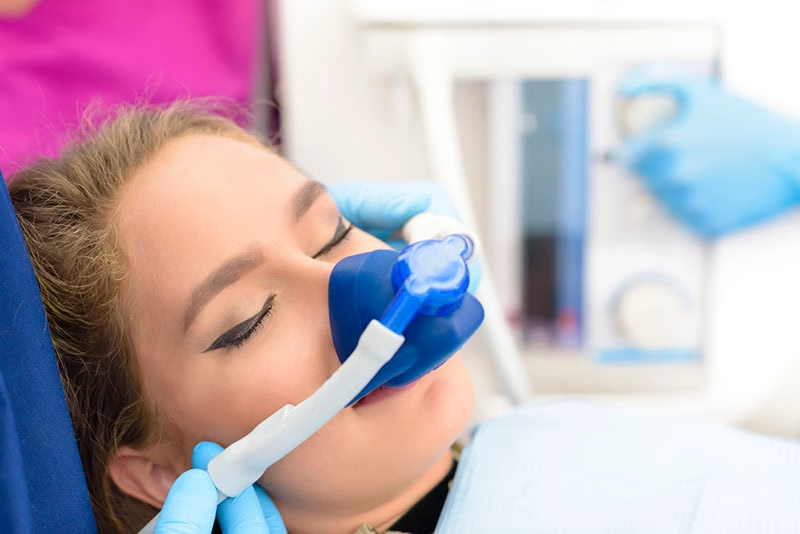
Local anaesthesia provides targeted pain relief whilst patients remain conscious, making it suitable for minor procedures with effects lasting 1-2 hours. General anaesthesia induces complete unconsciousness for complex procedures but carries higher risks requiring trained anaesthetists and extensive monitoring. Selection depends on procedure complexity, patient anxiety levels, and medical history. Local anaesthesia involves lower risk with mild side effects, whilst general anaesthesia requires longer recovery and supervised aftercare. Understanding these differences enables patients to discuss treatment options with their dental team.
How do dentists manage pain during procedures?
Dental anaesthesia encompasses three primary categories tailored to different clinical situations. Local anaesthesia delivers targeted pain relief by blocking nerve signals in specific areas, enabling patients to remain conscious during minor interventions.
Sedation addresses patient anxiety through various methods, including nitrous oxide inhalation, intravenous medications, or oral agents. General anaesthesia induces complete unconsciousness, reserved for complex or lengthy dental procedures requiring specialised monitoring in hospital settings.
Selecting appropriate anaesthesia depends on multiple factors: procedure complexity, patient anxiety levels, and medical history. Local anaesthesia typically activates within 5-10 minutes, providing pain management for routine work.
Sedation offers moderate consciousness with anxiety reduction, whilst general anaesthesia provides complete unconsciousness for demanding treatments. IV sedation is particularly effective for wisdom teeth extraction, allowing patients to experience a twilight sleep state with minimal memory of the procedure.
Dentists carefully evaluate each patient's requirements to determine suitable pain management strategies.
Local anaesthesia represents a commonly used pain management approach in dentistry, providing targeted relief for minor to moderate procedures while maintaining patient consciousness. This anaesthetic method blocks nerve receptors in specific areas, enabling dentists to work comfortably without compromising patient awareness.
Local anaesthesia enables targeted pain relief for dental procedures while preserving patient consciousness and awareness throughout treatment.
The onset typically occurs within 5-10 minutes, with effects lasting 1-2 hours depending on the agent selected. Common local anaesthetics include lidocaine, articaine, and mepivacaine, frequently combined with vasopressors like epinephrine to extend effectiveness.
Administration options include injectable solutions and topical gels, which may reduce injection discomfort. Local anaesthetic agents generally demonstrate favourable safety profiles, though individual responses may vary—side effects can include temporary numbness or mild swelling at injection sites.
For patients experiencing anxiety during dental procedures, nitrous oxide sedation offers an alternative approach that maintains consciousness while providing relaxation alongside local anaesthesia. This targeted pain relief approach makes local anaesthesia a frequently selected choice for routine dental procedures. The suitability of any anaesthetic approach depends on individual patient assessment and clinical judgement during treatment.
The mechanism of pain relief in dental anaesthesia centres on a straightforward physiological principle: blocking nerve receptors at the treatment site prevents pain signals from reaching the brain.
Local anaesthetic agents accomplish this by interrupting neural communication in the specific area where dental procedures occur.
Dentists typically deliver local anaesthetics through injections into gum tissue, with numbness developing within 5-10 minutes. The effect persists for 1-2 hours depending on the agent selected. This targeted approach allows patients to remain conscious and communicative throughout treatment.
Whilst serious complications remain rare, patients may experience temporary side effects including swelling at injection sites, dizziness, or mild discomfort as the anaesthetic wears off. Local anaesthesia is particularly effective for routine procedures like wisdom teeth removal, where maintaining patient consciousness ensures clear communication throughout the extraction process.
These minor reactions typically resolve quickly without intervention, making local anaesthesia a reliable choice for routine dental work.
Sedation offers an alternative approach to anxiety management in dental treatment, ranging from mild relaxation to deep sedation whilst maintaining patient responsiveness.
Nitrous oxide, an inhaled sedative, provides rapid onset and significant anxiety relief while keeping patients conscious.
IV sedation utilises benzodiazepines for deeper relaxation, particularly benefiting those with severe dental anxiety or undergoing complex dental procedures.
Effective sedation protocols require thorough medical history assessments before administration. Practitioners must carefully monitor patients throughout treatment to maintain appropriate standards and minimise potential risks. The choice between sedation types depends on individual patient needs and procedure complexity.
Advanced monitoring systems ensure continuous tracking of vital signs during sedation to enhance patient safety and enable practitioners to adjust medication delivery in real time.
Post-procedure guidelines mandate that patients avoid driving and making important decisions for at least 24 hours, as sedative medications produce lingering effects affecting cognitive function and motor control.
When dental procedures extend beyond moderate complexity or patient cooperation becomes compromised, general anaesthesia provides a necessary alternative to sedation and local anaesthesia. This approach proves essential for lengthy dental surgery, particularly when patients face severe anxiety, disabilities, or medical conditions preventing cooperation.
General anaesthetic induces complete unconsciousness, eliminating pain and discomfort. However, administration demands trained anaesthetists within hospital settings equipped with extensive monitoring equipment. Patients undergoing such procedures require thorough preoperative assessment to identify potential contraindications and medical conditions that might complicate treatment.
General anaesthesia involves certain risks including respiratory complications and extended recovery periods. Consequently, patients need postoperative monitoring and supervised care during their recovery period. Similar to cosmetic procedures like lip augmentation, professional administration by qualified practitioners ensures safety and optimal outcomes.
Despite these considerations, general anaesthesia remains valuable for complex cases where alternative techniques prove insufficient.
Local anaesthesia presents a considerably lower risk profile than general anaesthesia, with serious complications being rare and side effects typically limited to temporary numbness and mild swelling.
General anaesthesia, by contrast, carries higher risks including nausea, dizziness, allergic reactions, and in uncommon cases, cardiac complications.
Effective monitoring during and after general anaesthesia administration is consequently essential, requiring trained personnel, vital sign surveillance, and ready access to resuscitation equipment.
All sedation administered during dental procedures should be delivered by qualified anaesthetists who possess extensive professional qualifications and experience in patient safety protocols.
Because general anaesthesia induces complete unconsciousness and requires suppression of protective reflexes, it carries considerably greater risks than local anaesthesia and demands continuous monitoring of essential signs throughout administration and recovery.
General anaesthetics present complications including nausea, headache, dizziness, and confusion, alongside extended recovery periods. Local anaesthesia typically produces only mild, temporary side effects such as localised swelling or bruising.
Risk profiles differ markedly based on patient health status; those with specific medical conditions require enhanced monitoring during general anaesthesia, whereas local anaesthesia remains suitable for broader patient populations.
The choice between these approaches depends on procedure complexity and patient cooperation. Simpler dental procedures often require only local anaesthesia, while complex cases or anxious patients may necessitate general anaesthetics, though these involve different risk profiles and potential complications.
Throughout procedures involving general anaesthesia, continuous monitoring of vital signs—including heart rate, blood pressure, oxygen saturation, and carbon dioxide levels—remains essential to detect and manage complications promptly.
General anaesthesia carries serious adverse reactions requiring vigilant oversight:
Local anaesthesia presents fewer monitoring demands, though temporary side effects—numbness, swelling at injection sites, rare allergic reactions—warrant attention.
Oversedation during procedures may cause respiratory depression, necessitating appropriate dosing protocols.
Patients receiving either modality require responsible adult accompaniment post-procedure due to impaired judgement and coordination.
Careful pre-operative assessment and continuous monitoring during dental procedures promote optimal patient outcomes across both anaesthetic approaches.
Successful dental anaesthesia requires careful consideration of individual patient characteristics that can considerably affect both safety and efficacy.
Successful dental anaesthesia demands careful patient assessment to ensure both safety and treatment efficacy.
Different risk factors necessitate tailored anaesthetic approaches across special populations.
Older patients often exhibit heightened sensitivity to anaesthetic agents and may require dose adjustments.
Children and individuals with learning difficulties need specialised assessment protocols to ensure appropriate administration.
Those with underlying health conditions, such as cardiovascular or respiratory issues, demand close monitoring during procedures.
Patients experiencing severe dental phobia may benefit from sedation or general anaesthesia to manage anxiety.
For anxious patients, personalised anxiety management strategies tailored during comprehensive consultations can significantly improve treatment outcomes and comfort levels.
Pregnant patients typically receive local anaesthesia preferentially to minimise foetal exposure, whilst general anaesthesia remains reserved for essential cases.
Thorough pre-procedural evaluation identifying these risk factors enables clinicians to select appropriate anaesthetic strategies, promoting optimal outcomes whilst prioritising patient wellbeing.
All treatment decisions should be made following comprehensive clinical examination and assessment by appropriately qualified practitioners.
Proper preparation greatly enhances the safety and success of dental procedures involving anaesthesia. Patients should complete essential pre-procedure preparations by disclosing their medical history, allergies, and current medications to their dentist. This information enables appropriate anaesthesia options selection tailored to individual needs.
Key preparation steps include:
For sedation cases, patients must also arrange for a responsible adult to provide supervision afterwards due to lingering sedative effects. Pre-anesthesia assessments and fasting prior to the procedure ensure that patients are well-prepared for their treatment.
Adhering to these preparation guidelines supports optimal treatment outcomes and facilitates smooth recovery.
Following any dental procedure involving anaesthesia, effective pain management, careful monitoring, and adherence to activity restrictions are essential components of safe recovery.
Patients must understand how to manage post-operative discomfort through prescribed medications or recommended pain relief methods whilst remaining alert to any unusual symptoms.
Clear activity guidelines help prevent complications and allow the body to heal properly, with recovery timelines varying considerably between local and general anaesthesia.
Regular check-ups every 3-6 months are critical for monitoring your oral health and ensuring proper healing after your procedure.
As numbness subsides following local anaesthesia, patients typically experience mild discomfort that resolves within hours.
Effective post-operative care requires adherence to dentist-provided instructions to minimise pain and facilitate recovery.
Pain management strategies include:
Following general anaesthesia, lingering effects may persist longer, necessitating additional rest and supervision.
Patients should monitor for excessive bleeding, increased pain, or swelling—indicators requiring immediate dentist contact.
Maintaining hydration supports recovery, whilst avoiding strenuous activities for 24 hours allows the body to heal properly.
Compliance with post-operative care instructions markedly enhances recovery outcomes.
Close monitoring of essential signs—including heart rate, blood pressure, and oxygen saturation—forms a cornerstone of post-anaesthetic recovery, enabling dental practitioners to detect complications promptly and support patient stability.
Following dental procedures involving sedation or general anaesthesia, patients remain in the recovery area where continuous monitoring occurs until crucial signs return to baseline levels and full consciousness is restored, typically lasting thirty minutes to several hours.
Supplemental oxygen is routinely administered to maintain adequate oxygen levels during this critical phase. Staff vigilantly observe all measurements, documenting changes and intervening as needed.
Once patients demonstrate stable crucial signs and complete alertness, discharge instructions addressing pain management and warning signs of complications are provided, with recommendations for recovery at home with a responsible adult present.
The extent of activity restrictions following dental procedures depends directly on the type and depth of anaesthesia administered. Patients must follow post-procedure instructions carefully to ensure recovery and minimise complications.
Activity restrictions vary by anaesthesia type:
Patients should report unusual symptoms—prolonged numbness, dizziness, or respiratory issues—to their healthcare provider immediately.
Adhering to recovery time guidelines and pre- and post-procedure instructions regarding food, medications, and rest promotes proper healing.
How can patients help their dental care team fully understand their medical background and concerns? Through effective communication.
Patients should disclose their complete medical history, including allergies and current medications, enabling the dental team to select appropriate anaesthetics tailored to individual needs.
Discussing anxiety or fear about procedures is equally important. This conversation allows dentists to adjust their approach and potentially offer sedation options for enhanced comfort.
Patients should ask about medications used during treatment to understand potential side effects and prepare for aftercare.
Finally, carefully following pre- and post-procedure instructions supports optimal outcomes and smooth recovery.
Open dialogue between patients and their dental team creates a foundation of trust, addresses concerns proactively, and ultimately contributes to more comfortable dental experiences. This collaborative approach is especially valuable when undergoing advanced treatments such as full mouth dental implants, where comprehensive planning and personalized care are essential for success.
Dentists primarily use local anaesthesia for most procedures, including fillings and simple extractions. This approach allows patients to remain conscious whilst numbing the targeted area, typically taking effect within 5-10 minutes and lasting 1-2 hours.
General anaesthesia may be considered for complex or lengthy procedures requiring complete unconsciousness.
Dentists select the appropriate anaesthesia type based on procedure complexity, duration, and individual patient medical history.
Dental procedures employ both local and general anaesthesia depending on procedure complexity and patient needs.
Local anaesthesia numbs specific areas for minor procedures like fillings and extractions, taking effect within 10 minutes and lasting 30-60 minutes.
General anaesthesia induces unconsciousness for complex surgeries or highly anxious patients, requiring hospital settings and longer recovery periods.
Sedation anaesthesia provides an intermediate option for lengthy or anxiety-inducing procedures.
Dentists select the appropriate type based on procedure difficulty, patient health status, and anxiety levels.
UK dentists commonly use local anaesthetics including lidocaine, articaine, and mepivacaine for routine procedures such as fillings and extractions.
These agents numb specific areas whilst patients remain conscious, typically taking effect within several minutes and providing numbness for a period of time.
For patients experiencing dental anxiety or for longer procedures, sedation options such as nitrous oxide or intravenous sedation may be available.
Selection of anaesthetic depends on individual patient needs, medical history, and procedure complexity.
Patients should discuss their specific requirements with their dental practitioner during consultation.
Local anaesthesia represents the most commonly used anaesthetic in dentistry.
Lidocaine, the primary agent, takes effect within 5-10 minutes and provides approximately 1-2 hours of pain relief.
Dentists favour it for minor procedures including fillings, extractions, and cleanings.
A topical numbing agent typically precedes injection to reduce discomfort during administration.
Dental anaesthesia selection depends on procedure complexity, patient anxiety levels, and medical history. Local anaesthesia remains the standard for routine treatments, offering effective pain relief. General anaesthesia may be appropriate for extensive procedures or patients with severe dental phobia. Discussing options with the dental team beforehand helps ensure appropriate pain management and a more comfortable experience. Proper preparation and aftercare can influence recovery outcomes.