Family Friendly & Specialty Dentists in London, UK

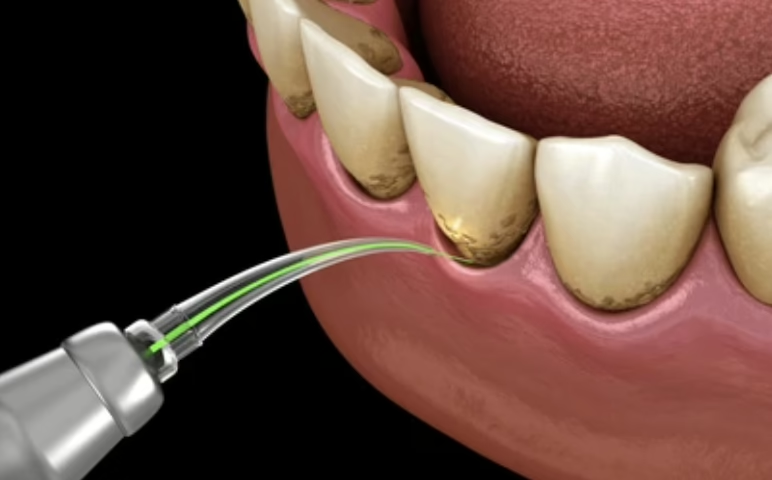
LANAP represents a laser-based treatment option for gum disease, particularly considered for patients with early to moderate periodontal conditions. The procedure targets infected tissue whilst aiming to preserve healthy gum and bone, without requiring traditional cuts or stitches. It is designed to support natural healing and regeneration, with the potential for reduced postoperative discomfort and recovery time compared to conventional surgical approaches. A professional evaluation is necessary to determine individual suitability and whether this treatment option aligns with specific clinical needs.
LANAP's innovative approach to gum disease treatment represents a significant departure from traditional surgical methods. The procedure utilises the PerioLase MVP-7 laser to precisely target and eliminate infected tissue without cutting or stitches.
LANAP revolutionizes gum disease treatment with laser precision, eliminating infected tissue without cuts or stitches.
This minimally invasive laser treatment works by stimulating the body's natural healing mechanisms, promoting regeneration of lost bone and gum tissue.
During LANAP, local anaesthesia ensures patient comfort, with most experiencing only a mild warmth and minimal post-procedure discomfort. The laser seals gum pockets with natural blood clots, protecting against reinfection while facilitating healthy tissue reattachment to teeth.
Particularly suitable for periodontal disease patients with gum pockets up to 6mm, LANAP has shown positive results in improving gum health and promoting tissue reattachment, making it a viable alternative to conventional gum surgery. As a minimally invasive laser procedure, LANAP prioritizes patient comfort while delivering the advanced technology and expertise needed for optimal periodontal outcomes.
Gum disease progresses through distinct stages, each with increasing severity and potential consequences for oral health.
Gingivitis, the initial stage, presents with redness and bleeding but may be reversible through proper oral hygiene.
Slight periodontitis introduces deeper gum pockets and early bone loss, requiring professional intervention.
Moderate periodontitis escalates further bone deterioration and may trigger systemic health complications, necessitating prompt treatment strategies.
Advanced periodontitis represents the most severe stage, characterised by significant bone loss, pus formation, and gum recession, dramatically increasing tooth loss risk.
Understanding these stages of gum disease is essential for timely treatment decisions.
Individuals with moderate to advanced periodontitis may benefit from innovative solutions such as LANAP treatment, which can help restore healthy gum tissue and manage periodontal disease progression.
Left untreated, gum disease can lead to serious health issues including increased risk of heart disease, stroke, and complications during pregnancy.
Once a diagnosis of gum disease is established, patients face several treatment options that have been standard in periodontal care for decades.
Scaling and root planing effectively remove plaque and tartar in early to mid-stage cases, whilst traditional surgery like pocket reduction addresses severe disease through cutting and sutures.
However, these approaches present notable limitations. Prescription antibiotics and medicated mouthwashes are limited in their ability to treat advanced cases thoroughly. Traditional gum surgery may not promote regeneration of lost tissue and bone, potentially leading to ongoing complications requiring continuous maintenance.
For advanced cases, the invasiveness of traditional surgery creates extended recovery periods and patient discomfort.
These constraints have sparked interest in minimally invasive laser treatment alternatives like LANAP, which emphasises natural healing and tissue regeneration rather than surgical intervention. A comprehensive consultation with a periodontics specialist can help determine whether scaling and root planing or other advanced treatments are most appropriate for your specific condition.
LANAP distinguishes itself through its precision targeting technology, which the FDA-approved PerioLase MVP-7 laser uses to eliminate diseased tissue whilst preserving healthy gum structures.
The minimally invasive approach eliminates the need for cutting and stitching, resulting in reduced postoperative discomfort and faster recovery compared to conventional surgical methods.
These innovations combine to deliver favourable healing outcomes, as the procedure stimulates natural tissue regeneration in managing periodontal disease. Unlike traditional surgical interventions, LANAP can be integrated into a comprehensive treatment plan tailored to individual patient needs for optimal long-term oral health success.
Precision represents the hallmark of modern periodontal treatment, and the PerioLase MVP-7 laser exemplifies this advancement by distinguishing between healthy and diseased gum tissue based on colour alone.
This precision targeting technology transforms gum disease management through selective treatment capabilities:
The laser's remarkably fine diameter—approximately three human hairs wide—enables minimally invasive treatment with exceptional accuracy.
By focusing exclusively on diseased gum tissue, LANAP may considerably decrease postoperative discomfort and bleeding compared to conventional gum surgery.
This precision targeting approach allows patients to experience faster healing and improved treatment outcomes, establishing laser technology as an advanced periodontal solution.
By eliminating the need for scalpels and sutures, laser-assisted new attachment procedure (LANAP) represents a significant departure from traditional periodontal surgery. This minimally invasive approach selectively targets infected tissue whilst preserving healthy gums, fundamentally changing the patient experience during periodontal therapy.
The precision laser technology minimises trauma to surrounding areas, resulting in treatment with reduced postoperative discomfort and swelling.
Patients may experience faster healing compared to conventional gum surgery, with many able to resume normal activities within days of treatment.
When patients undergo periodontal treatment, the ultimate goal extends beyond infection removal to actual tissue regeneration—a distinction that sets LANAP apart from conventional approaches.
LANAP's potential for improved healing outcomes stems from its ability to promote gum and bone tissue regeneration.
The minimally invasive procedure delivers distinct advantages:
Which patients benefit most from LANAP treatment? Suitable candidates for this minimally invasive periodontal therapy typically have early to moderate gum disease with pocket depths up to 6mm, featuring swollen or bleeding gums. Those experiencing persistent disease despite conventional deep cleanings may find LANAP particularly valuable for tissue regeneration and bone restoration. Diabetic patients and those with medical conditions complicating traditional surgery may benefit from LANAP's gentle approach. Regular dental check-ups can help identify whether patients are suitable candidates for LANAP or other advanced treatment options before disease progression occurs.
| Patient Profile | Characteristic | Potential Benefit |
|---|---|---|
| Early Disease Stage | Pocket depths ≤6mm | May improve outcomes |
| Persistent Disease | Previous conventional treatment | May support regeneration |
| Diabetic Patients | Medical considerations | Minimally invasive option |
| Post-Surgical Candidates | Reduced recovery needs | May support healing |
| Tissue-Focused Goals | Bone preservation desire | Natural restoration approach |
A thorough professional evaluation determines suitability, ensuring LANAP treatment options align with individual periodontal needs and health status. Only a qualified dental professional can assess whether LANAP is appropriate following a comprehensive examination.
LANAP treatment initiates natural tissue and bone regeneration rather than creating new structures instantly, with most patients experiencing noticeable healing within days and returning to normal activities by the next day.
The timeline for complete gum reattachment and recovery typically extends over several weeks, during which the procedure may demonstrate improvement in attachment levels and gum health.
Long-term disease prevention depends on consistent oral hygiene and follow-up care, as LANAP effectively removes infection and slows recession whilst establishing a foundation for sustained periodontal stability.
Regular maintenance through frequent follow-ups at dental specialist offices is essential for monitoring and maintaining implant health and ensuring ongoing implant stability.
Because periodontal disease destroys the supporting structures around teeth, patients often wonder whether treatment can truly restore what has been lost. LANAP laser therapy offers promising regenerative potential through advanced gum treatment mechanisms.
The procedure actively stimulates the body's natural healing processes:
Whilst LANAP doesn't instantly generate new gum tissue, it facilitates recovery through biological support.
Patients may experience gradual improvements in gum stability and health. The treatment supports the reversal of gum recession damage. Over time, enhanced natural recovery processes may result in stronger, more resilient gums capable of resisting further gum disease progression.
How quickly can patients expect to see improvements after LANAP treatment? The LANAP laser treatment may help manage gum disease. Most patients return to normal activities within days, though post-operative sensitivity may temporarily occur and typically resolves with appropriate pain relief.
| Timeline | Milestone | Expected Outcome |
|---|---|---|
| Week 1 | Gum Reattachment Begins | Initial tissue healing initiates |
| Weeks 2-4 | Swelling Reduction | Decreased inflammation may be visible |
| Months 2-3 | Regeneration | Improved overall gum health may be achieved |
Individual results vary and may include reduced gum swelling, decreased pocket depth, and enhanced gum health within weeks to months. The LANAP laser treatment's efficiency in promoting healing time makes it a treatment option for addressing gum disease whilst minimising recovery disruption.
A significant advantage of laser-assisted new attachment procedure treatment lies in its potential to deliver sustained disease prevention rather than temporary symptom relief. LANAP may help promote lasting gum reattachment and help to lower disease recurrence rates when combined with appropriate oral hygiene and maintenance.
Long-term outcomes may demonstrate substantial benefits:
Patients may experience improved overall gum stability that extends years beyond initial treatment.
The procedure's potential effectiveness in stimulating natural healing processes may create barriers against future infection.
These long-term outcomes establish LANAP as a clinically sound investment in oral health preservation, offering patients realistic expectations of potential sustained disease prevention and maintained tooth integrity.
Results vary between individuals and depend on various factors including oral hygiene maintenance and regular professional care.
Your journey towards healthier gums begins with a thorough evaluation that determines whether LANAP is the right choice. During this assessment, a periodontist measures pocket depths to confirm candidacy for this minimally invasive treatment option. Patients with early to moderate gum disease and pockets up to 6mm deep may be suitable candidates for this procedure.
Once approved, local anaesthesia helps ensure comfort throughout the procedure. The laser selectively removes diseased tissue whilst leaving healthy tissue untouched, preserving natural tooth structure.
Following treatment, the laser stimulates blood clot formation, promoting healing and reattachment of gum tissue to the tooth root. This biological response is similar to the healing mechanisms enhanced by Platelet-Rich Plasma Therapy used in advanced gum grafting procedures.
Patients may experience relatively quick recovery time, often returning to normal activities within days. This efficient approach makes LANAP a potential alternative to traditional gum disease treatments.
LANAP can be effective in treating severe gum disease, particularly advanced stages.
The laser targets diseased tissue whilst preserving healthy structures, potentially reducing pocket depths. Clinical evidence suggests this approach may help promote gum reattachment and support in managing disease progression.
This minimally invasive technique requires no incisions or sutures, offering patients enhanced comfort compared to traditional surgical methods whilst supporting natural tissue regeneration and healing.
LANAP (Laser-Assisted New Attachment Procedure) represents an effective approach for severe gum disease.
This minimally invasive technique promotes gum reattachment and regeneration whilst preserving bone structure.
Unlike traditional scaling and root planing, LANAP may address advanced cases involving significant bone loss and deep pockets.
Patients may experience reduced discomfort, faster recovery, and improved outcomes compared to conventional surgical methods, though individual results vary depending on the severity of the condition and patient-specific factors.
LANAP may not be suitable for patients with advanced periodontitis involving extensive bone loss.
Those with uncontrolled diabetes, bleeding disorders, or significant gum swelling may require alternative stabilisation first.
Allergies to laser components or treatments could affect candidacy.
Additionally, not all dental providers offer LANAP treatment.
Patients should consult their dentist to determine whether alternative periodontal therapies might be more appropriate for their specific condition.
Ideal LANAP candidates have early to middle-stage gum disease with periodontal pockets up to 6mm.
They typically experience swollen, bleeding gums or loose teeth despite previous deep cleanings.
Diabetic patients may find this minimally invasive option suitable.
Those prioritising healthy tissue preservation and shorter recovery times may be appropriate candidates.
A professional evaluation determines suitability, as individual circumstances vary and not all patients qualify for the procedure.
LANAP represents a clinically validated alternative to conventional gum disease treatment, offering minimally invasive periodontal care with reduced recovery time. Suitable patients with moderate to advanced periodontitis may benefit from gum regeneration and pocket depth reduction. Outcomes depend on individual healing capacity, commitment to post-treatment maintenance, and professional guidance. Consulting with a qualified periodontist determines whether LANAP aligns with specific clinical needs and health objectives.
