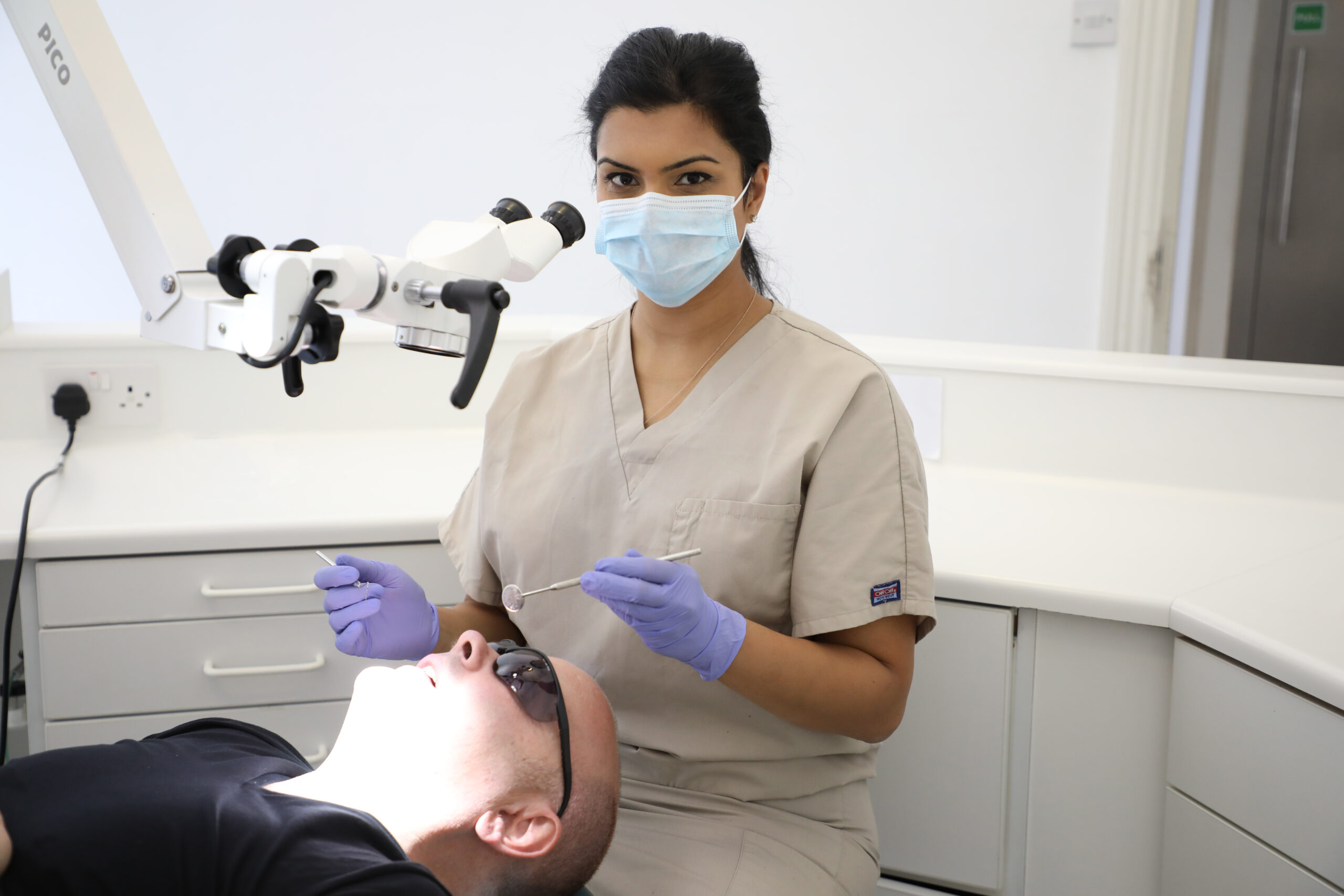
Surgical extractions at London Dental Specialists address complex dental cases where teeth cannot be removed through standard procedures. This might include impacted wisdom teeth, teeth broken at the gum line, or those with unusual root structures. While the thought of surgery may cause anxiety, our specialists use effective anaesthetics to ensure your comfort throughout the procedure. Many patients are surprised by how manageable the experience is. Understanding when a surgical extraction is necessary versus a simple extraction helps set realistic expectations for your treatment journey. Our team carefully evaluates each case to determine the most appropriate approach for your specific dental needs.
How painful is a surgical tooth extraction?
Surgical tooth extractions at London Dental Specialists begin with a local anaesthetic to numb the tooth, gum, and surrounding tissue. You may feel a slight \"bite\" from the needle, but most patients report minimal discomfort that lasts only a split second. During the procedure, you should feel pressure but not pain. After the anaesthetic wears off, some discomfort is normal, but this can be managed with prescribed pain medication. Our specialists ensure your comfort throughout the entire process.
Why would I need a surgical extraction instead of a simple extraction?
At London Dental Specialists, we recommend surgical extractions when:
- A tooth has become impacted with another tooth below the gum line
- The tooth has broken at gum level
- The tooth has an unusual shape making standard extraction difficult
- There are curved or lengthy roots that complicate removal
- The tooth is severely damaged by decay or trauma
- There is significant bone density around the tooth
Our specialists will always assess your specific situation to determine the most appropriate extraction method.
Which teeth typically require surgical extraction?
Teeth that commonly require surgical extraction at London Dental Specialists include:
- Impacted wisdom teeth (third molars)
- Teeth broken beneath the gum line
- Teeth with multiple or curved roots, particularly molars
- Severely decayed teeth with little structure above the gum line
- Teeth with failed root canal treatments
- Teeth affected by advanced periodontal disease
What is the difference between a simple and surgical extraction?
At London Dental Specialists, we perform two main types of extractions. A simple extraction is performed on teeth that are visible and accessible above the gum line, using dental forceps to loosen and remove the tooth. A surgical extraction is more complex and involves making an incision in the gum tissue, possibly removing bone around the tooth, or sectioning the tooth into smaller pieces for removal. Surgical extractions are necessary for impacted teeth or those broken below the gum line.
How long does recovery take after a surgical extraction?
Recovery after a surgical extraction at London Dental Specialists typically takes 7-10 days. Initial healing occurs within the first week, with the extraction site continuing to remodel over several months. Most patients can return to normal activities within 48-72 hours, though you should avoid strenuous exercise for about a week. Complete healing of the socket can take 3-6 months, but you'll be comfortable long before then. Our team provides detailed aftercare instructions to ensure optimal healing.
What should I expect during a surgical extraction procedure?
During a surgical extraction at London Dental Specialists, you can expect:
- Administration of local anaesthetic to ensure comfort
- Creation of a small incision in the gum to access the tooth
- Possible removal of a small amount of bone around the tooth
- The tooth may be sectioned into smaller pieces for easier removal
- Careful extraction of all tooth fragments
- Cleaning of the socket to remove any infection or debris
- Stitches may be placed to help with healing
- Placement of gauze to control bleeding
The procedure typically takes 30-60 minutes depending on complexity.
Are there any risks associated with surgical extractions?
While surgical extractions at London Dental Specialists are generally safe, as with any surgical procedure, there are some potential risks including:
- Dry socket (alveolar osteitis), where the blood clot becomes dislodged
- Infection at the extraction site
- Prolonged bleeding
- Temporary or permanent nerve damage (rare)
- Damage to adjacent teeth or restorations
- Sinus complications for upper molars
Our specialists take every precaution to minimise these risks and will discuss them with you before your procedure.
How should I prepare for a surgical tooth extraction?
To prepare for a surgical extraction at London Dental Specialists:
- Provide a complete medical history, including medications and supplements
- Follow fasting instructions if sedation will be used
- Arrange for someone to accompany you home if you'll be receiving sedation
- Wear comfortable clothing with short sleeves for IV access if needed
- Remove jewellery, contact lenses, and dentures before the procedure
- Stock up on soft foods for your recovery period
- Fill any prescribed medications before your procedure
Our team will provide specific instructions tailored to your situation.
What aftercare is required following a surgical extraction?
After a surgical extraction at London Dental Specialists, proper aftercare includes:
- Biting on gauze for 30-45 minutes to control bleeding
- Taking prescribed pain medication as directed
- Applying ice packs to reduce swelling (20 minutes on, 20 minutes off)
- Avoiding rinsing, spitting, or using straws for 24 hours
- Not smoking for at least 72 hours (ideally longer)
- Eating soft foods and gradually returning to your normal diet
- Gently rinsing with salt water after 24 hours
- Keeping your head elevated while sleeping
- Attending follow-up appointments as scheduled
Following these instructions carefully will promote healing and reduce the risk of complications.
Can’t find the answer to your Surgical Extractions questions here? Always feel welcome to
contact us with your Surgical Extractions questions and concerns.