Family Friendly & Specialty Dentists in London, UK
TMJ surgery treats jaw joint dysfunction that has not responded to other treatment. We assess your suitability during a clinical consultation and, where surgery is the right path, refer you to a hospital maxillofacial team.
The duration of any non-surgical treatment and the referral pathway vary by case. We discuss the specific approach for your situation during your initial consultation.
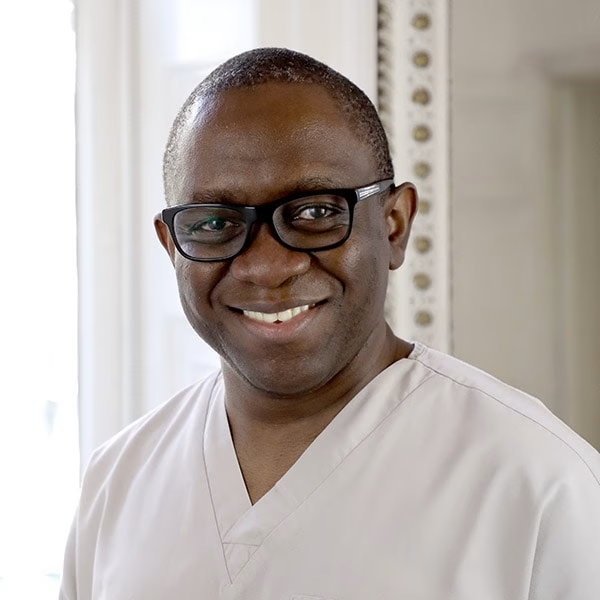
Led by Dr Ope Sodeinde.
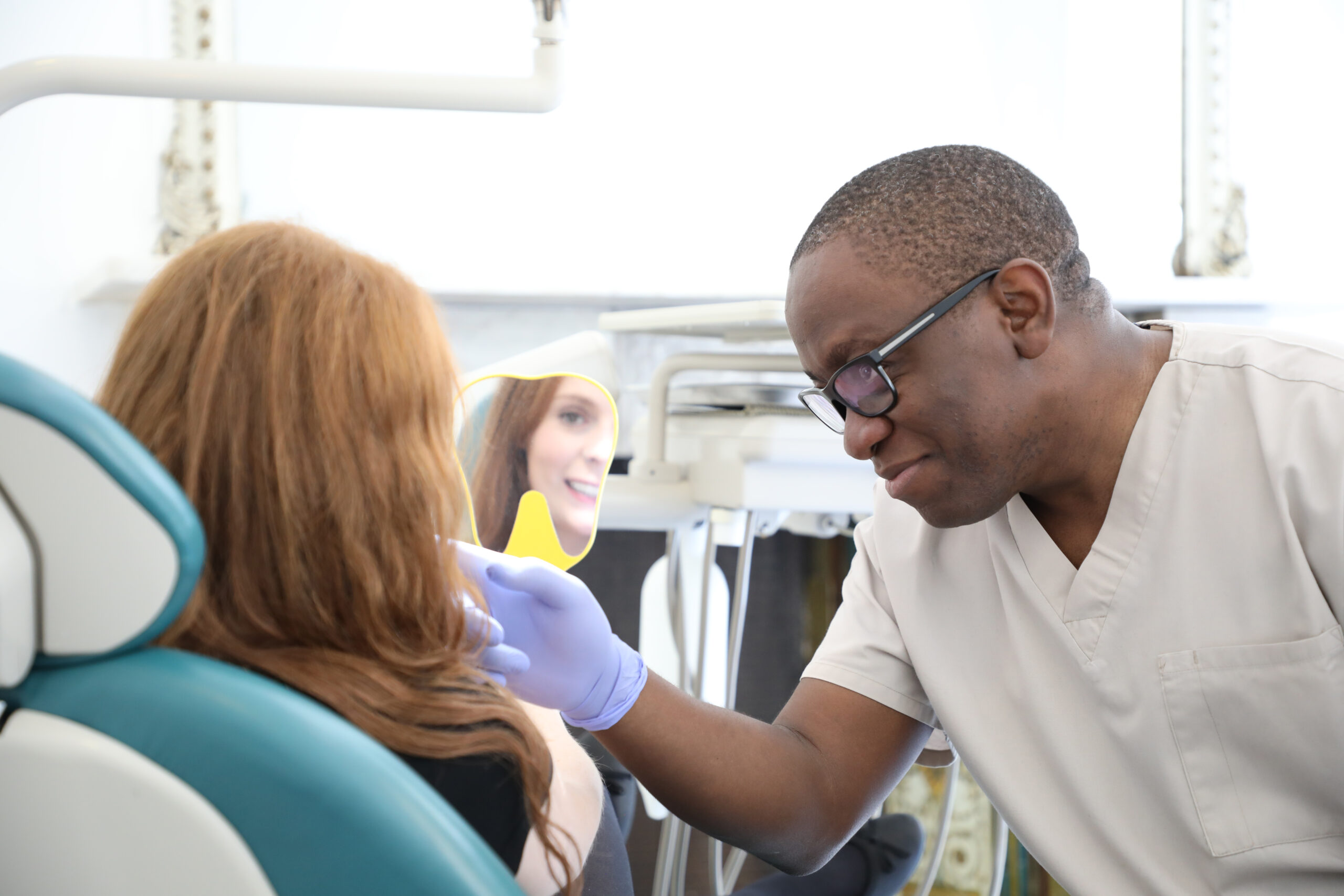
Living with persistent jaw pain often feels like a constant struggle. You may deal with inflammation or abnormalities that make simple movements difficult. We assess this using diagnostic imaging to identify the exact cause of your discomfort. If you need a broader range of oral surgery in London, we follow strict infection prevention protocols at every step.
Not every case requires surgery. We consider a surgical referral only if your symptoms persist despite other treatment. During a consultation, we assess whether surgery is right for you and confirm the diagnosis before referring you on.
Choosing the wrong path for jaw joint pain can lead to unnecessary treatment. We reduce this risk through specialist-led assessment, which confirms your diagnosis before any referral is made. This diagnosis-first approach means you receive the correct next step for your specific joint dysfunction.
We assess complex cases, including those requiring surgical extractions or referral for cyst and tumour removal, at the same visit where relevant. You get a transparent, itemised cost for your assessment so you can make an informed decision without financial surprises.
Leave your number and we will call you back. Nothing is booked until you say so.
Many people feel a sense of discomfort or hesitation when discussing jaw dysfunction. Your assessment determines whether a surgical referral is right for you, as the approach varies based on your specific diagnosis. We also manage other oral surgery needs, such as simple tooth extractions or biopsy procedures, at our Primrose Hill practice.
We understand that the prospect of surgery can be daunting. We discuss every risk, including nerve damage or the severity of a diagnosis, and any comfort options during your visit.
We begin by examining your jaw movement and symptoms. This stage shows whether a surgical referral is needed and identifies the specific cause of your discomfort. We use this clinical review to map out the next steps.
Precision is vital. If a referral is needed, we prepare a detailed clinical summary so your hospital team has the full picture. During this phase, we discuss the timeline and next steps for your care.
Where surgery is needed, a hospital maxillofacial team carries out the procedure to restore alignment and function to the temporomandibular joint. We remain involved in your wider oral surgery needs, including multiple teeth extraction or oral cancer screening, where relevant.
Healing takes time after any surgery. We support your recovery with guidance on movement and care once you return to our practice, working alongside your hospital team as needed.
We conduct a follow-up review to check how your jaw is moving and assess the long-term stability of the joint.
We use 3D imaging technology to plan your assessment and confirm the diagnosis. Your assessment is led by Dr Ope Sodeinde, GDC-registered specialist periodontist (GDC No. 104071), who also carries out surgical extractions, wisdom teeth removal, and multiple teeth extraction where these are part of your wider care.
Fees for your assessment depend on the complexity of your case, and we determine the exact cost during your consultation. Surgical fees, where a hospital referral is needed, are separate and set by the hospital team.
The timeframe depends on your specific case and, where we refer you, the hospital's own scheduling. You will get clarity on the next steps during your initial assessment.
We assess your symptoms and discuss whether a surgical referral is right for you, taking into account your specific anxiety or concerns.
How long any improvement lasts depends on the underlying cause of the dysfunction. We evaluate your eligibility and discuss the likely path during your consultation, which may include bone grafting if necessary.
Determining if you are suitable for this procedure requires a clinical examination. The specialist periodontist assesses your specific anatomy to determine the necessary approach. You can learn what happens at your oral surgery consultation and how to book to get a written assessment.
We provide this assessment as part of our wider range of oral surgery in London.
This includes a range of surgical procedures at our Primrose Hill practice. Depending on your clinical needs, you may require surgical extractions or simple tooth extractions. We also perform multiple teeth extraction and bone grafting. For more complex structural issues, we assess and refer for orthognathic (jaw) surgery and cyst and tumour removal.
You will receive a written plan and an itemised quote from your specialist periodontist, which is yours to keep and use at any other practice.
Real, verified Google reviews from patients of London Dental Specialists.
Your details are used to arrange your appointment and for nothing else.
111 Regent's Park Road, Primrose Hill, London NW1 8UR
Use our contact page if you would rather ask something than book.