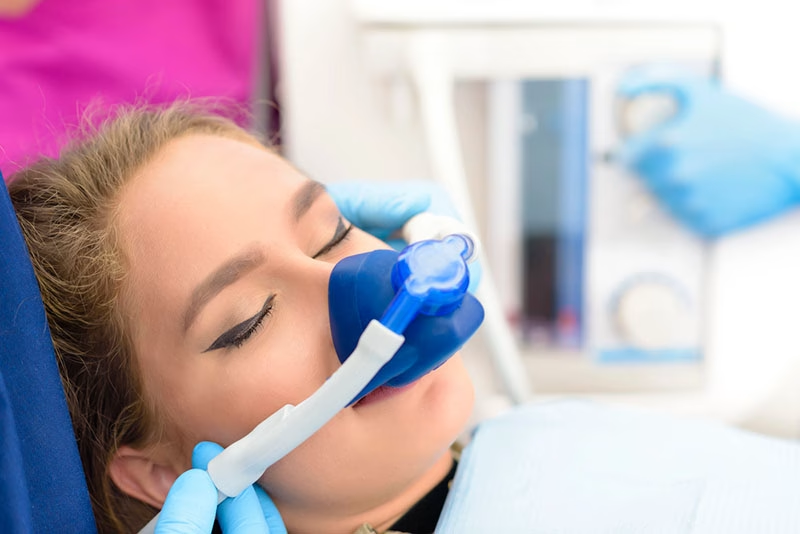
Wondering about nitrous oxide sedation for your child's dental visit? At London Dental Specialists, we understand your concerns. Nitrous oxide, often called laughing gas, is a safe, gentle sedation option suitable for children of all ages. This mild sedative is mixed with oxygen and inhaled through a small mask, helping your child stay calm and relaxed during treatment while maintaining all protective reflexes. Unlike stronger sedatives, nitrous oxide works quickly, wears off rapidly, and allows children to remain awake and responsive throughout their procedure. Many parents choose this option because it effectively reduces anxiety without the deeper sedation effects of other medications. Our specialists are happy to discuss whether nitrous oxide sedation might be right for your child's next dental appointment.
Is nitrous oxide sedation safe for children?
Yes, nitrous oxide sedation is considered very safe for children when administered by qualified dental professionals. At London Dental Specialists, we use nitrous oxide in concentrations up to 50% mixed with oxygen, which provides effective anxiety relief whilst maintaining protective airway reflexes. This form of sedation has an excellent safety profile, takes effect quickly, and wears off rapidly once treatment is complete, allowing children to return to normal activities shortly after their appointment.
At what age can children receive nitrous oxide sedation?
Nitrous oxide sedation can be safely administered to children of various ages, typically from around 4 years old. The determining factor is less about age and more about the child's ability to understand simple instructions and breathe through their nose with a small mask. Our specialists at London Dental Specialists will assess each child individually to determine if nitrous oxide is appropriate for their specific needs and developmental stage.
How does nitrous oxide sedation work for children?
Nitrous oxide sedation works by having your child breathe a mixture of nitrous oxide and oxygen through a small, comfortable nose mask. The gas takes effect within minutes, creating a feeling of relaxation and mild euphoria (hence the nickname \"laughing gas\"). Children remain conscious and can respond to questions, but feel calmer and less anxious about dental procedures. Once the treatment is complete, we administer pure oxygen for a few minutes, which quickly clears the nitrous oxide from their system.
Will my child feel any pain during treatment with nitrous oxide?
While nitrous oxide provides excellent anxiety relief and some analgesic (pain-reducing) properties, it may not completely eliminate pain sensation. For procedures that might cause discomfort, our dentists at London Dental Specialists will still administer appropriate local anaesthetic. The benefit of nitrous oxide is that it helps children remain calm during the administration of local anaesthetic and throughout the entire procedure.
Are there any side effects of nitrous oxide sedation for children?
Side effects from nitrous oxide sedation are rare and typically mild when they do occur. Some children may experience:
- Nausea or vomiting (uncommon, especially if the child hasn't eaten recently)
- Headache (rare)
- Dizziness (temporary)
- Giggly behaviour (common and harmless)
These effects typically resolve very quickly once the nitrous oxide is discontinued. At London Dental Specialists, we carefully monitor all children during treatment to ensure their comfort and safety.
How should I prepare my child for nitrous oxide sedation?
To prepare your child for nitrous oxide sedation at London Dental Specialists, we recommend:
- Giving them a light meal about two hours before the appointment
- Avoiding heavy meals immediately before treatment
- Explaining in age-appropriate terms that they'll wear a special nose mask that will help them feel relaxed
- Informing us of any respiratory conditions or medications your child takes
- Arriving a few minutes early to allow time for your child to become comfortable in our environment
Our friendly team will guide you through any additional preparation steps specific to your child's needs.
How long does the effect of nitrous oxide last?
One of the significant advantages of nitrous oxide sedation is how quickly it wears off. The effects begin to dissipate immediately once the gas is turned off, and we administer pure oxygen for about 5 minutes after treatment. Most children return to their normal state within 5-10 minutes with no lingering drowsiness. This means your child can typically return to school or normal activities immediately after their dental appointment at London Dental Specialists.
Is nitrous oxide sedation suitable for all dental procedures?
Nitrous oxide sedation is suitable for many paediatric dental procedures, particularly for children with mild to moderate anxiety. It works well for routine cleanings, fillings, extractions, and other common dental treatments. However, for more complex procedures or for children with severe anxiety or certain medical conditions, our specialists at London Dental Specialists may recommend alternative sedation options. We assess each child's needs individually to determine the most appropriate approach.
How does London Dental Specialists ensure safety during nitrous oxide administration?
At London Dental Specialists, we maintain the highest safety standards when administering nitrous oxide to children:
- Our dental professionals are specifically trained in paediatric sedation techniques
- We use modern equipment with precise gas delivery and monitoring capabilities
- Each child's vital signs are monitored throughout the procedure
- We maintain appropriate nitrous oxide to oxygen ratios at all times
- A thorough medical history review is conducted before recommending sedation
- We follow strict protocols for administration and recovery
Your child's safety is our absolute priority during every dental visit.
Can’t find the answer to your Nitrous Oxide Sedation for Children questions here? Always feel welcome to
contact us with your Nitrous Oxide Sedation for Children questions and concerns.