Family Friendly & Specialty Dentists in London, UK
Perforation repair seals an accidental opening in the wall or floor of a root canal so that bacteria can no longer pass between the inside of the tooth and the surrounding bone. At your consultation we assess the size and position of the opening before deciding how best to close it. Dr Neha Patel, specialist in endodontics, carries out the repair.
How long the repair takes depends on the size and location of the opening. We give you a timeline for your case after a clinical examination.
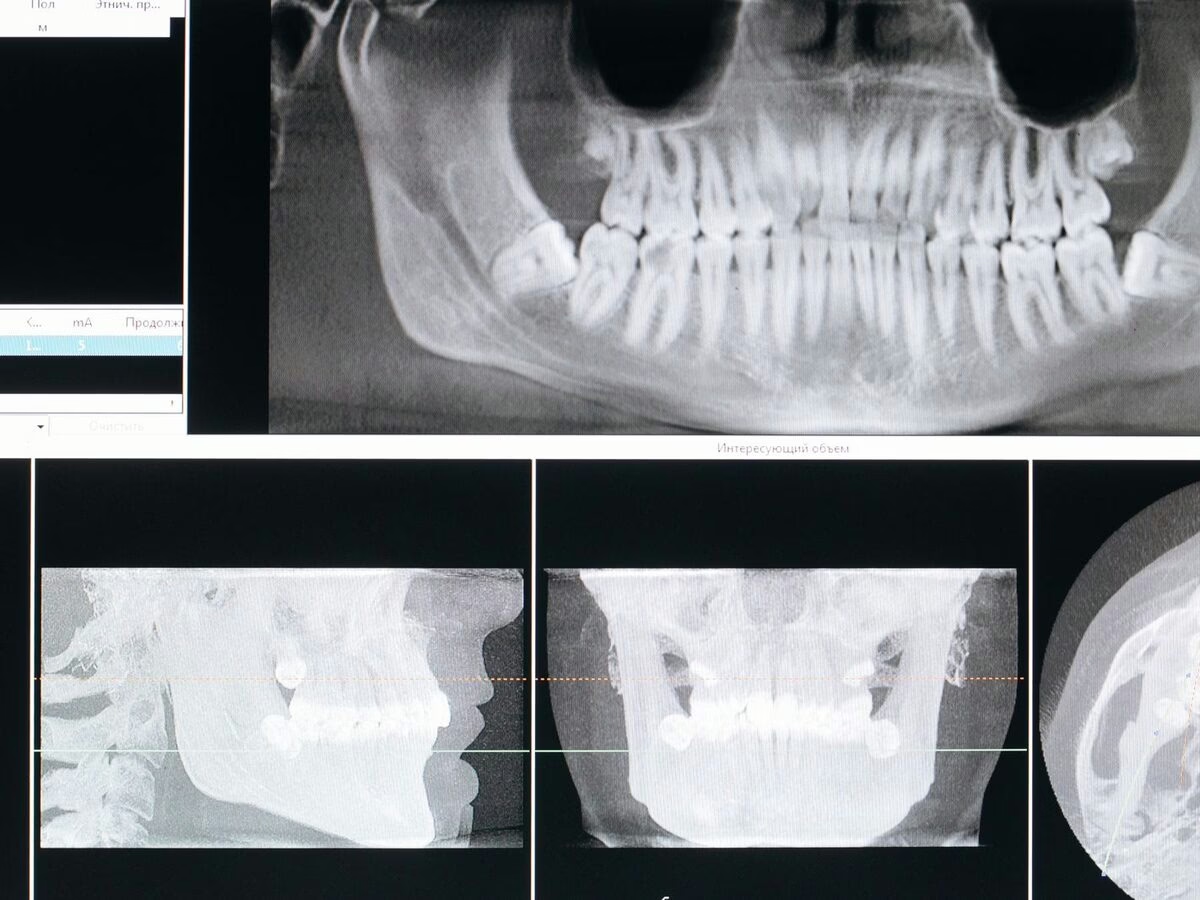
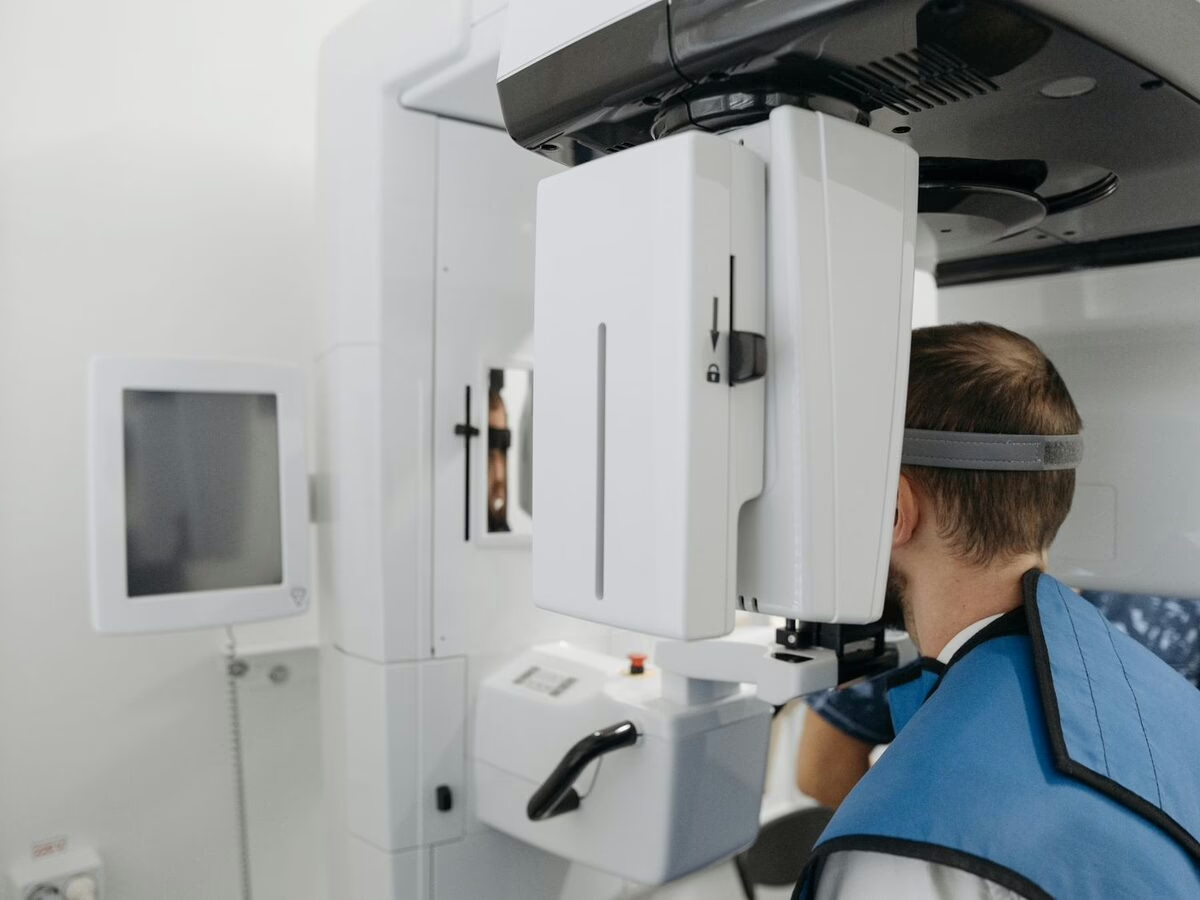
Finding the source of a toothache is often the hardest part. You may have a sharp sensitivity or a dull ache that does not settle, with no obvious cause. We use 3D CBCT imaging to see what is happening inside the tooth and around the root, which lets us find a perforation that a flat X-ray can miss and reduces the need for exploratory treatment. That accuracy is the basis of our plan for endodontics in London, whether the problem turns out to be a perforation, cracked tooth syndrome or a deeper infection.
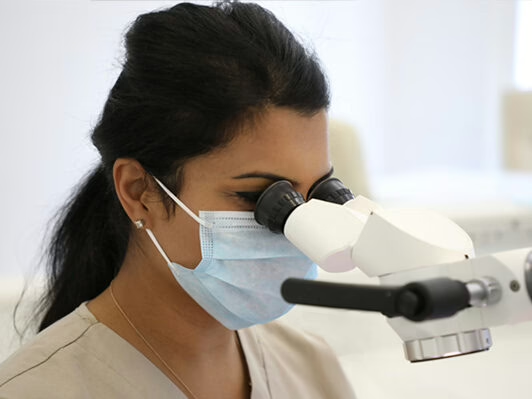
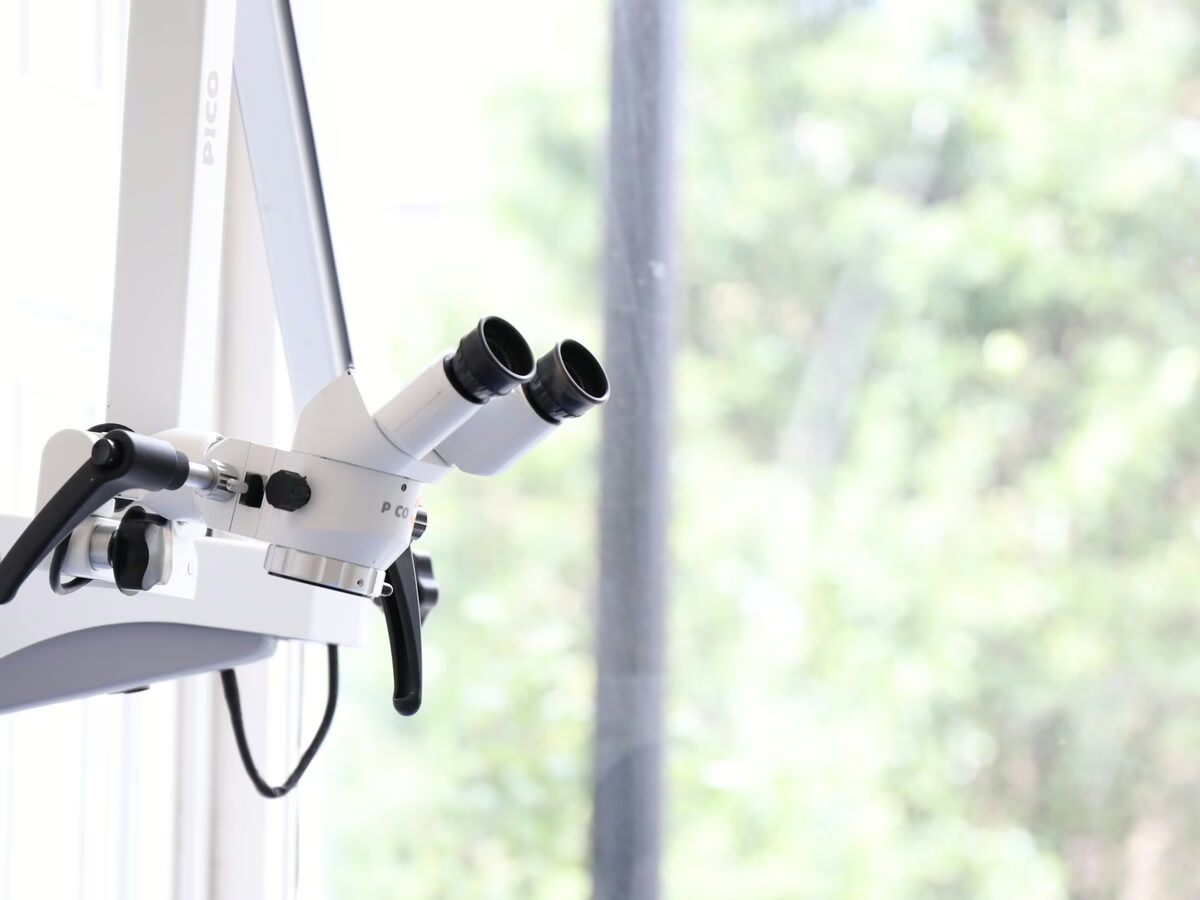
Some teeth need more than a standard root canal. Where a previous treatment has failed or the tooth has been injured, we also provide root canal retreatment and apicoectomy. Dr Patel uses a dental operating microscope to examine incomplete fractures and other internal damage, so we can stop the infection spreading and avoid extraction where the tooth is worth keeping.
Choosing the wrong approach after a root canal complication can cost you the tooth, so we plan first. Dr Patel assesses whether the tooth can be saved by sealing the opening from inside the canal, or whether it needs a more involved procedure such as hemisection for multi-rooted tooth preservation.
Some openings sit in canals we cannot reach from inside the tooth, which is where intentional replantation for inaccessible canal treatment comes in. Others need a retrograde filling for apical sealing to close the root end. Because the diagnosis comes before any price, you receive an itemised quote that explains the cost and the reason for each step before treatment begins.
Leave your number and we will call you back. Nothing is booked until you say so.
An iatrogenic opening is a perforation made accidentally during a previous procedure, most often while a canal was being located or a post space prepared. We treat these cases to resolve the infection around the opening and prevent tooth loss, whether the perforation happened recently or years ago. Many people delay after a treatment has gone wrong. We do not judge anyone for that.
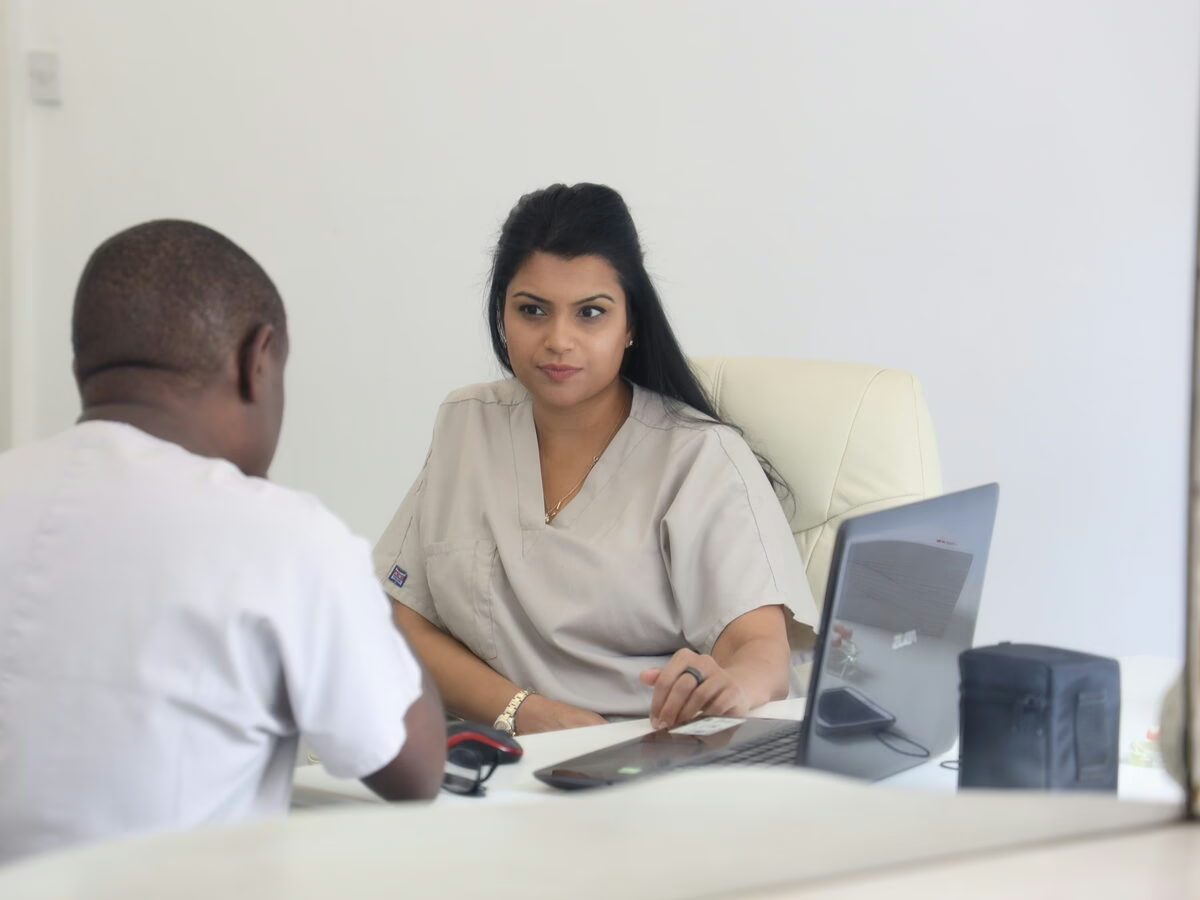
The repair is carried out by Dr Patel, a specialist in endodontics with advanced training in the internal anatomy of the tooth. She assesses each case to decide whether the perforation can be sealed or whether the tooth is no longer viable. We can also explain root canal treatments: which option fits your situation at the same visit.
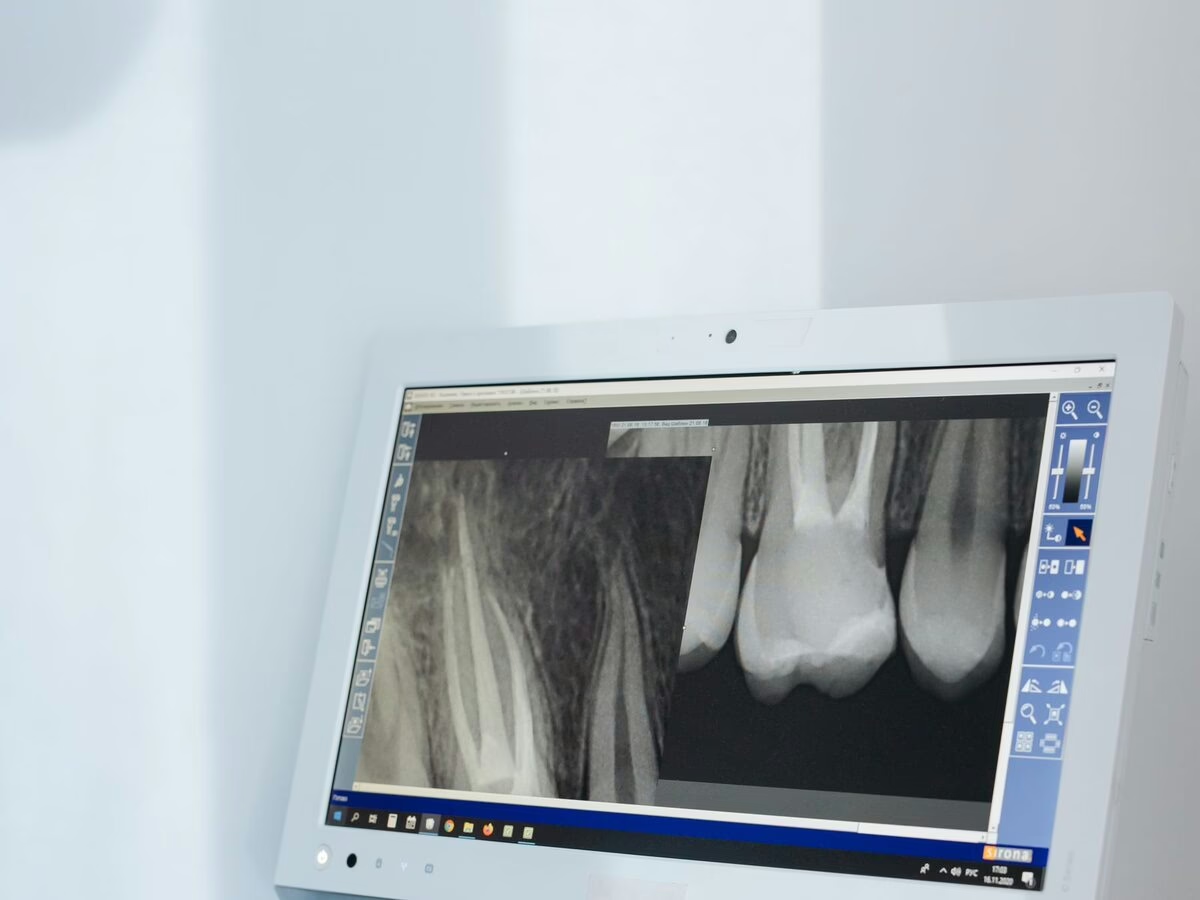
We start by locating the perforation and measuring its size, because a small opening high in the root behaves very differently from a large one near the gum line. This tells us whether the tooth is saveable, and we explain the risks and the likely timeline at this stage.
We plug the opening with a biocompatible repair material that sets against the bone and stops bacteria passing through. Where inflammation persists at the root tip, we may recommend an apicoectomy as a further step.
Once the opening is sealed, we remove any remaining infected pulp tissue and clean the canals so the inside of the tooth can stabilise.
We then build the tooth back up so it can take chewing forces without fracturing, which gives the final restoration a stable base.
We review the tooth after treatment to check that the seal is holding and the bone around the perforation is recovering, then coordinate the permanent crown or filling.
Perforation repair is carried out under an operating microscope with fine instruments and modern repair and disinfection materials. The same magnification is used to diagnose tooth fractures that cannot be seen with the naked eye.
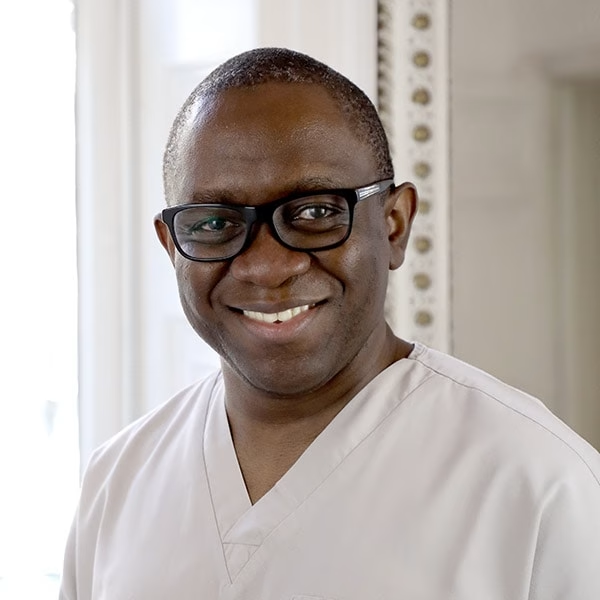
Where a tooth needs it, we also use bioactive materials that encourage a dentine bridge to form over the pulp, and microsurgery where the problem cannot be reached from inside the tooth. Alongside perforation repair, our endodontic work at the Primrose Hill practice includes root canal retreatment, apicoectomy, cracked tooth treatment, dental trauma care and luxation management. The practice is led by Dr Ope Sodeinde, GDC-registered specialist periodontist (GDC No. 104071).
People who come to us after a complication usually want an unhurried explanation and honest options, without pressure to proceed. That is what a consultation with us is for.
I am normally anxious about dental work but Dr Patel made me feel very comfortable; she kept me updated throughout and reassured me.
If anxiety has made you put off a repair, Dr Patel keeps you informed at each stage of the appointment so you know what is being done and why.
Some small perforations can be managed by a general dentist. The consultation tells you whether the position and size of your perforation call for the magnification and training available in a specialist practice.
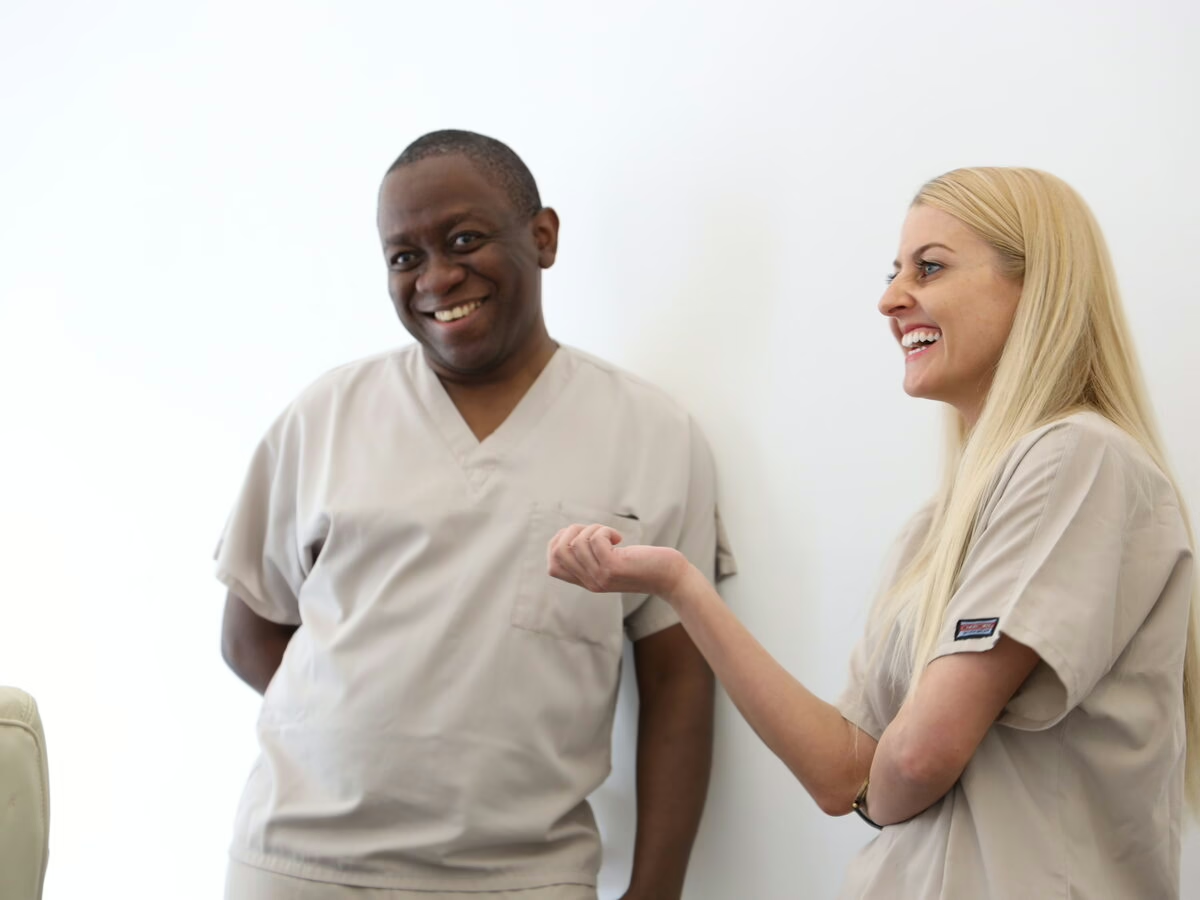
Dr Neha Patel, specialist in endodontics (GDC No. 150517), performs perforation repairs at our practice.
Fees depend on how large the perforation is and where it sits in the root. We give you a cost breakdown at your initial assessment, after we have examined the tooth.
The number of visits and the length of each depend on the extent of the damage. We confirm both at your clinical assessment.
Whether a perforated tooth can be kept is decided at a clinical examination, where we measure the opening and decide the most reliable way to seal it. You can read what happens at your root canal consultation and how to book to get a definitive answer for your case.
Dr Patel manages these repairs at our Primrose Hill practice, 111 Regent's Park Road, London NW1 8UR.
020 7589 7792
A consultation with Dr Patel establishes whether a repair is possible or whether a different endodontic approach is needed. The alternatives for saving a tooth include hemisection for multi-rooted tooth preservation, intentional replantation for inaccessible canal treatment where the canal cannot be reached, and a retrograde filling for apical sealing to close the root end.
You receive a written plan and an itemised quote for your treatment, which is yours to keep and use at any other practice. You can arrange your assessment with Dr Patel to decide the best course of action for your tooth.
020 7589 7792

Real, verified Google reviews from patients of London Dental Specialists.
Your details are used to arrange your appointment and for nothing else.
111 Regent's Park Road, Primrose Hill, London NW1 8UR
Use our contact page if you would rather ask something than book.