Family Friendly & Specialty Dentists in London, UK

Leaving a decayed tooth without root canal treatment can lead to abscess and tooth loss. Dr Ope Sodeinde explains the stages, risks and options in London.
You might be feeling a lingering ache or perhaps you've noticed a cavity but have been putting off the dentist because there is no "real" pain yet. It is common to wonder if a treatment is truly necessary when you aren't in distress, or to worry that a small dental problem has already become a major one. Understandably, many people feel this way, and it helps to know what is actually happening inside the tooth.
Once a cavity burrows past the enamel and dentine, it reaches the soft tissue in the middle of the tooth, the pulp, which is packed with nerves and blood vessels. This is when a dull twinge can turn into a different kind of pain. Bacteria in this area do not stay put; they set up an infection at the root. At this point a filling is no longer enough, and you are into the territory of endodontics, the branch of dentistry that deals with saving the tooth from the inside out through root canal treatment, also known as root canal therapy.
In some cases, you may have deep decay but feel no pain at all. This can happen if the pulp has already become necrotic. This means the nerve has died, which masks the symptoms while the infection continues to multiply and destroy the inner tissue. For example, a patient might arrive for a routine general dentistry examination with a large cavity that looks "quiet," but once the decay is removed, the nerve is exposed or already infected, necessitating prompt intervention to prevent a chronic abscess.
To save the tooth, a specialist like Dr Neha Patel (Specialist in Endodontics, GDC 150517) performs root canal treatment to clean, disinfect, and seal the canals. This procedure, which costs £1200, removes the infected soft tissue to stop the bacteria from spreading further into the jawbone. Without this specialist care, the infection typically leads to severe pain and permanent tooth loss.
A quiet tooth isn't a healed tooth: decay keeps working through the enamel and into the dentine whether or not it hurts. While the speed of this progression varies for every person, the sequence of a decaying tooth generally follows a predictable path of internal destruction.
Once the hard outer enamel is breached, a cavity forms where food and bacteria become trapped. Because the dentine beneath the enamel is a softer layer, the decay typically progresses more quickly once it reaches this stage.
As bacteria move deeper, they reach the dental pulp, the soft tissue containing the tooth's nerves and blood vessels. This causes the pulp to become inflamed, which often manifests as a lingering ache or sensitivity to temperature.
Eventually, the infection destroys the nerve and blood supply within the pulp chamber. You may notice the sharp pain suddenly easing or disappearing entirely; however, this is not a sign of recovery, but rather an indication that the nerve has died while the infection continues to spread.
The bacteria travel down the root canal and exit through the tip of the root. This creates a pocket of infected fluid known as an abscess. This can lead to visible swelling in the gums, a persistent bad taste, or a dull, throbbing pressure at the base of the tooth.
The chronic infection begins to damage the surrounding bone and connective tissue that holds the tooth in place, in a way that can resemble the effects of advanced gum disease. As the supporting structure erodes, the tooth may become loose, eventually leading to permanent tooth loss if the infection is not halted.
Understanding this progression helps clarify why a clinical examination is necessary even when a tooth no longer feels painful.
Left untreated, a dead tooth can quietly develop an abscess that may form a gum boil, cause the cheek to swell rapidly, or spread to the neighbouring teeth. These complications often develop even if the initial pain disappears, as the bacteria continue to migrate through the root canal system into the surrounding tissues.
If you experience swelling accompanied by a fever, or if you have difficulty breathing or swallowing, please contact NHS 111 or 999 immediately. For those managing sudden pain or swelling, emergency dental care from emergency dentists in London can provide the necessary urgent assessment.
There's no fixed timeline you can rely on, no "three weeks and you're fine, six weeks and you're in trouble" rule, because decay doesn't follow a schedule and neither does pain. The timeline for a tooth to move from a manageable cavity to a critical infection varies entirely based on your anatomy and the depth of the decay. For some, the process is slow; for others, a tooth can become severely infected and structurally compromised long before any warning signs appear.
It is common to feel that a tooth is "healing" if a sharp ache suddenly vanishes. In reality, this often happens because the nerve inside the tooth has died. This means the source of the infection remains but the "alarm system" has been switched off. A patient might experience this "silent" phase for months, only to have the tooth fracture unexpectedly during a meal or develop a painful abscess once the bacteria migrate into the jawbone. Because of this, the only reliable way to judge the urgency of treatment is through a clinical examination and dental X-rays.
Dental treatment fees (a Root Canal Treatment is £1200) or a genuine fear of dental procedures can make it tempting to delay care until the pain becomes unbearable, and that is a worry many people share. However, waiting for symptoms to reappear often means the tooth has lost more structural integrity, which can complicate the saving process. Whether you are managing a budget or overcoming anxiety, the goal is to identify the infection via imaging before it necessitates more invasive options like tooth extraction.
Not every damaged tooth needs a root canal: a cavity caught before it reaches the nerve can often be cleaned out and closed up with a simple filling instead. Whether a tooth can be saved with a conservative restoration or requires more intensive endodontic work depends entirely on how deep the decay has penetrated.
General guidance suggests that if decay is confined to the enamel and dentine (the outer layers), a filling is usually sufficient. However, once infection reaches the pulp, the central area containing the nerves and blood vessels, the damage cannot be reversed by home remedies, mouthwashes, or antibiotics alone. While these may temporarily manage symptoms, they do not remove the source of the infection.
The following table compares the primary options for managing a decayed tooth based on the severity of the damage.
| Option | When it may suit | What it involves | What to weigh up |
|---|---|---|---|
| Dental Fillings | Decay is limited to the outer tooth structure. | Removing decay and sealing the space with a restoration. | Preserves most natural tooth structure. |
| Pulp Capping | Decay is very close to or barely touching the pulp. | Placing a medicated liner to encourage pulp healing. | A conservative attempt to avoid a full root canal. |
| Root Canal Treatment | Infection has reached the pulp or caused an abscess. | Cleaning the canal system and sealing it to save the tooth. | Retains the natural tooth and prevents extraction. |
Because every tooth's anatomy is different, a dentist must perform a clinical examination and use imaging to determine the exact depth of the decay. You can use this tool to help identify which symptoms might align with these different treatment paths.
The results from the decision tree are a starting point for a conversation with your clinician, not a final diagnosis. While some may wonder if a "large filling" is a sign of a failing tooth, the goal is always to retain as much healthy natural tooth as possible. If the pulp is irreversibly infected, the priority shifts to removing the bacteria to stop the spread of infection to adjacent teeth.
Use this comparison to prepare specific questions for your next appointment regarding the longevity and suitability of each option for your specific case.
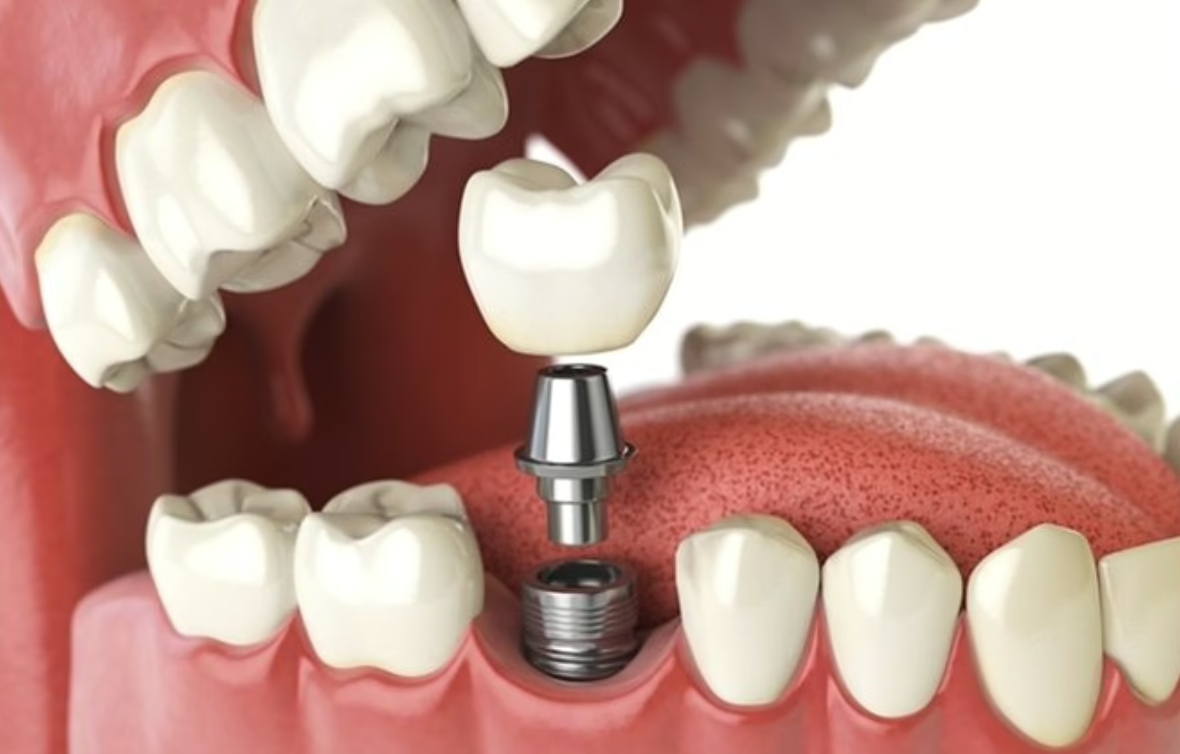
Removing the tooth solves only half the problem, because the empty socket won't stay unchanged for long. When a tooth is removed, the surrounding teeth often begin to shift into the gap, which can alter your bite and put undue pressure on the remaining teeth. To prevent this instability, replacement options such as a bridge, dentures, or dental implants are usually considered to restore both the appearance and function of your smile.
For those who find themselves in this position, London Dental Specialists provides oral surgery in London for removals and dental implants for permanent replacement, the latter of which is backed by a 10-year implant warranty. Depending on the complexity of the case, a non-surgical extraction is £500, while a surgical extraction is £700.
While these restorative options are effective, keeping a natural tooth where it can be saved is often preferable. For example, a patient might be torn between the immediate relief of an extraction and the long-term benefit of a root canal; however, the decision depends entirely on the tooth's structural integrity. If the root is too damaged to support a restoration, removal becomes the only viable path to stop infection.
Dr Neha Patel or Dr Nicky Dehbonei will start by examining the tooth and taking X-rays, often followed by a CBCT scan to map the exact shape of the root canal before any drilling begins. This 3D imaging is essential for understanding the complex anatomy of the root. This ensures the clinician can locate all canals accurately. Once the mapping is complete, the process involves cleaning the infected tissue from inside the tooth, disinfecting the root canals, and sealing them to prevent further bacteria from entering.
For a patient with a deep cavity that has progressed into the pulp, this process saves the natural tooth structure and prevents the need for extraction. Dr Neha Patel, Specialist in Endodontics (GDC registration 150517), performs these root canal treatments, while Dr Nicky Dehbonei, Dentist with a Special Interest in Endodontics, provides expertise in CBCT radiological interpretation. You can use the following table to see how dental treatment fees vary based on the specific tooth being treated.
The dentist will confirm which specific fee applies to your case during the clinical examination. While a standard Root Canal Treatment is listed at £1200, costs are tiered by tooth type, including paediatric dentistry fees for children's teeth: £295 for a baby molar, £775 for a permanent incisor, £825 for a premolar, and £895 for a molar.
In some cases, a previous root canal may have failed, requiring endodontic retreatment at a fee of £1500. If the infection persists at the root tip, a procedure called an apicoectomy may be necessary. For those requiring specialist endodontics in London to address these complex failures, the goal remains to save the tooth and resolve the underlying infection.
Patients often ask us a handful of the same questions once they are in the chair, so here are clear answers.
Yes, it is possible to require endodontic treatment without a visible hole in the tooth. Internal damage can be caused by a deep crack (which may call for cracked tooth treatment), trauma to the tooth (where dental trauma solutions may be needed), or decay that has entered through a gap between teeth. A clinical examination and X-rays are necessary to determine if the internal pulp is infected.
An unfinished root canal leaves the internal channels open to bacteria, which often leads to a new infection or a painful abscess. If a tooth hurts after the procedure is complete, it may indicate a failed root canal that requires further specialist intervention. You should book an appointment for an assessment if you notice new sensitivity or swelling.
While the procedure is designed to remove pain by treating the infection, some patients feel anxious about the process. We offer sedation dentistry to help you feel more relaxed and comfortable during your appointment. Your clinician will discuss the best approach to manage your comfort based on your specific needs.
A root canal is no longer viable if the tooth has suffered a vertical fracture through the root or if there is insufficient healthy tooth structure left to support a restoration. In these cases, the tooth cannot be saved and may require a tooth extraction. A specialist assessment is required to see if the tooth can be salvaged or if an alternative is needed.
Root Canal Treatment is priced at £1200. This fee covers the endodontic procedure required to treat and save a severely damaged or infected tooth. The final treatment plan may include additional restorations, such as fillings, to seal the tooth once the root canal is complete.
The next sensible step is a Root Canal Consultation with the endodontic team at London Dental Specialists in Primrose Hill. Whether you are dealing with a lingering ache that wakes you at night or a tooth that has become silently numb after a period of intense pain, a professional assessment is the only way to determine if the tooth can be saved.
For a patient arriving with a deep cavity and a history of sensitivity to cold, this appointment is where we move from uncertainty to a clear clinical plan. Dr Neha Patel or Dr Nicky Dehbonei will use a clinical examination and imaging to map the root anatomy and identify the extent of the infection. This ensures that the treatment approach is tailored to the specific biology of your tooth.
The Root Canal Consultation is £245. The consultation fee goes towards the cost of any treatment you go on to have with us, so it is not an extra on top. To book your appointment, please call +442075897792 or visit our clinic in Primrose Hill; we suggest bringing a detailed list of your symptoms and any previous X-rays to help the team with your assessment.
Not sure where to start?
Book a consultation with London Dental Specialists. Call +442075897792 or visit london-dental-specialists.co.uk.
Dr Ope Sodeinde, Principal Dentist & Clinical Director, GDC registration 104071 (Specialist in Periodontics), BDS (Hons), MFDS RCS(Ed), MSc Restorative Dentistry, MClinDent Periodontics, MPerio RCS(Ed)
Principal Dentist & Clinical Director; founder and owner of the practice.