Family Friendly & Specialty Dentists in London, UK


Orthodontic treatment can reshape facial structure by repositioning teeth and realigning the jaw, potentially influencing bone growth patterns and facial muscle adaptation. As teeth shift into alignment, facial muscles may adjust to their new positions, which could affect muscle tone and reduce chronic tension. Improved jaw function may help alleviate headaches and enhance facial symmetry. These changes extend beyond dental alignment, affecting soft tissue in the cheeks and lips. Early intervention in children may produce particularly harmonious results. Understanding the full scope of these potential transformations reveals why professional oversight throughout treatment is essential.
Because teeth rely on jawbones for support, their alignment fundamentally shapes facial structure and balance. Misaligned teeth can compromise jaw alignment, triggering cascading changes throughout the face. Conditions like overbites and underbites alter the overall appearance by affecting how the jaw sits relative to the skull.
Misaligned teeth compromise jaw alignment, triggering cascading facial changes that alter overall appearance and structure.
Crowded teeth create additional complications, shifting lip position and narrowing the smile's width. These structural changes ripple through facial appearance, impacting cheekbone prominence and chin positioning.
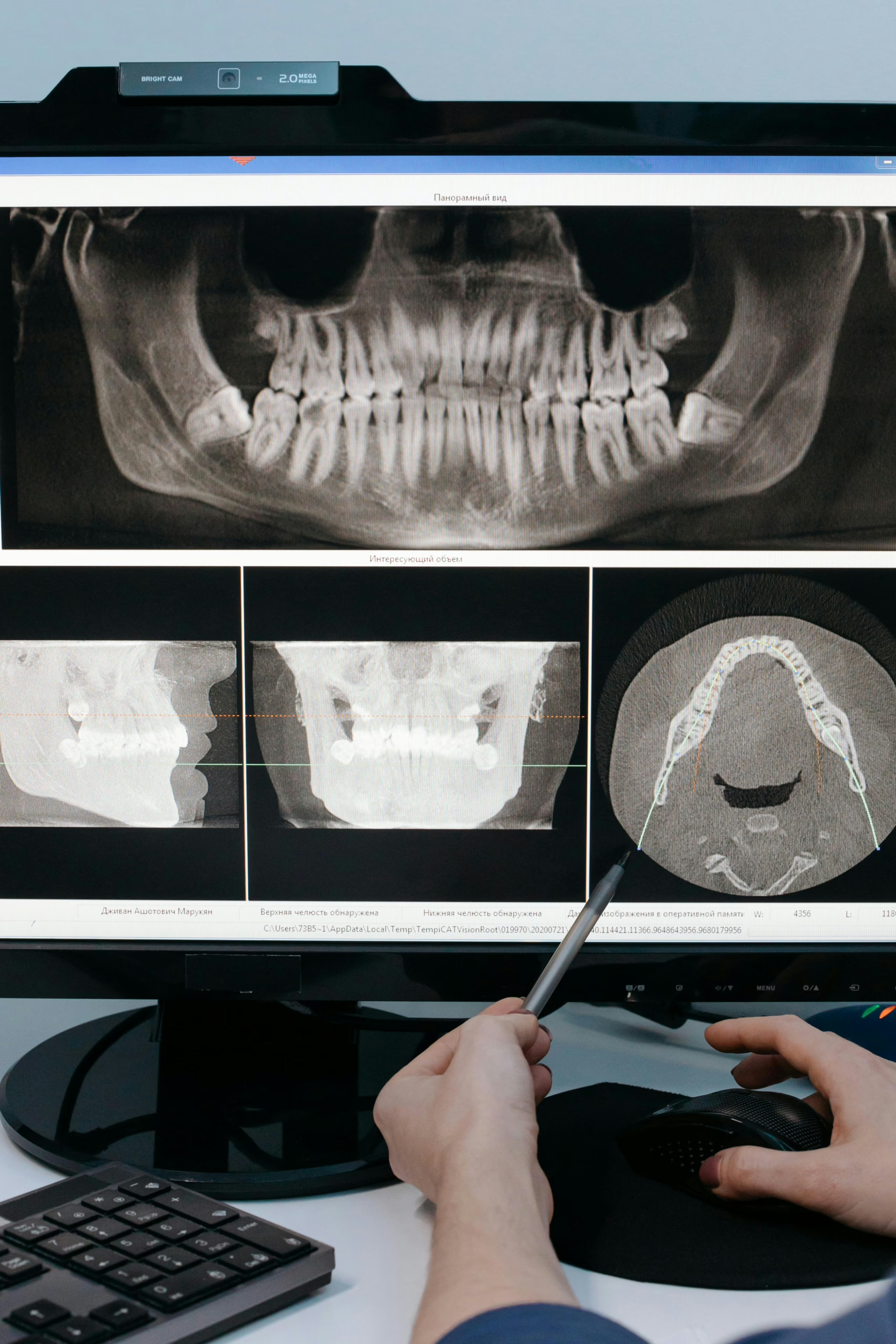
Orthodontic treatment may address these issues by guiding proper teeth alignment. Intervention, particularly during childhood and adolescence, can prove valuable. Advanced 3D imaging technology allows specialists to create customized treatment plans that precisely guide facial development and restore facial symmetry.
Braces and expanders may help direct facial development and restore facial symmetry. By correcting dental misalignment, orthodontics may enhance not merely the smile itself, but the entire facial harmony and overall appearance.
Braces function as precision instruments that reshape more than just tooth position—they can influence jaw alignment and facial structure. Through orthodontic treatment, misalignments like overbites and underbites may be corrected, potentially enhancing facial symmetry and balance.
The influence of braces can extend beyond teeth:
In adolescents, orthodontic intervention can help shape growth patterns during critical developmental periods, potentially allowing for improved overall proportions.
Adults may experience benefits through reduced jaw muscle strain, which can enhance facial expression. Our team of orthodontists and specialists uses advanced 3D imaging technology to precisely plan treatments that address both aesthetic and functional concerns. The transformation demonstrates how strategic tooth repositioning can create improvements throughout the facial structure.
As teeth shift into proper alignment during orthodontic treatment, the facial muscles gradually adapt to new positions, requiring less compensatory effort and strain.
This muscular realignment may bring relief to areas previously burdened by misalignment, allowing the face to settle into a more relaxed and natural state.
Over time, these physical changes can subtly enhance facial expressions, as improved jaw function enables more efficient and uninhibited muscle movement.
When combined with treatments for conditions like underbites, this muscular adaptation can significantly reduce associated jaw pain and headaches caused by improper strain on the facial structure.
When teeth gradually shift into their corrected positions throughout orthodontic treatment, the facial muscles surrounding the jaw and mouth must adjust to accommodate these changes. This muscle adaptation process fundamentally reshapes how facial muscles engage during everyday activities.
As orthodontic treatment progresses, several key transformations may occur:
Through consistent orthodontic adjustments, the surrounding musculature gradually realigns with the new dental positioning.
This coordinated transformation enables facial muscles to work harmoniously, promoting both improved aesthetics and enhanced functional capacity for long-term oral health.
Correcting dental misalignments through orthodontic treatment addresses a frequently overlooked source of facial discomfort: abnormal pressure generated during biting and chewing. By realigning the jaw, orthodontic adjustments may reduce excessive strain on surrounding facial muscles, enabling them to function more efficiently.
This improved jaw alignment allows natural muscle movement patterns to resume, potentially decreasing tension and promoting relaxation. As muscles adapt to their corrected positions, patients may experience reduced jaw pain, headaches, and stiffness.
The restored muscle function can contribute to a more relaxed facial expression and improved posture. Beyond symptom management, ongoing orthodontic care may enhance overall facial muscle health and balance, delivering both functional and aesthetic improvements that extend far beyond straightened teeth.
Beyond the immediate relief of physical tension, orthodontic treatment catalyses a subtle but significant transformation in how facial muscles function and express emotion. As braces gradually realign teeth and correct bite patterns, the facial musculature adapts to these structural changes, resulting in noticeable improvements in expression quality.
The influence of orthodontic correction extends beyond aesthetics, fundamentally altering how muscles interact during emotional expression. This transformation may manifest through:
Patients often report that their ability to express genuine emotion becomes more pronounced as treatment progresses, with proper dental arch alignment supporting unrestricted muscle movement and creating a more balanced, engaging facial presence.
Why do some children develop harmonious facial profiles whilst others struggle with misalignment issues that persist into adulthood?
Early intervention through orthodontic treatment can greatly influence facial development during critical growth periods. By addressing jaw alignment and bite problems during childhood and adolescence, orthodontists guide bone development and enhance facial aesthetics before skeletal maturation completes.
Appliances such as expanders and braces actively shape jaw growth, potentially preventing complex issues later. Initial evaluation during childhood allows monitoring of dental development. Space maintainers are also instrumental in preserving gaps from lost primary teeth and preventing adjacent teeth from drifting, which can reduce crowding and support proper facial development.
Early treatment may help correct crossbites and narrow jaws, potentially improving oral function and facial symmetry.
Beyond physical benefits, addressing these concerns may enhance lip posture and facial profiles, supporting confidence during formative years.
Strategic early intervention can help establish foundations for facial harmony and oral health.
Adult orthodontic patients may experience soft tissue modifications that extend beyond dental alignment, particularly in the temporal and buccal regions where dental movements can influence cheekbone and lip prominence.
The extent of these changes may vary with facial morphology, as individuals with wider, shorter faces may show different responses to aesthetic alterations during and after treatment.
Treatment approach—whether extraction or non-extraction—can shape soft tissue outcomes differently, making it important to assess how each strategy may affect overall facial contours.
Individual responses to orthodontic treatment vary, and a thorough clinical examination is necessary to evaluate potential outcomes for each patient.
For patients seeking comprehensive aesthetic improvements beyond orthodontics, digital smile design technology can help visualize the complete outcome of combined orthodontic and cosmetic dental treatments to achieve optimal facial harmony.
How markedly do soft tissue contours shift when orthodontic treatment alters underlying facial bone structure?
Temporal and buccal changes represent significant soft tissue transformations in adult orthodontic patients. Research demonstrates that modifications to facial bone structure correlate directly with noticeable alterations in cheek and temporal regions.
The extraction group exhibited distinct angular measurements, revealing measurable relationships between tooth removal and soft tissue remodelling around the face.
Key considerations for patients include:
Understanding these temporal and buccal changes helps patients make informed decisions about alignment procedures, particularly when facial aesthetics remain a primary treatment goal alongside dental correction.
Facial morphology emerges as a critical determinant of how soft tissues respond to orthodontic intervention in adult patients. Research demonstrates that adults with wider, shorter faces experience more pronounced soft tissue changes following treatment, suggesting facial proportions greatly influence outcomes.
These alterations manifest particularly in the temporal and buccal regions, where dental arch modifications correlate with observable soft tissue shifts. Notably, tooth extraction—a longstanding concern—does not substantially compromise facial aesthetics as previously feared.
However, the interaction between dental alignment adjustments and existing facial structure remains complex. Understanding these patterns proves essential for orthodontists managing diverse patient populations, as individual face shapes determine susceptibility to changes.
Continued investigation across ethnic backgrounds will refine treatment protocols, ultimately optimising both functional outcomes and facial aesthetics for adult orthodontic patients.
One of the most persistent questions in adult orthodontics concerns whether tooth extraction compromises facial aesthetics. Research indicates that extraction versus non-extraction treatment may yield comparable outcomes in facial aesthetics for adult females undergoing orthodontic treatment.
Key findings from published studies include:
Understanding these facial parameters enables clinicians to consider which patients may require modified approaches. Rather than categorically avoiding extraction, treatment decisions should be based on individual facial geometry and relevant clinical factors.
Orthodontic outcomes vary between individuals, and treatment planning should be tailored to each patient's specific circumstances following a thorough clinical examination and assessment.
Because orthodontic treatment corrects misaligned teeth and bite problems, it can fundamentally improve how facial muscles function and move. When jaws align properly, facial muscles may operate without unnecessary strain, enabling natural movement and relaxed expressions. Orthodontic treatment can improve overall appearance by reducing jaw tension and associated headaches, whilst correct alignment alleviates pressure on facial joints. At London Dental Specialists, personalized treatment plans are developed using advanced diagnostic imaging to ensure optimal functional and aesthetic outcomes.
| Benefit | Impact | Result |
|---|---|---|
| Proper Bite | Balanced muscle function | Enhanced oral function |
| Jaw Alignment | Reduced joint pressure | Improved lower face posture |
| Teeth Positioning | Ideal muscle tone | Better facial symmetry |
| Tension Relief | Decreased strain | More comfortable appearance |
| Muscle Balance | Corrected imbalances | Stronger self-image |
Enhanced oral function may reduce muscle imbalances, positively influencing facial symmetry. Correctly aligned teeth support natural muscle movement, contributing to improved facial changes and a more balanced, aesthetically pleasing facial appearance that enhances confidence and self-perception.
Whilst orthodontic treatment improves muscle function and alignment, patients naturally wonder when they may see visible results in their facial appearance.
The timeline for noticeable differences varies based on individual factors, including age, alignment severity, and treatment adherence. Changes emerge progressively throughout treatment, with subtle improvements beginning within months.
Potential facial changes may include:
Treatment plans account for these progressive changes. As teeth shift into proper positions, the supporting facial muscles and bones adapt accordingly.
This coordinated adjustment can create noticeable differences in facial profile, smile aesthetics, and expression quality. Patients who maintain consistent treatment adherence may experience positive results, though individual outcomes vary. Regular check-ups during orthodontic treatment allow dental specialists to monitor these facial changes and adjust the treatment plan as needed.
How can individuals recognise whether orthodontic treatment might address their specific dental and facial concerns? Several indicators suggest orthodontic care could benefit facial features and jaw alignment.
| Sign | Implication |
|---|---|
| Persistent mouth breathing during sleep | May indicate airway and alignment issues |
| Difficulty chewing or speaking clearly | Signs of misaligned teeth requiring evaluation |
| Facial asymmetry or unbalanced jaw width | Suggests need for assessment |
Early or late loss of baby teeth can signal developmental issues warranting evaluation. Protruding front teeth or receding chin are visible indicators that treatment options might be considered for both functionality and aesthetics. For cases where orthodontics alone may be insufficient, lip repositioning surgery offers an alternative solution for addressing excessive gingival display and improving smile aesthetics. An orthodontic evaluation helps identify whether intervention may be appropriate to address facial features and improve facial structure. Professional assessment determines suitable treatment approaches tailored to individual needs, addressing both cosmetic concerns and underlying structural considerations.
Yes, braces can affect facial structure by repositioning teeth and gradually realigning the jawbone.
This process may influence facial symmetry and jawline definition as orthodontic forces guide bone and muscle adaptation.
Younger patients may experience more noticeable changes since their facial bones remain developmentally active.
Adults may also see subtle improvements in facial harmony and reduced jaw muscle strain, though bone changes occur more gradually than in growing patients.
Orthodontic treatment does not damage faces when properly managed by qualified professionals.
While temporary soft tissue changes may occur during correction, evidence demonstrates minimal long-term impact to facial structure.
Modern techniques, including 3D technology, allow practitioners to monitor and manage treatment progress effectively.
Adults often experience favourable aesthetic improvements, such as enhanced jawline definition, without significant adverse effects on facial anatomy or function.
Orthodontic treatment involves temporary bone remodelling as teeth shift position, but significant bone loss rarely occurs with professional management.
Minor density alterations during treatment typically stabilise after completion with proper dental care.
Patients with pre-existing gum disease face higher risk.
Applying proper orthodontic forces and following care guidelines minimises adverse effects, supporting healthier outcomes.
Yes, braces commonly cause facial pain. The devices exert pressure on teeth and surrounding facial muscles, leading to temporary discomfort that typically peaks within the first few days after adjustment.
Patients may experience jaw soreness, headaches, or general facial pain as muscles adapt to new tooth positions. Whilst usually manageable with over-the-counter pain relievers, persistent or severe pain warrants orthodontist consultation to exclude complications.
Orthodontic treatment can influence facial structure by repositioning teeth, which may affect jaw alignment and facial bones. This process can create changes in facial muscles and soft tissues, with results varying by age and treatment duration. Children may experience more pronounced skeletal changes, whilst adults typically see modifications primarily in soft tissue. Whether pursuing treatment for functional improvement or aesthetic enhancement, orthodontics can offer effects extending beyond tooth alignment.