Family Friendly & Specialty Dentists in London, UK

Is a root canal painful? A London specialist explains what you feel during and after treatment, how numbing works, recovery, fees and what to ask first.
You are likely staring at your calendar, dreading the appointment and wondering if the stories you've heard about root canals are true. It is common to feel a sense of apprehension when a tooth is throbbing, as the fear of the procedure often outweighs the reality of the treatment.
Once the anaesthetic's in, what you'll feel is pressure and vibration, not the sharp stab you're bracing for. Your gums and the tooth itself go numb within a few minutes, so the drilling and cleaning register as dull movement rather than pain. The toothache that sent you here, that's the infection talking, and clearing it out is what actually switches the pain off.
I take care over how the anaesthetic is delivered, so that the injection is as comfortable as it can be. The mechanism of a root canal involves clearing out the pulp, the internal nerve tissue, which is the source of the infection. However, you may find that an inflamed tooth is harder to numb because the sensitive nerve endings in the periodontal membrane around the outside of the tooth can be highly reactive.
If you are wondering what the worst part is, I will be honest: for some, it is the initial injection, and for others, it is simply the fatigue of keeping your mouth open for an extended period. The reality is that the intense pain people fear is usually the infection itself; the treatment is the only way to remove it.
The most concrete thing to remember is that while the procedure is designed to be comfortable, some teeth may remain slightly sensitive to pressure for a few weeks as the surrounding tissues heal.
Underneath the enamel sits a soft core of nerves and blood vessels called the pulp, and once decay, a crack, or a knock to the mouth lets bacteria reach it, that tissue gets infected or inflamed and needs to come out. Root canal treatment removes this damaged pulp, cleans the internal canals, and seals them to prevent further infection. This process aims to save your natural tooth, as the primary alternative is usually extraction.
A dentist's recommendation depends on a clinical examination, but they often suggest this path when a tooth shows signs of deep distress. For example, a patient might experience a lingering sensitivity to hot or cold, pain when biting, or notice a tooth gradually darkening in colour. In some cases, an abscess, a pocket of infection, can form at the root tip, which may cause a bad taste in the mouth or visible swelling. These issues can stem from deep decay or dental trauma, where a physical impact damages the nerve.
You can use the following observations to help identify if your symptoms align with common signs of pulp inflammation.
If you recognise these signs, it is important to have a professional assessment to determine if the tooth can be saved. While general dentists carry out root canals, complex cases may require specialist endodontics in London. At London Dental Specialists, these procedures are performed by Dr Neha Patel (Specialist in Endodontics, GDC 150517, BDS, MFDS RCS(Ed), FHEA, MClinDent (Endo), MEndo RCS(Ed)). If you are experiencing sudden severe pain or facial swelling, please contact emergency dentists in London immediately.
Strip away the anxiety and what's left is a clear sequence, starting with an X-ray and, where the anatomy is tricky, a CBCT 3D scan that Dr Nicky Dehbonei uses to map the canals before any drilling begins. This diagnostic phase ensures the clinician has a precise map of the root system to avoid surprises during the procedure.
Local anaesthetic is administered to ensure the tooth and surrounding gums are completely numb before any work starts. If you feel anxious, let us know, as sedation options are available to help you remain calm.
Once the area is numb, the dentist makes a small opening in the crown of the tooth. This allows them to reach the pulp chamber and the root canal system safely.
Using small, specialised instruments, the clinician removes the infected or damaged pulp and nerve tissue from inside the tooth. If a dental abscess is present, it may be drained at this stage to relieve pressure and infection.
The empty canals are meticulously cleaned, disinfected, and shaped. This process removes all remaining bacteria and prepares the internal space to receive a filling material.
The canals are filled and sealed through the normal root canal opening. A temporary filling is then placed to seal the tooth between visits.
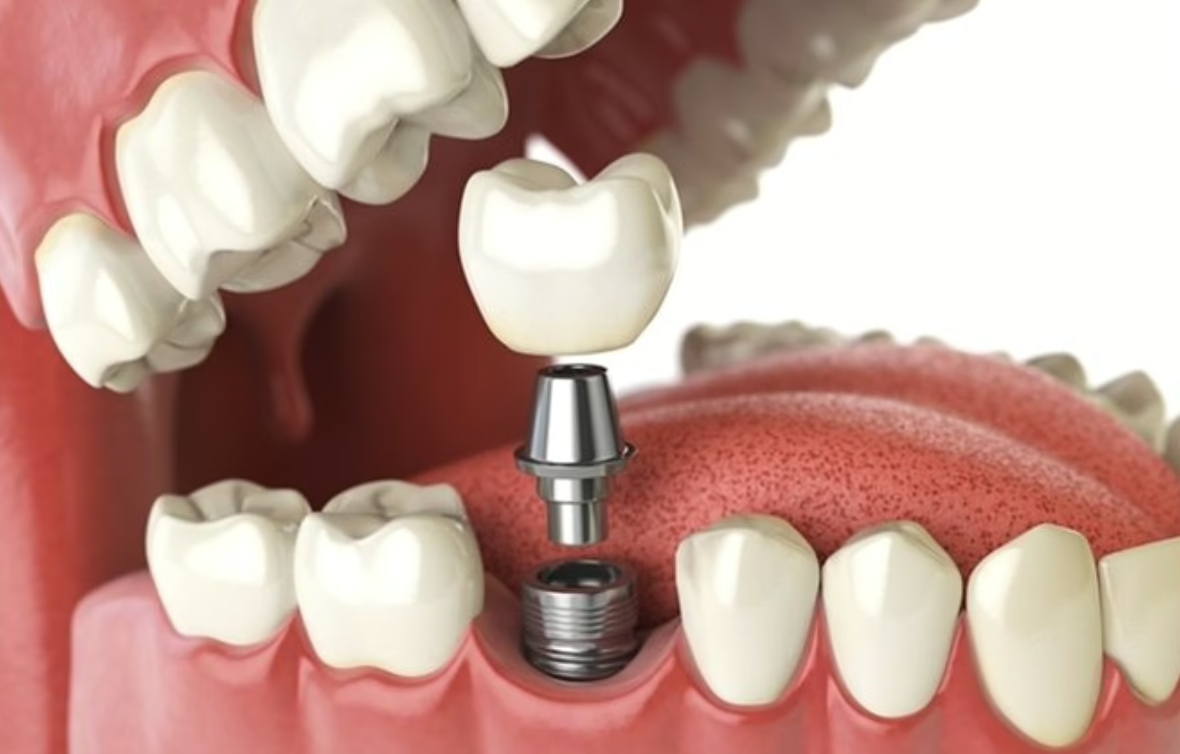
Once the infection is cleared, the tooth is permanently restored. Depending on the level of damage, this may involve a permanent filling or Porcelain Crowns (from £2,500/tooth) to restore the tooth's original shape, size, and strength.
Depending on the complexity of the infection, treatment can take more than one visit, and antibiotics may be prescribed in some cases at the dentist's judgement.
Your clinician will provide a tailored plan based on your specific imaging and symptoms.
The pain most people dread usually belongs to the infected tooth itself, not the treatment that fixes it. While experiences vary, many patients find the process no more uncomfortable than having a routine filling, though those with long-standing infections may find the tooth takes longer to settle.
| Stage | What you may feel | Why it happens | What usually helps |
|---|---|---|---|
| Before treatment | Severe toothache, sensitivity, or throbbing pain. | An infected or inflamed nerve causing pressure inside the tooth. | Professional examination and specialist treatment. |
| The appointment | Mild pressure or vibrations; generally no pain. | Local anaesthesia numbs the area to ensure comfort. | Local anaesthetics and the removal of the infected nerve. |
| First few days after | Tenderness or a "bruised" feeling in the jaw and gums. | The area is healing after the procedure and previous inflammation. | Over-the-counter painkillers (e.g., ibuprofen or paracetamol) if suitable and advised by your dentist. |
| With temporary filling | Bite tenderness when chewing or applying pressure. | The tooth is settling before the final restoration is placed. | Avoiding hard foods on that tooth; following NHS general aftercare guidance. |
Use this table to identify which stage of recovery you are in and determine whether your current sensations are typical or require a follow-up appointment.
Most people feel some tenderness or bruising around the tooth for a few days after the procedure, though if the infection had been brewing for a while, that ache can hang around longer. This sensation is typically different from the original toothache and often settles as the area heals. To protect the tooth while it recovers, chew gently on the opposite side of your mouth and ensure your temporary filling remains intact until your final restoration is placed.
For a patient who has dealt with a severe abscess, the relief from local anaesthesia can be immediate, but the surrounding tissues may remain sensitive for a couple of weeks. You can manage this minor discomfort with over-the-counter options like ibuprofen or paracetamol. To help you monitor your progress and know when to contact the practice, you can use this recovery checklist.
If you notice swelling, a returning bad taste, or a bite that feels "high," it is important to call us. While most patients return to normal activities the next day, pain that worsens rather than eases may indicate a failed root canal, which occurs when pain or infection returns after treatment. In such cases, root canal retreatment is an option to save the tooth. For more detailed instructions on maintaining your oral health during this period, refer to our root canal aftercare guide.
Plenty of patients keep their root-filled tooth for decades, but that tooth is now hollowed out and more brittle than its neighbours, which is why a crown usually comes next to protect it. While the internal infection is removed, the remaining tooth structure is more susceptible to fractures under the pressure of chewing. Maintaining a strict oral hygiene routine matters a great deal to ensure the surrounding gums and bone remain healthy, supporting the tooth's long-term stability.
For example, a patient who has undergone treatment for a deep molar infection may find that the tooth cannot withstand the force of grinding without additional support. To address this, we provide Porcelain Crowns from £2,500/tooth. These are caps placed over teeth to restore shape and size, often needed after root canal treatment, and this restoration is carried out by our specialist.
In terms of general outcomes, the American Association of Endodontists notes that many root canals are successful, with some studies suggesting success rates between 90% and 95%. However, if a treated tooth becomes symptomatic again due to a new infection or a complex root anatomy, Root Canal Retreatment is available at £1500. This option allows the specialist to re-clean and seal the canal to attempt to save the tooth once more.
If you've put off a root canal for years because the thought of the needle alone makes your palms sweat, there are several ways to take the edge off before the specialist even picks up a handpiece. Whether you are dealing with a lifelong phobia or simply a bad experience from a decade ago, your comfort is a priority. If you find the initial local anaesthetic daunting, tell us, and we will take extra care over how it is given.
Depending on your level of anxiety, different sedative options can help you feel more relaxed. For those who would like more support, we provide inhalation sedation (laughing gas) at £350/hour and intravenous sedation at £550/hour.
You can use the following table to see how these different comfort options compare.
The right approach is not a one-size-fits-all solution; it is agreed upon during your consultation based on your specific needs and medical history. While sedation helps manage anxiety and relaxation, it is important to remember that it does not remove all sensation or fear, but rather makes the process more manageable.
To help us tailor the environment to you, we suggest telling your clinician about any past bad experiences before the treatment begins. You might also find it helpful to agree on a "stop signal", such as raising your hand, so you feel in total control of the pace. We encourage you to ask as many questions as you need before we start to ensure you feel safe and informed.
Once you're ready to sort the tooth out, Dr Neha Patel can see you for a Root Canal Consultation at £245. The consultation fee goes towards the cost of any treatment you go on to have with us, so it is not an extra on top.
For those facing a complex case, such as a tooth with curved canals or a previous treatment that has failed, the team provides specialist care to save the natural tooth. Root Canal Treatment is published at £1200, while Root Canal Retreatment is £1500. Clinical root canal work is performed by Dr Neha Patel, Specialist in Endodontics, with Dr Nicky Dehbonei providing expertise in the radiological interpretation of 3D scans.
We recognise that patients have different preferences regarding healthcare providers. NHS availability and fees vary, and you may wish to ask your own dentist or NHS England about available NHS options.
To book your consultation, please contact us at +44 20 7589 7792. We are open Monday to Friday, 08:30 to 18:00.
Patients booking in for root canal treatment tend to ask the same handful of questions, so here they are with straight answers.
No, root canal treatment is a safe and routine endodontic procedure. Its purpose is to remove infected pulp and seal the canal to prevent further bacteria from entering the tooth.
The process varies depending on the complexity of the infection and the anatomy of the tooth. While some cases are completed in one visit, others require several appointments to ensure the canals are fully cleaned and dried before the final filling is placed.
The best way to avoid the procedure is through early intervention for decay and maintaining a strict oral hygiene routine. If a tooth is too severely damaged to be saved, the only alternative is extraction, though this results in the permanent loss of the natural tooth.
Yes, it is possible for an infection to recur if the original seal fails or if a hidden canal was missed. In these instances, a Root Canal Retreatment (fee £1500) is performed to remove the old filling and re-treat the area.
Private treatment at our practice offers specialist-led care with published fees. Root Canal Treatment is £1200, and because these fees are for the procedure itself, a separate consultation is required to assess your specific needs. The consultation fee goes towards the cost of any treatment you go on to have with us, so it is not an extra on top.
Not sure where to start?
Book a Root Canal consultation with London Dental Specialists (£245). Call +442075897792 or visit london-dental-specialists.co.uk. The consultation fee goes towards the cost of any treatment you go on to have with us, so it is not an extra on top.
Dr Ope Sodeinde, Principal Dentist & Clinical Director, GDC registration 104071 (Specialist in Periodontics), BDS (Hons), MFDS RCS(Ed), MSc Restorative Dentistry, MClinDent Periodontics, MPerio RCS(Ed)
Principal Dentist & Clinical Director; founder and owner of the practice.