Family Friendly & Specialty Dentists in London, UK
Implant surgery carries risks and complications like any surgery: infection at the site, an implant that fails to integrate with the bone, damage to a nerve or the sinus during placement, and, later, inflammation of the gum and bone around the implant. This page sets them out plainly. We use 3D imaging at your consultation to identify the ones that apply to you before anything is planned.
Your assessment is carried out by Dr Ope Sodeinde, who decides whether a bone graft is needed before placement to reduce the likelihood of failure.
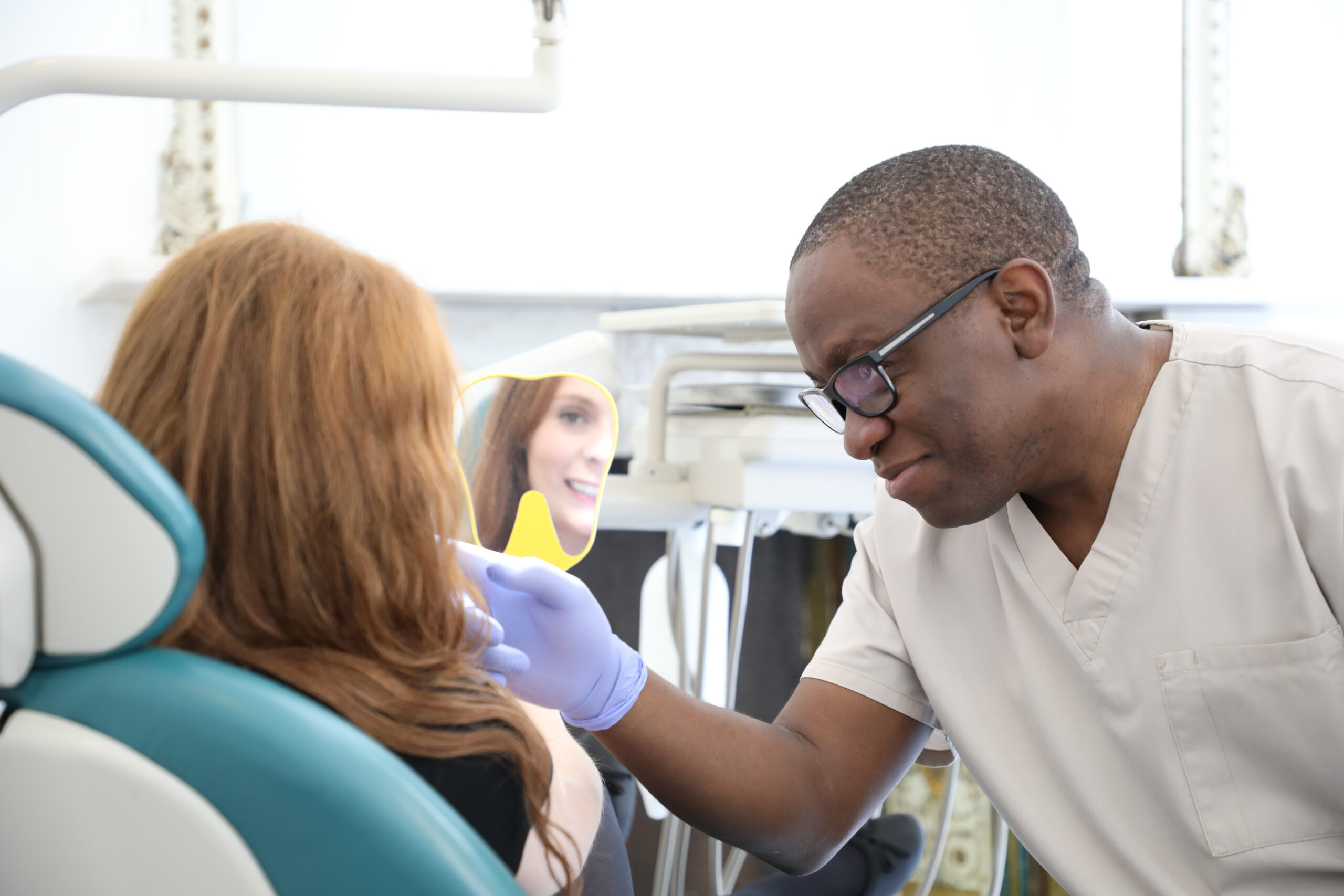
It is normal to wonder what can go wrong. The most common long-term threat is the same one that costs adults their natural teeth: gum disease, which begins as inflammation from plaque and, around an implant, can destroy the supporting bone. Daily plaque removal is your part of preventing it. Our part is diagnosis: we examine and image the jaw before planning dental implants in London, and Dr Ope Sodeinde identifies the specific risks in your mouth at the consultation.
For implants we place, we offer a 10-year implant warranty, subject to its written conditions, which we give you before treatment. It is a commitment about specified implant-related costs, not a promise that nothing will go wrong.
Dr Ope Sodeinde, a specialist periodontist, plans every case to reduce the likelihood of failure. If you have a history of gum infection, we give detailed guidance on implants with gum disease, and you can see how these decisions play out in our patient cases and stories.
Leave your number and we will call you back. Nothing is booked until you say so.
Dr Ope Sodeinde assesses your bone density and gum health to confirm you are a candidate for the implant procedure step by step. The assessment identifies whether the site needs support first, such as grafting for implants with receding gums, so the fixture goes into stable bone.
Find out if you are a candidate on our am I suitable page.
Dr Ope Sodeinde assesses the bone and gum to identify complications before they occur. Where the bone will not support individual implants, a different design such as All-on-4 full-arch implants may manage the anatomical risk better.
Placement is planned on the 3D scan to keep clear of the nerve in the lower jaw and the sinus in the upper jaw, which reduces the chance of post-operative numbness or sinus problems.
We review the implant as it fuses with the bone. This is when early signs of infection or a failure to integrate show, and when they are easiest to deal with.
When the crown is fitted we check the bite, because a restoration that takes too much load can loosen, fracture, or cause bone loss around the implant.
A maintenance plan and regular professional cleaning aim to prevent peri-implantitis, the inflammation around an implant that leads to implant loss if it is not caught.
Clinical decisions are led by Dr Ope Sodeinde, specialist periodontist, who owns the practice and is registered as a specialist in periodontics (GDC No. 104071). Periodontics is the specialty that deals with the gum and bone around teeth and implants, which is where most implant complications arise.
Patients who review us tend to mention a calm, unhurried manner and options explained without pressure, including the risks.
Alongside Dr Ope Sodeinde, the team includes Dr Neha Patel, specialist in endodontics, Dr Kia Papagalani, specialist orthodontist, and Dr Nicky Dehbonei and Dr Lydia Dzhukha, dentists with special interests. That range lets us assess the long-term viability of your treatment, including whether a neighbouring tooth is worth saving instead.
The consultation identifies your risk factors first, and the itemised quote reflects the treatment your case needs. The written warranty conditions set out which implant-related costs are covered if a problem arises.
It depends on what has happened. We give you a guide to caring for implants after surgery, and Dr Ope Sodeinde reviews the site to confirm the implant is integrating as it should.
Inflammation around an implant is peri-implantitis. It is treatable, and the earlier it is caught the better the outcome. If an implant fails or becomes infected, we provide treatment for failing or infected implants.
A risk is something that could happen; a complication is something that has. Dr Ope Sodeinde assesses your bone loss and eligibility at the initial examination so that risks are planned for before they become complications.
Your own risk profile needs a clinical examination. We diagnose first, and establish whether you can proceed to implants or need a grafting sequence beforehand. Sedation is available if dental visits make you anxious. You can see what the £245 consultation includes and how to book it for a clear assessment and an itemised quote.
Knowing the risks is the first step to a good outcome. Related reading covers the implant procedure step by step and how risk is managed during surgery; patient cases and stories; caring for implants after surgery; how long implants last and what shortens that; and the considerations for implants with gum disease.
The consultation ends with a written plan and an itemised quote that you keep, giving a clear record of the visits and costs your case needs. It includes in-mouth x-rays and a complimentary second appointment to discuss the plan.
Local anaesthetic is standard and sedation is available. The £245 consultation fee goes towards the cost of any treatment you choose to have with us; it is not an extra on top. Payment arrangements can be discussed with our staff.
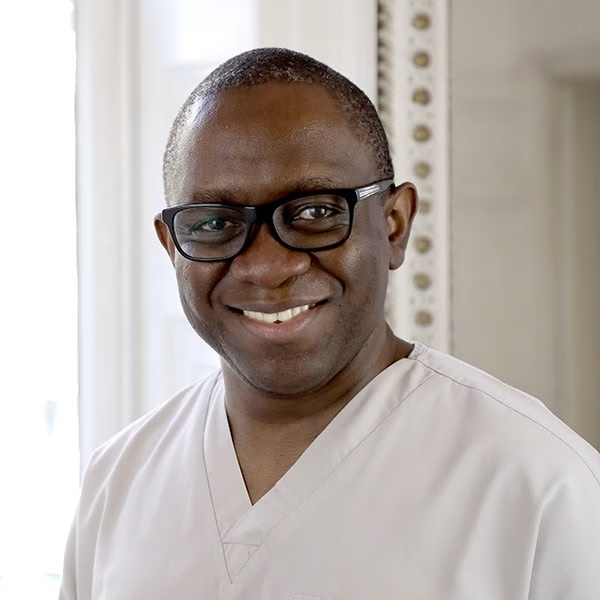
Real, verified Google reviews from patients of London Dental Specialists.
Your details are used to arrange your appointment and for nothing else.
111 Regent's Park Road, Primrose Hill, London NW1 8UR
Use our contact page if you would rather ask something than book.