Family Friendly & Specialty Dentists in London, UK
Most adults with missing teeth are, but the honest answer comes from a specialist consultation with 3D imaging of your jaw rather than from a checklist. That appointment costs £245 and goes towards treatment if you proceed.
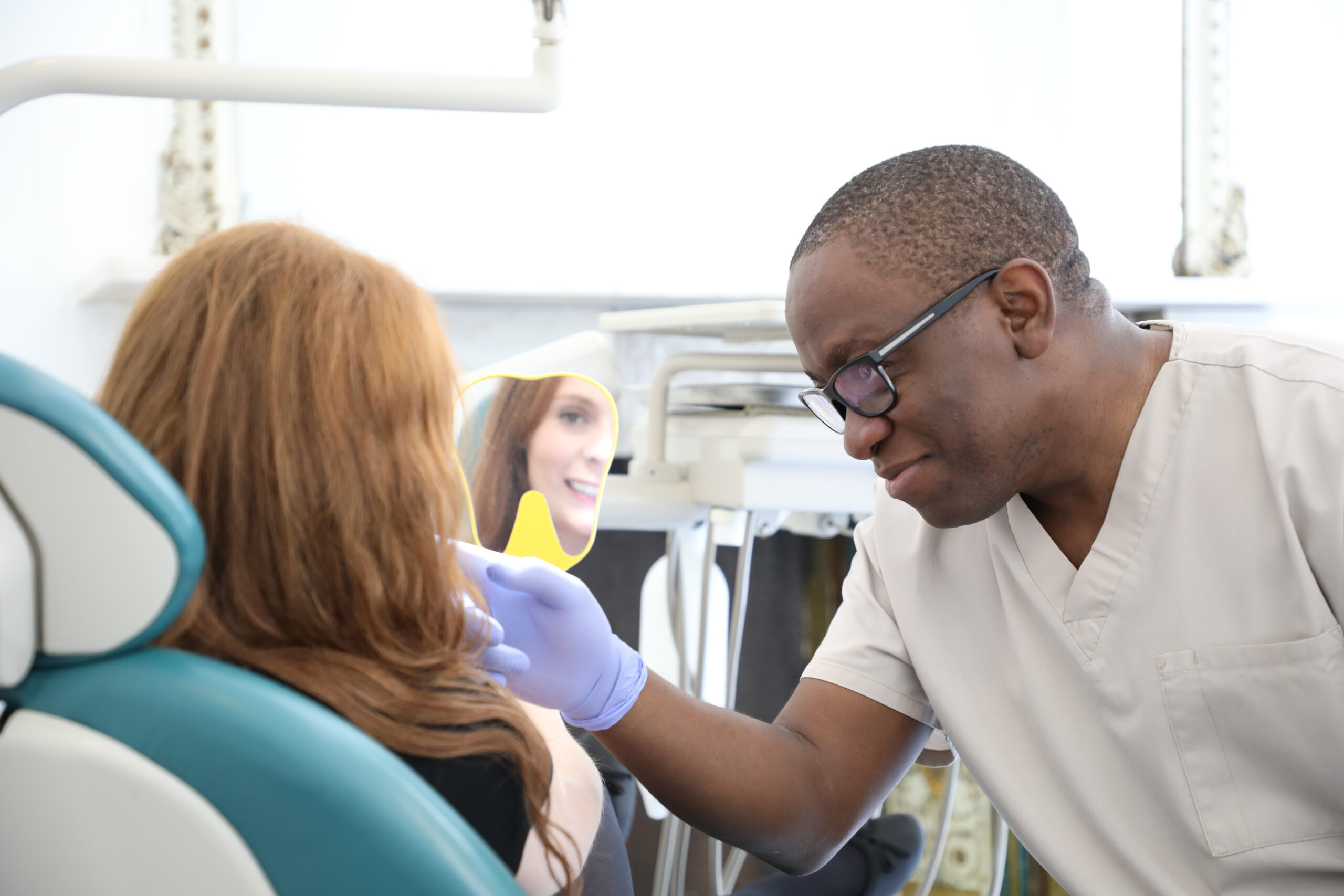
The most common worry is that the jaw cannot hold a replacement tooth, particularly after tooth loss from gum disease, which starts as inflammation from plaque and, left untreated, destroys the bone around the teeth. We assess candidacy for dental implants in London by examining and imaging the jaw. Dr Ope Sodeinde uses the results to decide whether you need a bone graft or a sinus lift to build enough bone for placement; these can sometimes be done at the same visit as the implant. Once fitted, daily plaque removal around the implant is your part of keeping it.
Suitability rests on the health of your jawbone and gums. Dr Ope Sodeinde, a specialist periodontist, examines bone density and any existing gum disease to confirm the site can integrate a titanium post, and identifies any grafting or periodontal work needed first. You can find what dental implants cost, itemised to plan your treatment, and a clear account of the risks and complications of the procedure.
Leave your number and we will call you back. Nothing is booked until you say so.
Embarrassment about missing teeth is a common reason people delay their first visit. The assessment is a clinical conversation about bone density and gum health, nothing more. From it, Dr Ope Sodeinde builds a predictable plan, chooses from the implant systems we place to match your anatomy, and gives you a realistic view of how long implants last given your oral health. It also identifies any preparatory work needed before the posts go in.
Dr Ope Sodeinde examines your jaw structure and gum health and measures whether there is enough bone to hold a post. If there is not, we discuss bone grafting before implants to build a stable foundation.
We check for active infection or chronic inflammation, because an implant placed into unstable gum is at risk from the start. If you have a history of periodontal problems, we give specific guidance on implants with gum disease.
We review your general health and any medication you take. Some conditions and drugs affect how bone heals around a titanium post, and they shape the timing of surgery.
If fear of dental work is part of what has held you back, we discuss sedation for implant surgery at the planning stage.
You can see how different suitability problems were managed by viewing patient cases and stories, including patients with varying degrees of bone loss.
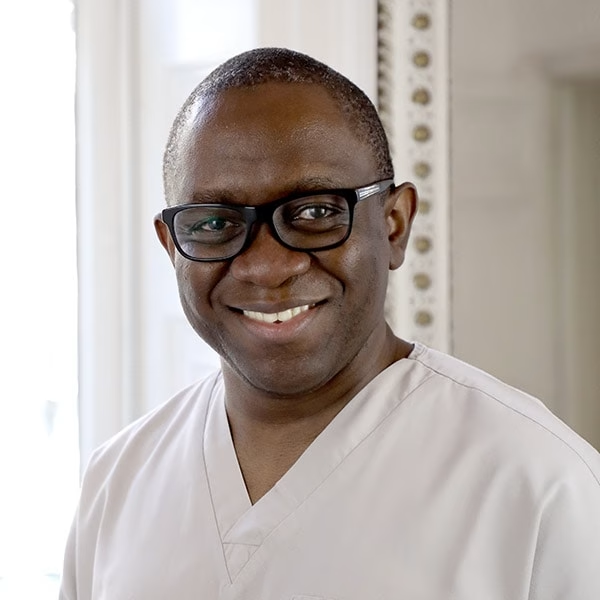
Your care is led by Dr Ope Sodeinde, specialist periodontist, who owns the practice and is registered as a specialist in periodontics (GDC No. 104071). He provides the clinical oversight for every implant placed here.
Alongside Dr Ope Sodeinde, the team includes Dr Neha Patel, specialist in endodontics, Dr Kia Papagalani, specialist orthodontist, and Dr Nicky Dehbonei and Dr Lydia Dzhukha, dentists with special interests. That mix matters for suitability, because saving or moving a neighbouring tooth is sometimes part of making an implant possible.
Patients who review us tend to mention a calm, unhurried manner and options explained without pressure. If you have questions about maintaining your result afterwards, read our dental implants aftercare guide.
You are likely to be if you have missing teeth and enough bone to anchor an implant, or bone that can be rebuilt. Dr Ope Sodeinde examines your bone density and gum health at the assessment; where there has been bone loss, a grafting sequence can often make placement possible.
No. Some medical conditions, uncontrolled gum disease, or too little jawbone can rule treatment out or delay it. The consultation identifies these, and we explain the implant procedure step by step so you can judge whether it fits your health.
Placing an implant into a site that cannot support it is the main cause of early failure. The diagnostic stage at our Primrose Hill practice exists to confirm the foundation is stable before any surgery is planned.
You will not be judged. Dr Ope Sodeinde assesses your case and gives you a factual diagnosis; the state of your mouth today is the starting point, not a verdict.
Whether you have had bone loss or simply have doubts about your dental health, candidacy is settled by a physical examination of your jaw and gums. If you are unsure about your eligibility, see what the £245 consultation includes and how to book it. Sedation is available if anxiety is what has delayed you.
Request your assessment or call 020 7589 7792.
If bone loss is your concern, the grafting sequence is explained at the consultation. Related reading covers what dental implants cost, itemised; the implant systems we place; patient cases and stories; the implant procedure step by step; caring for implants after surgery; and the risks and complications of implants.
The assessment is diagnosis first. You receive a written plan and an itemised quote to keep and use at any practice, and a complimentary second appointment to discuss the plan before you decide.
The £245 consultation fee includes in-mouth x-rays. It goes towards the cost of any treatment you choose to have with us; it is not an extra on top. Local anaesthetic is standard and sedation is available. We offer a 10-year implant warranty, subject to its written conditions.
Call 020 7589 7792.
Real, verified Google reviews from patients of London Dental Specialists.
Your details are used to arrange your appointment and for nothing else.
111 Regent's Park Road, Primrose Hill, London NW1 8UR
Use our contact page if you would rather ask something than book.
