Family Friendly & Specialty Dentists in London, UK
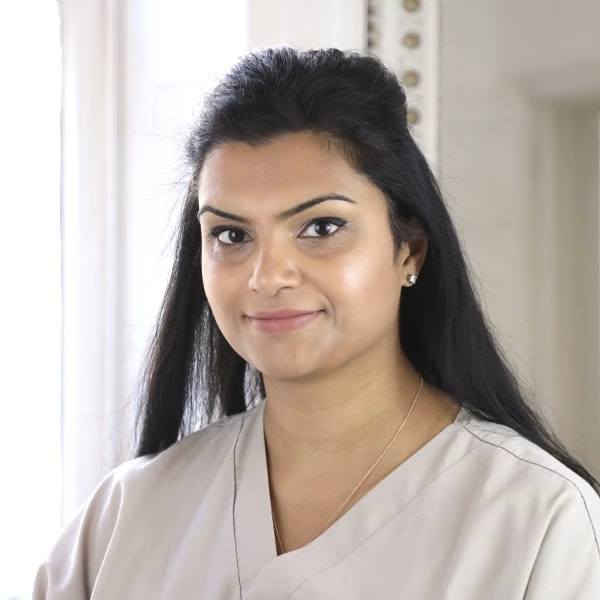
Post removal is the process of extracting a dental post to allow access for root canal retreatment. We focus on the precise removal of these materials to save the natural tooth. Dr Neha Patel, specialist in endodontics (GDC No. 150517), performs these procedures at our Primrose Hill practice.
The time removal needs depends on the material and position of the post. A consultation lets us assess your specific case and give an accurate timeframe for the procedure.
You may have already had a root canal, yet the pain has returned. This often happens when an infection spreads to adjacent teeth or the original treatment failed to seal the canal. We use 3D CBCT imaging to see exactly where the failure occurred, which lets us identify the precise cause of your pain and build a targeted plan for endodontics in London. We can then decide whether root canal retreatment is the right path to preserve your natural tooth structure and avoid extraction.
Some cases are more complex, such as those involving cracked tooth syndrome or trauma. Dr Patel uses a dental operating microscope to find incomplete fractures that are invisible to the naked eye. We also carry out pulp vitality tests, using thermal stimuli to gauge nerve response. These steps mean we provide a precise diagnosis before we begin, rather than exploratory treatment.
Choosing the right clinician for post removal is a decision based on risk. We provide specialist-led planning to preserve the tooth while removing the obstructing material. This precision matters when we handle broken instrument removal from canal system or the management of procedural errors in complex cases.
Cost is often a primary concern for patients. We use a diagnosis-first consultation to give you pricing transparency and an itemised quote before any treatment begins. Dr Patel assesses the internal anatomy of the root to decide whether the procedure is the most viable option for your long-term dental health.
Leave your number and we will call you back. Nothing is booked until you say so.
Removing a dental post is often the first step in saving a tooth that has failed a previous root canal. We understand that returning for retreatment can feel daunting, especially if you are worried about losing the tooth entirely. Dr Patel focuses on preserving your natural structure by carefully clearing the way for new treatment. Whether you have new pain or a failing restoration, we provide a calm environment to address these issues without judgement. You can see root canal treatments: which option fits to understand the different paths to recovery.
A clinical assessment determines whether your tooth is a candidate for this procedure.
We begin by assessing the current state of the tooth. This stage determines whether the post can be removed safely to allow for root canal retreatment. We use this clinical review to identify potential complications before we start.
We carefully extract the post to clear the canal, removing the material blocking the root so we can treat the underlying infection. We use local anaesthetic for patients who feel anxious.
Once the post is gone, we remove any remaining infected nerve tissue. This protective procedure is designed to save the natural tooth, and we clean and shape the canals to prepare them for a new filling.
We fill the cleaned canals with a biocompatible material. This seal prevents bacteria re-entering the tooth. The number of visits needed depends on the complexity of your specific case.
The final step is to protect the tooth from further damage. We place a restoration that returns the tooth to full function and supports the long-term stability of the natural root.
We use operating microscopes, precision instruments, and advanced materials for filling and canal disinfection, and magnification for the precise diagnosis of tooth fractures.
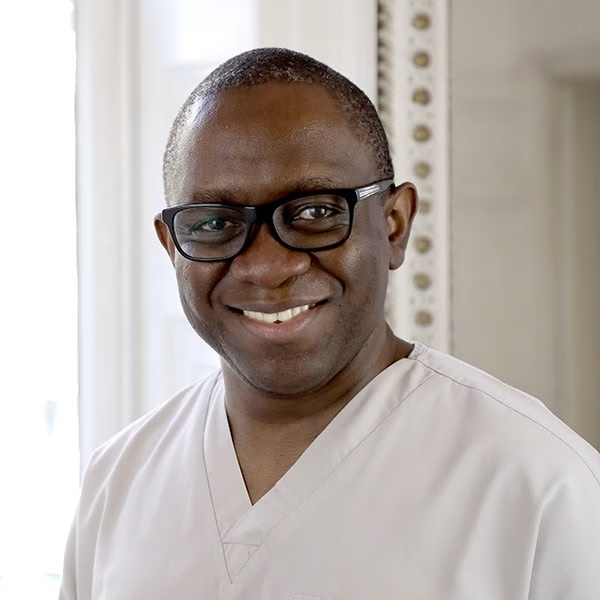
We use bioactive materials to stimulate dentine bridge formation, which supports pulp healing. The practice is led by Dr Ope Sodeinde, GDC-registered specialist periodontist (GDC No. 104071), who performs the microsurgery that preserves the natural tooth and restores oral health.
Whether you need root canal retreatment, an apicoectomy, or care for a cracked tooth, our team uses 3D imaging for the best possible outcome. We also provide dental trauma care and treatment for luxation.
We assess the necessity of this procedure at your consultation. The frequency of retreatment depends on the specific clinical failure of the original root canal.
Saving a natural tooth is often the priority. We evaluate the tooth's structural integrity to decide whether removing the post and retreating the canal is the most viable option for you.
Post removal often requires removing the existing crown to access the canal. We discuss the requirements for a new restoration at your assessment.
Coverage varies by provider and policy. We recommend contacting your insurance company directly to verify your specific benefits for endodontic retreatment.
Deciding whether a tooth can be saved needs a precise clinical evaluation. We use this visit to examine the existing filling and decide whether the post can be removed without compromising the root. You can learn what happens at your root canal consultation and how to book to establish your specific requirements.
Dr Patel assesses the stability of the tooth to decide whether retreatment is the most viable path, so the plan matches your clinical needs. For a broader overview of endodontics in London, our main hub gives further detail on root canal care.
Request your assessment or call us at 020 7589 7792.
A consultation with Dr Patel determines whether a tooth is saveable. We assess the root structure to identify the best path forward, including broken instrument removal from canal system or the management of procedural errors in complex cases.
Call 020 7589 7792.
You receive a written plan and itemised quote that is yours to keep and use at any other practice. You can arrange your assessment with Dr Patel to determine the next steps for your tooth.
020 7589 7792
Real, verified Google reviews from patients of London Dental Specialists.
Your details are used to arrange your appointment and for nothing else.
111 Regent's Park Road, Primrose Hill, London NW1 8UR
Use our contact page if you would rather ask something than book.