Family Friendly & Specialty Dentists in London, UK
Placing implants in a mouth with gum disease needs a periodontal approach: the infection is treated first, then the implant goes into stable bone and gum. We use 3D imaging at your first visit to assess the bone, and Dr Ope Sodeinde, a specialist periodontist, sets your suitability and timeline at that stage.
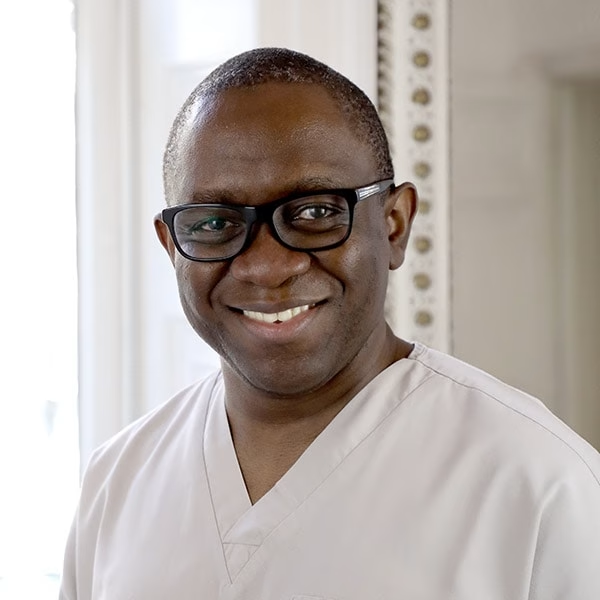
Gum disease begins as inflammation from plaque and, left untreated, is one of the most common causes of tooth loss in adults. If you have already lost teeth to it, or have an active infection now, you may assume implants are off the table. We assess the jaw with imaging and a periodontal examination to establish whether dental implants in London are the right solution for your case.
Dr Ope Sodeinde examines the supporting bone and soft tissue and treats the disease to create a stable environment for a restoration. Where bone has been lost, a bone graft or a sinus lift may be needed, sometimes at the same visit as the implant. Once restored, daily plaque removal is your part of protecting the implant and the gum around it.
Dr Ope Sodeinde assesses the health of your bone and gum to determine whether you are suitable for implants. The underlying infection is treated first, so the implant is placed into healthy tissue rather than alongside an active disease process. He manages the whole sequence, from periodontal treatment to the final fitting, whether that is a single tooth or All-on-4 full-arch implants for a complete restoration.
Leave your number and we will call you back. Nothing is booked until you say so.
Noticing receding gums or loose teeth is a common reason people put off seeking help. We treat patients who have lost teeth to periodontal disease and patients whose existing implants are failing because of gum infection. Suitability depends on whether the gums can be brought to a stable state, which we verify at the clinical assessment. In specific cases we can offer same-day dental implants, and every patient gets a guide to caring for implants after surgery.
Dr Ope Sodeinde measures pocket depths and bone loss to find where support is lacking. This stage decides whether you can go straight to single and multiple tooth implants or whether the infection needs treating first.
The periodontal disease is treated by removing bacteria and plaque from deep within the gum pockets, with the aim of stopping the progression of bone loss. The risks and complications of treating gum disease before surgery are set out in our guide.
Once the gums are stable, the titanium implants are placed in the jawbone under local anaesthetic, positioned in the strongest available bone.
The bone bonds to the implant through osseointegration. During this period we review the gum for any sign that the disease is returning.
The custom crown is fitted once the implant has integrated. It is shaped to avoid food traps that could seed a new gum infection, and the bite is balanced so the supporting bone is not overloaded.
Care is led by Dr Ope Sodeinde, specialist periodontist, who owns the practice, is registered as a specialist in periodontics (GDC No. 104071), and places every implant here. Periodontics is the specialty that treats gum disease, which is the relevant qualification for this particular problem.
Patients who review us tend to mention an unhurried manner and options explained honestly, including when gum treatment has to come before implants.
London Dental Specialists helped me with my gum problems and I now consider the issue resolved - previously I had tried all sorts of things on my own but I needed Ope and team's professional help and expertise.
Ope was not only knowledgeable but also incredibly kind and took the time to provide me with all the information I needed about my gum treatment plan.
Dr Ope Sodeinde also assesses whether a gum graft is needed to support an implant, and is candid about when it is worthwhile.
Ope explained to me that a gum graft is not always standard but that he has found it a worthwhile and effective process in some cases.
The wider team includes Dr Neha Patel, specialist in endodontics, Dr Kia Papagalani, specialist orthodontist, and Dr Nicky Dehbonei and Dr Lydia Dzhukha, dentists with special interests. Where gum recession is the main problem, see how we restore teeth with implants in those cases.
The diagnosis-first consultation establishes whether you need bone grafting or periodontal treatment before implants, and the itemised quote includes those stages, so there are no hidden costs.
Longer than a straightforward case, because the gum disease is usually treated and allowed to stabilise before the implant is placed. We give you a realistic timeline at your assessment.
Both the periodontal treatment and the implant surgery are done under local anaesthetic, and sedation is available if you are anxious.
Stability depends on the supporting tissue staying healthy, which is why the maintenance plan matters. You can read more about how long implants last and the care required to protect them.
Fear of judgement is often what stops people seeking help for gum disease. The assessment is about your clinical needs and nothing else. If you are worried about bone loss or whether you are suitable, view what our £245 consultation includes and how to book to get a definitive answer. Sedation is available if returning to the dentist makes you anxious.
Request your assessment or call 020 7589 7792.
Replacing teeth after gum disease follows its own sequence, which Dr Ope Sodeinde sets out after assessing your bone and gum. Related reading covers implants with receding gums, All-on-4 full-arch implants, how long implants last, the risks and complications of implants, and caring for implants after surgery.
Putting it off is common. The consultation is diagnosis first: Dr Ope Sodeinde assesses your jaw with in-mouth x-rays and gives you an itemised plan and quote to keep, with a complimentary second appointment to discuss it and a printed or PDF aftercare guide.
Local anaesthetic is standard and sedation is offered. The £245 consultation fee goes towards the cost of any treatment you choose to have with us; it is not an extra on top. We offer a 10-year implant warranty, subject to its written conditions. Payment options can be discussed with our staff.
Real, verified Google reviews from patients of London Dental Specialists.
Your details are used to arrange your appointment and for nothing else.
111 Regent's Park Road, Primrose Hill, London NW1 8UR
Use our contact page if you would rather ask something than book.