Family Friendly & Specialty Dentists in London, UK
Receding gums usually mean the bone underneath has receded too, and an implant needs bone to hold it. Whether you are a candidate is a specialist question: Dr Ope Sodeinde uses 3D imaging to measure your bone levels and decide whether a graft is needed before placement.
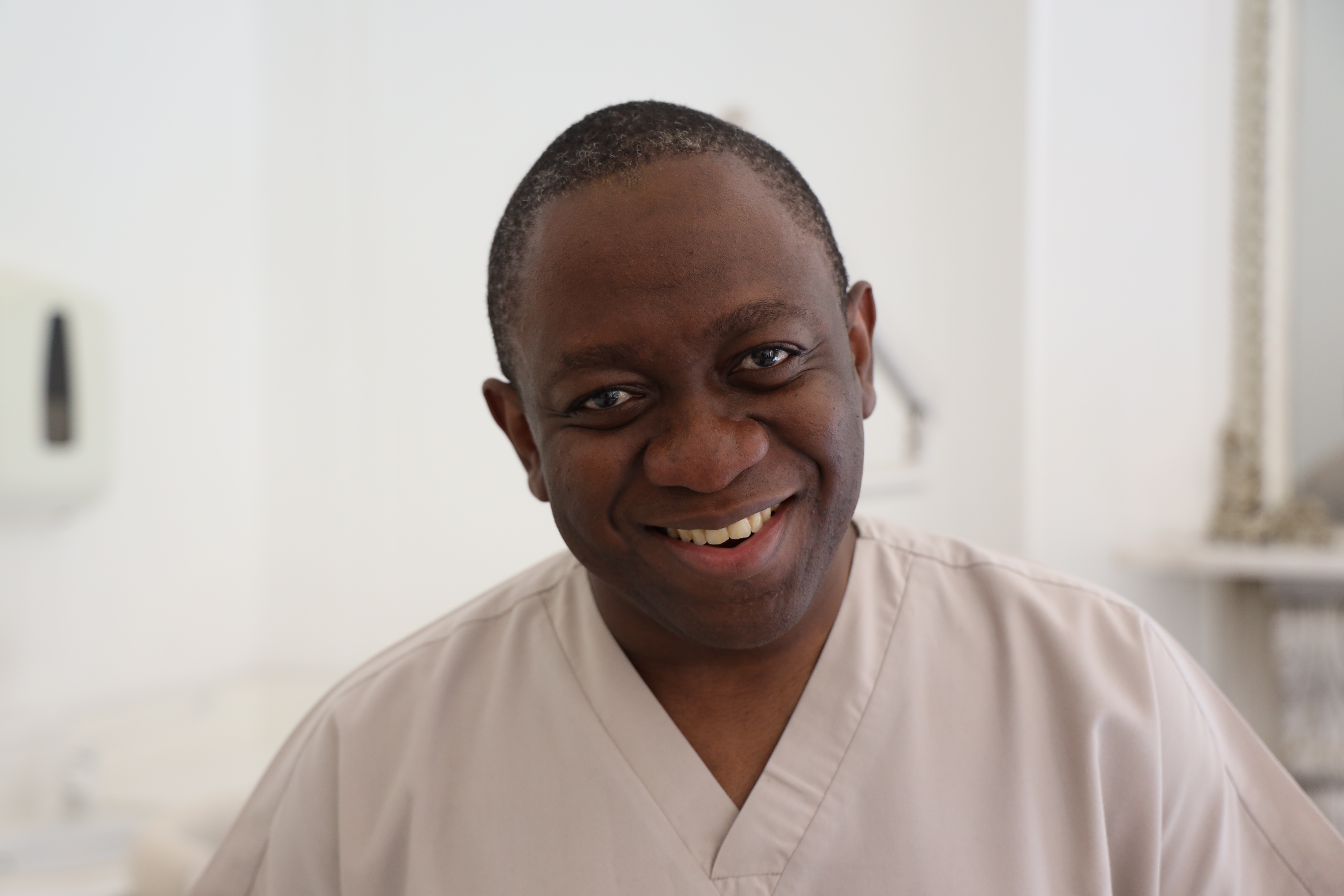
Recession often follows gum disease, which starts as inflammation from plaque and is a common cause of tooth loss in adults. You may notice the gums pulling back, roots showing, and teeth that feel less firm. The same process weakens the jawbone, which makes placing dental implants in London more complex, because the implant needs a stable volume of bone to hold it.
Dr Ope Sodeinde examines the jaw and measures the bone and tissue that remain, to establish whether you can proceed to implants or need support first. Accurate positioning matters here: an implant placed at the wrong angle or depth in thin tissue is harder to clean and more prone to further recession.
Recession can expose roots or leave gaps that make conventional restorations difficult. At the consultation we assess whether dental implants can replace missing teeth in these areas and whether the remaining bone is stable enough for a secure foundation. That assessment also decides between same-day dental implants and a staged approach with grafting first.
Dr Ope Sodeinde plans the placement to protect the gum tissue that remains, and we give you a guide to caring for implants after surgery to support healing.
Leave your number and we will call you back. Nothing is booked until you say so.
Receding gums often leave people self-conscious about how their teeth look. At the clinical examination Dr Ope Sodeinde establishes whether there is enough bone and tissue to support a fixture, or whether the area needs building up first. The assessment includes a review of the risks and complications and a discussion of single and multiple tooth implants. It is the only reliable way to know whether you are suitable.
Dr Ope Sodeinde examines the extent of gum recession and the bone and soft tissue that remain, and identifies whether you need tissue or bone support before any implant is placed.
The implant position is mapped so it sits securely despite the recession. This stage also settles the type of restoration, such as implant-supported bridges where several teeth are missing.
Dr Ope Sodeinde places the implant in the strongest available bone, with the position chosen to account for the reduced gum coverage.
The implant bonds with the bone over several months. We review the site to confirm the gum stays stable around the neck of the implant. You can read about how long implants last once this bond has formed.
The final crown or bridge is fitted once the implant has integrated. Its shape is designed to protect the remaining gum line and to look natural against your existing gums.
Clinical oversight comes from Dr Ope Sodeinde, specialist periodontist, who owns the practice, is registered as a specialist in periodontics (GDC No. 104071), and places every implant here. Gum recession is a periodontal problem, so it is treated by the specialty that deals with it.
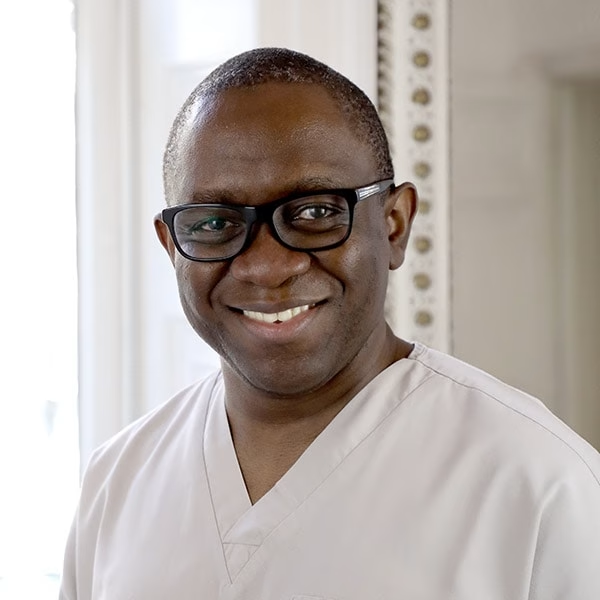
No. Implants replace missing teeth; they do not reverse recession. Dr Ope Sodeinde assesses your gum health to decide whether you need the sequence for implants with gum disease or bone grafting before the site is stable enough for a restoration.
Not on its own. Recession has a cause, usually gum disease or over-brushing, and that has to be managed. What an implant does is restore function and stability where a tooth has already been lost to bone loss.
Yes, provided there is enough bone to hold the post. Where bone loss is significant, grafting can rebuild a suitable foundation, and we discuss that option at the consultation.
It depends on whether grafting or gum treatment is needed before the implant. The diagnosis-first consultation identifies those stages and the itemised plan lists them, so there are no hidden costs.
Bone loss makes many people assume they are unsuitable for implants. Often they are not: this £245 consultation establishes whether a viable sequence exists for you, including grafting where necessary. Dr Ope Sodeinde assesses your anatomy and gives you an honest timeline, so you know how many visits to expect. Sedation is available if dental work makes you anxious.
An initial consultation with Dr Ope Sodeinde establishes whether implants are viable for your gum and bone levels, and sets out the timeline and costs before you commit. Related reading covers caring for implants after surgery, the risks and complications of implants, how long implants last, implants with gum disease, All-on-4 full-arch implants, and same-day dental implants.
The consultation ends with a written plan and an itemised quote, yours to keep and take to any other practice. It includes in-mouth x-rays to establish how far bone loss has narrowed your options, and a complimentary second appointment to discuss the plan before you decide.
Local anaesthetic is standard and sedation is available. The £245 consultation fee goes towards the cost of any treatment you choose to have with us; it is not an extra on top. We offer a 10-year implant warranty, subject to its written conditions, at our Primrose Hill practice.
Real, verified Google reviews from patients of London Dental Specialists.
Your details are used to arrange your appointment and for nothing else.
111 Regent's Park Road, Primrose Hill, London NW1 8UR
Use our contact page if you would rather ask something than book.