Family Friendly & Specialty Dentists in London, UK
London Dental Specialists in Primrose Hill delivers comprehensive dental care through registered specialists. Our patient Anna chose our practice after discovering our:
| Treatment Type | Specialist Qualification | Registration |
|---|---|---|
| Orthodontics | Specialist Orthodontist | GDC Registered |
| Endodontics | Root Canal Specialist | GDC Registered |
| Prosthodontics | Crown Specialist | GDC Registered |
Private orthodontic care at our practice includes:
| Treatment Component | Service Details | Quality Assurance |
|---|---|---|
| Initial Consultation | Comprehensive Assessment | Expert Planning |
| Treatment Options | Multiple Solutions | Tailored Care |
| Professional Care | Specialist-led | GDC Standards |
| Materials | Premium Quality | CE Marked |
Our crown options feature:
The endodontic journey involves:
| Treatment Phase | Duration | Procedure Details |
|---|---|---|
| Root Canal | 1-2 visits | Specialist clean and seal |
| Gold Post | Single visit | Custom casting |
| Core Build-up | Same visit | Foundation creation |
| Crown Preparation | One visit | Expert shaping |
Our practice credentials include:
Anna’s treatment progression included:
Our premium post and core treatment features:
| Component | Benefit | Warranty |
|---|---|---|
| Gold Post | Superior strength | 5 years |
| Custom Cast | Perfect fit | 5 years |
| Core Build-up | Stable foundation | 5 years |
| Crown Support | Long-term stability | 5 years |
Our Primrose Hill practice provides:
We offer flexible payment options:
| Payment Type | Details | Benefits |
|---|---|---|
| Interest-free | 0% plans | Spread cost |
| Insurance | Major providers | Direct billing |
| Payment Plans | Customised | Affordable care |
| Warranties | 5-year cover | Peace of mind |
Our approach combines specialist expertise with patient care excellence. Anna’s successful treatment demonstrates our commitment to delivering outstanding results through:
Leading dental implant systems in British dental practices include:
| Implant Brand | UK Certification | Warranty Coverage |
|---|---|---|
| Nobel Biocare | UKCA/CE Marked | 10-year warranty |
| Straumann UK | UKCA/CE Marked | 10-year warranty |
| Osstem UK | UKCA/CE Marked | 10-year warranty |
| Dentsply UK | UKCA/CE Marked | Extended warranty |
Our Primrose Hill practice utilises these GDC-approved implant systems with comprehensive warranties.
Private dental implant treatments in Central London include several components:
| Treatment Component | Included Services | General Cost Range |
|---|---|---|
| Initial Consultation | CBCT scan, Treatment planning | £95-£250 |
| Bone Grafting | Bio-Oss, Bio-Gide materials | £500-£2000 |
| Soft Tissue Grafting | PRF treatment, AlloDerm | £500-£1500 |
| Implant Placement | Surgical guide, Implant fixture | £1800-£3000 |
| Final Restoration | Custom abutment, Porcelain crown | £1000-£1500 |
Our specialists maintain:
Bruce’s treatment followed the British Association of Oral Surgery guidelines:
Initial Phase:
Preparation Stage:
| Treatment Stage | UK Protocol | Duration |
|---|---|---|
| Assessment | FGDP(UK) Standards | 1-2 visits |
| Planning | CBCT Analysis | 1-2 weeks |
| Surgery | GDC Guidelines | 1-2 hours |
| Integration | Monitored Healing | 3-6 months |
| Restoration | British Standards | 2-3 visits |
NHS implant availability:
| Treatment Type | NHS Availability | Private Option |
|---|---|---|
| Single Implant | Limited Cases | Full Choice |
| Multiple Implants | Exceptional Only | Available |
| Full Arch | Special Cases | Available |
| Bone Grafting | Limited | Comprehensive |
Approved bone grafting materials include:
| Material Type | UK Brand | Origin |
|---|---|---|
| Xenograft | Bio-Oss | CE/UKCA Marked |
| Allograft | BioHorizons | CE/UKCA Marked |
| Synthetic | Geistlich | CE/UKCA Marked |
Our warranty programme provides:
Primary Coverage:
Protection Includes:
| Coverage Type | Duration | Inclusions |
|---|---|---|
| Implant | 10 Years | Full replacement |
| Crown | 5 Years | Repair/Replace |
| Maintenance | Lifetime | Annual Reviews |
British implant success rates:
| Timeframe | Success Rate | Evidence Base |
|---|---|---|
| 5 Years | 98% | UK Studies |
| 10 Years | 95% | Clinical Data |
| 15 Years | 93% | Long-term Research |
Our Primrose Hill practice maintains success through:
Advanced Technology:
Specialist Expertise:
Contact our Primrose Hill practice to begin your dental implant journey. Our GDC-registered specialists provide comprehensive treatment with full UKCA/CE marked materials and a 10-year warranty. Book your consultation today.
Clear aligner therapy at London Dental Specialists includes comprehensive orthodontic care with Invisalign® SmartTrack® technology. Our GDC-registered specialists in Primrose Hill provide:
| Treatment Element | Specifications | Benefits |
|---|---|---|
| Initial Assessment | iTero® digital scanning | Precise treatment planning |
| Aligner Design | ClinCheck® software | Virtual outcome preview |
| Treatment Duration | 12-18 months average | Predictable results |
| Warranty Coverage | 5-year protection | Peace of mind |
Modern implant dentistry combines titanium root replacements with advanced grafting techniques. Our Primrose Hill practice utilises:
| Procedure Type | Materials Used | Integration Period |
|---|---|---|
| Immediate Load Implants | Grade 4 Titanium | 3-4 months |
| Socket Preservation | Allograft Materials | 4-6 months |
| Ridge Augmentation | Synthetic Grafts | 6-8 months |
| Soft Tissue Grafts | Autogenous Tissue | 2-3 months |
Periodontal plastic surgery addresses gum recession through various grafting techniques:
| Aspect | Before Treatment | After Treatment |
|---|---|---|
| Gum Line | Irregular recession | Even contours |
| Root Coverage | Exposed roots | Protected roots |
| Tissue Quality | Thin biotype | Thick biotype |
| Aesthetics | Compromised | Natural appearance |
Complex cases like Matthew’s follow a strategic timeline:
| Phase | Duration | Procedures Performed |
|---|---|---|
| Planning | 2-3 weeks | Digital scanning, CBCT imaging |
| Alignment | 12 months | Invisalign® clear aligners |
| Tissue Preparation | 4-6 months | Bone and gum grafting |
| Implant Surgery | 3-4 months | Surgical placement, healing |
| Final Restoration | 2-3 weeks | Crown fitting, adjustments |
Ideal candidates demonstrate:
Treatment Suitability Factors:
Clinical Considerations:
Investment in dental implant treatment includes:
| Component | Coverage | Duration |
|---|---|---|
| Initial Consultation | Comprehensive planning | 60 minutes |
| Surgical Procedures | Implant placement | As needed |
| Restorative Work | Custom crown creation | 2-3 weeks |
| Warranty | 5-year protection | Long-term |
| Aftercare | Maintenance programme | Ongoing |
Matthew’s transformation demonstrates achievable outcomes:
| Treatment Area | Improvement Achieved | Stability |
|---|---|---|
| Teeth Position | Optimal alignment | Long-term |
| Bone Structure | Enhanced density | Permanent |
| Gum Health | Restored architecture | Stable |
| Bite Function | Improved occlusion | Balanced |
| Aesthetics | Natural appearance | Lasting |
London Dental Specialists offers:
Professional Credentials:
Practice Features:
| Aspect | Verification | Standard |
|---|---|---|
| Specialist Registration | GDC-verified | Current |
| Treatment Warranty | 5-year coverage | Comprehensive |
| Patient Satisfaction | 150+ reviews | 5-star average |
| Clinical Standards | CQC-registered | Excellent |
Contact our Primrose Hill practice to begin your smile transformation journey with our specialist team. Our comprehensive approach combines clear aligner therapy, dental implants, and advanced grafting techniques, all protected by our 5-year warranty.
London Dental Specialists prioritises patient safety through rigorous instrument sterilisation practices. Our state-of-the-art decontamination procedures ensure the highest standards of hygiene and infection control. This article will guide you through our comprehensive process, adhering to UK regulations and utilising top-quality equipment.
At London Dental Specialists, we follow a meticulous step-by-step process to clean and sterilise our dental instruments:
Our practice invests in cutting-edge technology to ensure thorough decontamination:
| Equipment | Purpose | Brand |
|---|---|---|
| Ultrasonic Cleaner | Removes debris through high-frequency sound waves | Coltene BioSonic |
| Washer-Disinfector | Cleans and disinfects instruments | Miele PG 8581 |
| Autoclave | Sterilises instruments using high-pressure steam | W&H Lisa |
| Instrument Sealer | Packages cleaned instruments | Hawo HD 480 WSI-V |
Our practice strictly adheres to UK guidelines for dental instrument decontamination:
Our decontamination process consists of several crucial stages:
We ensure the highest quality of our decontamination process through:
Our staff’s safety is paramount. During the decontamination process, they wear:
We tailor our decontamination approach based on the instrument type:
| Instrument Type | Decontamination Method |
|---|---|
| Hand instruments | Ultrasonic cleaning followed by autoclave sterilisation |
| Handpieces | Lubrication and autoclave sterilisation |
| Endodontic files | Single-use or autoclave sterilisation |
| Surgical instruments | Ultrasonic cleaning and autoclave sterilisation |
We strive to balance effective decontamination with environmental responsibility:
To maintain the quality and lifespan of our instruments, we:
Preventing cross-contamination is a top priority. We achieve this through:
We employ a robust tracking system to ensure all instruments are properly sterilised:
London Dental Specialists’ commitment to thorough disinfection and decontamination ensures the safety of our patients and staff. Our advanced equipment, strict adherence to UK regulations, and continuous improvement of our processes demonstrate our dedication to maintaining the highest standards of hygiene and infection control in dental practice.
Did you know that your teeth are constantly moving throughout your life?
Our teeth have evolved over hundreds of millions of years to be perfect for chewing. A number of other factors influence the position of our teeth, most notably genetics, but also the forces that are exerted on them.
Our teeth are under pressure at all times. This force comes inwards (exerted by the lips and cheeks) and outwards (exerted by the tongue), not to mention the forces expressed when we close our jaws (our bite) or chew food.
The smile that most people come to London Dental Specialists hoping to achieve is neat and uniform. Usually, teeth drift forwards, which creates a certain aesthetic that most people hope to avoid. This is because teeth move through the path of least resistance, and most of the biting force comes from the back of the mouth.
Let’s explore why our teeth move and what we can be on the lookout for.
Our teeth’s ability to move is thanks primarily to the periodontal ligament, which surrounds every single tooth. I am perhaps biased when I say this, but it’s a fascinating structure that has been studied extensively for many years, and is a large part of my own specialty as a dentist.
Put simply, the periodontal ligament is the main reason you’d know about it if you had a strand of hair stuck between your teeth. It is incredibly sensitive.
In general, teeth move along the path of least resistance. For example, if a tooth has been pulled out or lost due to trauma or gum disease, teeth will move to crowd this gap over a period of time. Other forces, such as grinding or clenching your teeth, or favouring chewing on one side of your jaw, will add further force to the teeth, pushing them in the direction away from the force.
In many cases, when patients have the molars at the back of their mouths removed, it affects the teeth at the front of their mouth! This is because the front teeth are taking a greater amount of force from the jaw muscles. The jaw muscles aren’t aware that teeth have been removed! They’ll continue to exert the same amount of force on fewer teeth.
Imagine it this way: if you were to lay evenly on a bed of nails, it would hurt much less than if you were to put a lot of pressure on one specific area on a bed of nails. This is because you’re exerting pressure over a large surface area when you lie evenly. This means that each nail is supporting only a small amount of your weight – meaning less pressure – so they don’t cause any pain.
When your teeth don’t align properly, it’s known as malocclusion. This could be seen as an underbite or an overbite, but both can cause serious problems.
In fact, the World Health Organisation considers malocclusion as one of the most serious oral health issues, alongside tooth decay and periodontal disease. As common as it is, its prevalence is highly variable, estimated to be between 39 per cent and 93 per cent in children and adolescents.
Your bite is very important and much dental work is carried out each year to correct problematic bites. This is because the bite must have multiple points of contact so that the biting force from the jaw muscles is evenly distributed across the teeth (think about the bed of nails!).
With issues like malocclusion or teeth grinding, the pressure exerted on the teeth and jaw can be too forceful. This means that the connective tissue that holds the teeth in place is at risk of being damaged by these forces, which could result in loose teeth. If there is too much space in the jaw, the teeth may drift out of place.
Not only will a healthy bite ensure even pressure across the mouth and reduced risk of weakened connective tissue and tooth loss, there are a number of other benefits you might not have thought of, too. A healthy bite will help you to breathe, sleep and speak easier, and ensure your smile is not only healthy but beautiful, allowing your teeth to function properly.
There is no set time frame when it comes to how quickly teeth can drift. It’s different for every patient. Some patients might find that their teeth move over a period of many years, whilst others might experience movement over a matter of months. Certain factors accelerate drifting teeth, such as gum disease (which weakens the supporting structures), tooth loss or trauma.
To regain control of your healthy and beautiful smile, a brace is an excellent option. This must only be considered in cases where there is no gum disease or the gum disease is under control, and where the teeth haven’t moved too far out. If too much movement has occurred, however, the offending teeth can be replaced with dental implants.
If you’re ready to achieve your healthiest and most beautiful smile yet, don’t hesitate to contact us. We offer free virtual consultations where we can identify what treatment is right for you. We have lots of examples of the beautiful smiles we have achieved for our patients over the years, who first came to us unconfident and concerned about their smiles. Everyone’s smile is different, but they can all be healthy and beautiful!
There are two common reasons tooth wear occurs: acid erosion and attrition. In this blog, I’ll be exploring what happens in both cases, and what you can do to protect your healthy and beautiful smile.
The primary cause of worn teeth is acid erosion. Acid from drinks and our stomachs slowly dissolves the enamel (the outer surface of the tooth) until it reaches the dentine (the yellow inner surface of the tooth).
The speed of the erosion depends on the frequency of acid contact with enamel. Enamel is the hardest substance in the human body, so it can take a long time for acid to wear it away. When it finally reaches the inner surface of the tooth, however, the rate of erosion progresses rapidly because the dentine is so soft.
Let’s explore the two main suspects culpable for acid erosion:
Up to 80 per cent of adults are at risk of enamel loss as a result of what they eat according to the American Dental Association,
In fact, a study on the relationship between food habits and tooth erosion was conducted on Malaysian University students. It was found that 68 per cent of participants had tooth erosion. Those subjects who had received information about healthy eating were less likely to have tooth erosion.
Some foods in our diets can be incredibly acidic. The pH scale measures acidity or alkalinity levels in a range from zero to 14. Substances that fall below a pH of seven are considered acidic, and those above seven are alkaline.
When we’re not eating and drinking, our saliva should be in the neutral range of 6.5 to 7.5 pH. This range is perfect for preventing enamel erosion and tooth decay.
There are certain foods that are common in our diets that can become a problem when consumed in excess.
The most popular offenders are:
These substances range from two to five on the pH scale. I know lemon water is quite trendy these days, but when consumed in excess it will cause issues over time!
When consuming foods with high levels of acidity, you should rinse your mouth with water and wait at least an hour before brushing your teeth. This gives your saliva a chance to wash away the acid and reharden your enamel.
Dental erosion as a result of stomach acid generally progresses more rapidly and can be more severe. This is because our stomach acid has a pH between one and two, which is incredibly acidic – much more so than the foods in our diet.
Stomach acids can enter the mouth for a multitude of reasons, most obviously vomiting, but also as a result of gastroesophageal reflux disease (otherwise known as acid reflux). This is when acid from the stomach leaks up the oesophagus due to weakened oesophageal muscles.
Patients with these conditions should be especially mindful of staying hydrated. Saliva is an excellent natural defence against tooth wear as it helps to clean the teeth of acid and allow the enamel to reharden. Many acid reflux medications can cause an incredibly dry mouth, so chewing sugar-free gum and drinking lots of water should help.
These include:
Acid erosion is difficult to identify before it becomes a problem unless you are being regularly monitored at a dental practice. This is yet another reason it is so important to visit your dentist on a regular basis – even if you don’t think there are any issues in your mouth.
Your dentist and hygienist will take digital scans of your teeth and compare them over time. This is the only real way of identifying tooth wear before it requires treatment.
With regards to stomach-related acid erosion, take note of regular heartburn which could be a sign of acid reflux. In these cases, I recommend visiting not only a GP, but also your dentist or hygienist to keep a close eye on your teeth. You may have heard stories from women who have experienced loss of tooth structure during pregnancies where they suffered with regular heartburn.
Dental attrition is caused by “tooth to tooth contact”, such as grinding or clenching teeth. The resulting friction causes enamel to wear down.
Many times, teeth grinding and jaw clenching are stress and anxiety induced. If you’re experiencing stress and anxiety to such an extent that your teeth are being affected, I recommend you consult a professional. After all, the healthiest and most beautiful smiles come from happy and confident people, and we all deserve to feel this way.
A 2011 study on the prevalence of dental attrition found that 80 per cent of participants (400 subjects out of a total of 500) showed signs of dental attrition up to the dentine.
If you’re struggling with attrition as a result of grinding your teeth or clenching your jaw and can’t seem to stop, I recommend investing in a hard acrylic mouth guard to protect your teeth during your sleep.
The rate of wear as a result of acid erosion is much faster than erosion by attrition.
The long-term consequences of tooth wear depend on a multitude of factors, including but not limited to a patient's genetics and the source of erosion. If no tooth wear protective measures are put in place, you might be putting yourself at risk of tooth ache, sensitivity, and even tooth loss. Once the erosion reaches the inner tooth, it could cause an infection in the nerve, which might require root canal treatments.
A consequence of tooth erosion that many patients fear the most, however, is simply an uneven smile. Teeth become shorter very gradually – over time you might not notice, but looking back at pictures might make you gasp at the difference!
Whilst this consequence is cosmetic, it can be a huge knock to your confidence. Confidence is a key ingredient in a healthy and beautiful smile, and that’s why I so often stress the importance of regular check ups with your dentist.
Reduction of stress, being mindful about your diet, and consulting a professional are great ways to protect your teeth.
Remember – simple is best! The best way to look after your teeth is simply to brush them for two minutes twice a day with a fluoride toothpaste. Enamel that has fluoride in it is stronger than enamel without fluoride.
No matter where your tooth wear comes from, a good dental practice should be completely non-judgemental. At London Dental Specialists, we are always here to help. Irrespective of the cause of your tooth erosion, there will be a solution and we can show you. Complete the form below so we can restore your smile to its former glory.
Dental implants are made up of a titanium screw that goes into the bone. Sounds scary, but they are the strongest and most convenient option available to fix missing, broken, or dead teeth.
At London Dental Specialists, we specialise in offering high-quality dental implants to successfully rebuild your healthy and beautiful smile. But there are other options out there, and in order to feel confident about your choices, you should be aware of what they are and how they compare.
Your specialist dentist will place a titanium implant into the jawbone beneath the missing tooth. We can imagine that the screw replaces the root of the missing tooth. After a healing period of three months, a custom moulded crown can be screwed on top of the titanium implant, fixing it in place. Cosmetically, dental implants look great – in fact, no one will even be able to tell you’ve got one!
Your dentist should consider how much bone you have at the implant site. Some patients might require a bone graft ahead of fitting a dental implant. A bone graft usually takes bone from the chin, the back of the mouth, or the hip.
This bone doesn’t always have to come from you, either! Interestingly, the bone used in your bone graft might come from a patient who has recently had hip surgery! The head of the femur, which is removed during this type of surgery, is often donated to dentists to be used in bone grafts. Of course, this will always be clearly communicated to the patient!
Whilst a bone graft is beneficial, if one cannot be carried out, or one you’ve previously had is no longer working, a longer dental implant can be screwed into the cheekbones, underneath the nose or behind the upper jaw.
There are two main options for replacing missing teeth outside of a dental implant:
There are several types of dental bridges and the most common is the traditional fixed bridge. The traditional fixed bridge is usually made from metal, porcelain, or ceramic teeth joined together. Fitting this type of bridge involves drilling the tooth down to a stump to get an impression of it, and then fitting the bridge on top.
Whilst this is more secure than other forms of dental bridge, the destruction of the natural tooth could lead to the need for root canal treatment. This is where we can enter what is called a restorative cycle: the more the tooth is “restored” and “repaired”, the more damaged it becomes until eventually this process will lead to the failure of our teeth.
Another common bridge is a Maryland bridge, also known as a resin-retained or “sticky” bridge. This is where a replacement tooth is glued into a gap, fixed in place by a wing-like structure which also supports the neighbouring teeth.
Dental bridges can last for many years, especially with good oral hygiene. Over time, the cement can deteriorate, or patients to fall short of good oral hygiene. Both of these will lead to tooth decay and collapse of the bridge. In situations where there are multiple missing teeth, bridges are not recommended.
One of the great advantages of dental implants is that the process never goes down this restorative spiral. And the more missing teeth you have, the more important it is to choose a treatment option that is strong and doesn’t cause further damage.
The most important consideration about dentures is that they require more extensive hygiene care to keep them healthy because dentures trap plaque.
A clinical trial conducted in Newcastle which compared patients who had fixed teeth with those who had removable teeth found that patients with removable teeth had higher rates of gum disease. Other studies have supported this, finding that “subjects wearing removable dentures were significantly at risk for periodontal disease progression”.
This is not to say that patients who have dentures are doomed! Of course not. However, if you do choose to have a denture, your oral hygiene must be pristine in order to protect your teeth. It is much harder to keep dentures clean than it would be an implant. This is because dentures might cover other teeth and cause a buildup of plaque.
I cannot stress enough the importance of taking our oral hygiene seriously, both from a gum disease perspective and a decay perspective.
The only patients for whom a dental implant might not be appropriate are those patients who have had radiotherapy in the area of the mouth that requires the implants. For example, some salivary gland tumours require radiotherapy to treat, and will have been targeted extensively. Radiotherapy will kill the blood supply to the bone, and in these situations a dental implant would not be ideal.
Whatever your situation or issue, we want to equip you with the knowledge you need to feel confident and reassured, before you even visit a specialist. If you’d like to chat more about concerns surrounding the best treatment option for you please complete the form below.
You might think that gum disease and diabetes are strange bedfellows, but in actual fact there is a proven causal link between untreated periodontitis and the onset or worsening of diabetes.
In fact, I’d go so far as to describe this as a two-way relationship – there is also evidence that untreated diabetes can trigger the onset or worsening of periodontitis.
At their core, both periodontitis and diabetes are inflammatory conditions. If you have diabetes, or know someone who does, I’d strongly recommend that you consult a specialist about potential gum disease and the implications this will have. The earlier you can identify signs of gum disease and begin treatment, the less severe the consequences will be.
In the meantime, though, let’s get to grips with why these two conditions are so strongly linked, and what we can do to minimise negative symptoms.
The cells in our gums have what is aptly called a RAGE receptor. This receptor is for advanced glycation end products – in other words, the result of high levels of sugars and protein combining. This occurs more often in diets high in red meats, dairy products, and oils, which is why I recommend a healthy diet rich in fresh whole foods.
RAGE receptors are expressed when cells are dysfunctional; for example, in inflammatory conditions like diabetes or when there are tumours present. Patients with uncontrolled diabetes have a higher number of advanced glycation end products in their bloodstream. This means that the RAGE receptors inside the gum cells are activated and trigger an immune response. This immune response is what activates all the destructive symptoms of gum disease that I talked about in my last blog.
Many diabetic patients are shocked to hear that properly treating their periodontitis could result in reducing their reliance on medication to control their diabetes.
This is because properly treating periodontitis results in easier glycaemic control. Not only does this reduce the risks associated with heart issues, it also means that symptoms of diabetes in general will be better controlled, and in some cases medication could even be reduced.
This is hugely exciting. Excellent dentistry doesn’t just focus on the aesthetic benefits of a beautiful and healthy smile, but on the psychological ones too. It’s no surprise that our physical health has a big impact on our mental health. In an age of expanding waistlines, increased sugar, and reduced physical activity, it’s more important than ever to look after ourselves properly – from the inside out.
Recently I had two lovely patients come to me at London Dental Specialists. Both patients were diabetic, under 30, and had referred themselves to me because of untreated periodontitis. Because many people don’t fully appreciate the link between the two conditions, these patients had been told that they didn’t need to worry, and that some deep cleaning from a periodontist would do the trick.
Unfortunately, this was not the case. The aim of my blog series, sharing real case studies and expert guidance, is to reassure anxieties around going to the dentist and give you full control over your smile. But it would be a disservice to my readers if I didn’t stress the importance of taking periodontitis seriously.
Because these two patients had referred themselves several years after first experiencing symptoms of gum disease, and combined with the increased rate of deterioration due to their diabetes, deep cleaning wasn’t enough and tooth extraction was the inevitable outcome.
As discussed in my last blog, the key to treating gum disease is found in the depths of our gum pockets. In diabetic patients, it’s even more crucial that gum pockets are maintained at a healthy depth.
The care of every patient should be approached uniquely and on an individual basis. However, if you have diabetes, your dental care provider should be much less tolerant of any deterioration in the gums or bone structure. Patients who have diabetes or who have untreated periodontitis are much more susceptible to the other, and will experience a rate of deterioration that is much more rapid than that seen in other patients.
If you’re concerned about the topics explored in this blog, fear not! London Dental Specialists are offering free virtual consultations so that you can have your queries and concerns answered by an expert in no time at all. Complete the form below and we look forward to hearing from you!
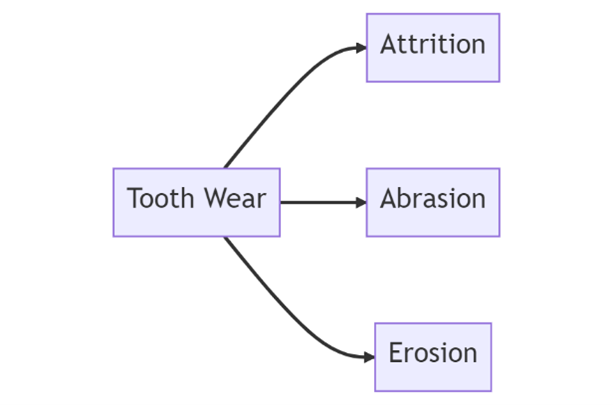
There are 3 causes of tooth wear - attrition, abrasion, and erosion.
Attrition is caused by the constant grinding of teeth against each other, wearing down the enamel. It's particularly prevalent in those who suffer from bruxism, a condition that compels one to clench or grind their teeth (usually during sleep). Clenching and grinding is extremely common these days due to our stressful lives.
Abrasion is the result of excessive tooth brushing or using a toothbrush with hard bristles. It can also be caused by biting on hard objects, like pens or fingernails.
Erosion is the dissolution of tooth enamel due to the presence of acids. These acids can come from external sources like fizzy drinks, citrus fruits, and even wine (I know, gasp). They can also be a result of internal factors like acid reflux or frequent vomiting.
If you suffer from bruxism, a custom-made mouth guard will protect your teeth from grinding and clenching, giving your enamel a well-deserved break.
Choose a toothbrush with medium bristles and adopt a gentle brushing technique. Better still, but an electric toothbrush with a pressure sensor so that you can be confident about knowing when you are brushing too hard. Also, avoid biting on hard objects or using them to open packages (yes, I'm talking to you, pen chewers).
To combat erosion, try these simple yet effective strategies:
Now, for the Grand Finale!
There you have it, folks - the causes and solutions for tooth wear, all in one nifty package. And remember, prevention is always better than cure, so start implementing these solutions today to keep tooth wear at bay (read about treatments options for situations where there are cosmetic issues due to tooth wear).
Want to know how to take your dental health to the next level? Fill out the form below and the team will contact you within 24 hours.
