Family Friendly & Specialty Dentists in London, UK
Dental implants are an exceptional solution for those seeking to replace missing or severely damaged teeth. They involve the surgical placement of a titanium post into the jawbone, which acts as an artificial root. This post then supports a custom-made crown, bridge, or denture, mimicking the appearance and functionality of natural teeth (read more here).
To help you visualise the process, here's a handy diagram:

Dental implants boast a plethora of benefits, from improved appearance and speech to enhanced comfort and convenience. Moreover, they're renowned for their durability and success rates, making them a top choice for those seeking a long-term solution to missing or damaged teeth.
The earlier you address tooth loss or damage, the better. Prompt action can prevent complications, such as shifting teeth, bone loss, and infection. So, don't delay—consult your dentist to determine whether dental implants are the right choice for you.
Are Dental Implants in Your Future? Don't Delay, Act Today!
Feeling enlightened and ready to embark on your journey towards a dazzling new smile? Don't hesitate! Fill out the form below to schedule your appointment.
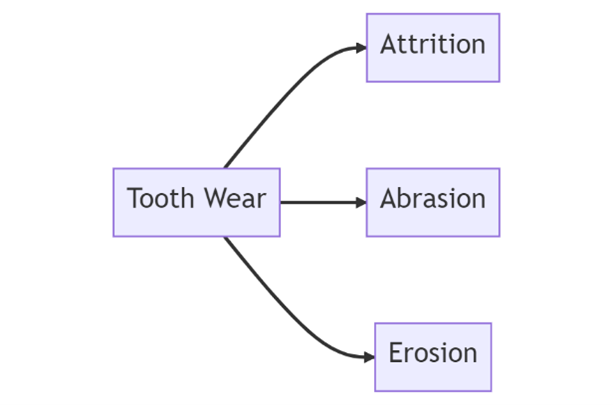
There are 3 causes of tooth wear - attrition, abrasion, and erosion.
Attrition is caused by the constant grinding of teeth against each other, wearing down the enamel. It's particularly prevalent in those who suffer from bruxism, a condition that compels one to clench or grind their teeth (usually during sleep). Clenching and grinding is extremely common these days due to our stressful lives.
Abrasion is the result of excessive tooth brushing or using a toothbrush with hard bristles. It can also be caused by biting on hard objects, like pens or fingernails.
Erosion is the dissolution of tooth enamel due to the presence of acids. These acids can come from external sources like fizzy drinks, citrus fruits, and even wine (I know, gasp). They can also be a result of internal factors like acid reflux or frequent vomiting.
If you suffer from bruxism, a custom-made mouth guard will protect your teeth from grinding and clenching, giving your enamel a well-deserved break.
Choose a toothbrush with medium bristles and adopt a gentle brushing technique. Better still, but an electric toothbrush with a pressure sensor so that you can be confident about knowing when you are brushing too hard. Also, avoid biting on hard objects or using them to open packages (yes, I'm talking to you, pen chewers).
To combat erosion, try these simple yet effective strategies:
Now, for the Grand Finale!
There you have it, folks - the causes and solutions for tooth wear, all in one nifty package. And remember, prevention is always better than cure, so start implementing these solutions today to keep tooth wear at bay (read about treatments options for situations where there are cosmetic issues due to tooth wear).
Want to know how to take your dental health to the next level? Fill out the form below and the team will contact you within 24 hours.
There can be some confusion when it comes to dental appointments and we hope that this blog will clear up any uncertainty (Read about the different dental roles here). Your hygienists’ main priority are your gums and helping to prevent and treat gum disease. This involves providing you with tailored oral hygiene advice and recommendations.
Your dentist is there to check your teeth for any decay and take any x-rays that may be indicated. This task can also be carried out by your hygienist, if he/she is a qualified dental therapist but this is usually made clear to you at the time of booking your appointment.
There are certain things that a dental therapist or hygienist cannot diagnose that will be in your best interests and you will need to see a dentist for these (read about the importance of regular check ups).
One of the most important checks all dental clinicians (dentists, hygienists and therapists) carry out is a mouth cancer screening, this is done at every appointment and can be life saving. Regular appointments with your dental hygienist/therapist or dentist is crucial to spot the signs of mouth cancer early. A common misconception is that patients with full dentures (top and bottom) do not need to visit the dentist. Mouth cancer can still affect these patients, therefore it is paramount to have regular check ups. They could save your life or a loved one's life.
If you are concerned about gum disease, oral cancer or would simply like more information on any dental concerns, please complete the form below.
Invisalign is the most widely known and used aligner brand in the world today. More and more adults are considering and taking up on the teeth straightening journey since these almost invisible options are available on the market. Click here to read about all the options.
Are you one of them?
Have you seen a dentist for assessments or scans to determine if you would be eligible?
Were you told that Invisalign is not a good option for you but you are still keen on having it because of its discrete nature?
Don`t give up, here at London Dental Specialists, we work with complex cases other dentists don't have the experience of treating. We are here to help you to find out how you can still achieve your desired smile.
Please complete the form below and one of the team will contact you within 24 hours (on a weekday).
Have you ever worried that you had bad breath? This blog will give you some tips on what causes this and how to prevent any embarrassing moments.
Halitosis can be caused by bacteria that are not removed efficiently when brushing with your toothbrush. It is important to angle your toothbrush towards the gumline and spend at least 2 minutes brushing. To make bruising your teeth easier and more efficient you can consider an electric toothbrush.
Brushing your teeth efficiently but still experiencing bad breath?
If you are not cleaning in between your teeth, 40% of tooth surfaces are being missed. These are areas where your toothbrush bristles cannot reach, therefore, bacterial plaque will continue to accumulate and cause bad breath. Not all tools are made equally when it comes to cleaning in between your teeth. Interdental brushes are far superior when it comes to removing these harmful bacteria when compared to conventional string floss (read more here).
This diagnosis is usually made when the gingival cause has been eliminated i.e. when halitosis is present with perfect oral hygiene, the problem is coming from the stomach. A consultation with a gastroenterologist It could also be that there are some digestive issues occurring in which your GP can help get to the root cause of the problem.
Ready to kick bad breath to the curb? Don't let halitosis hold you back any longer! Fill out the form below to get expert tips and personalised advice on how to achieve fresh breath for good. Your social life (and everyone around you) will thank you!
With so many different toothbrushes on the market, it can be confusing choosing one that is right for you. As a dental hygienist for London Dental Specialists, I can alleviate your tooth brushing worries and save you a heap of time researching (read more here).
The important thing to consider when purchasing an electric toothbrush is head movement. An oscillating and rotating head is the perfect combination of requirements for efficient plaque removal. The Oral-B brushes have both of these features, so I tend to recommend this brand of electric toothbrush to all of my patients. It is also important to purchase a brush which is rechargeable as a battery powered brush will begin to deplete in power after the first use. This is compared to a rechargeable brush which will generally maintain its level of power when re-charged.
The Oral-B pro series onwards are the best type of brush to go for. This includes the genius and smart range. These brushes are best as they tend to have more power which will remove plaque efficiently. These brushes also have a built in timer and pressure sensor to prevent you from over brushing your teeth and gums. These electric toothbrushes tend to retail at £35+ and can be purchased from Amazon or Boots for the best prices. Any Oral-B brush that is below a pro series will not be adequate for plaque removal.
If you have the budget to allow, the Oral-B iO series is currently the best brush on the market and retails at approx. £100+. These brushes have 2 pressure sensors opposed to 1 (which you’ll be getting with the Pro series). This ensures that you are not underbrushing as well as over brushing. Underbrushing can be just as detrimental to your oral hygiene as brushing too gently will not remove a sufficient amount of plaque.
Electric toothbrushes will generally live for many years, however, it is a good idea to change your electric brush every few years. This is because like most rechargeable electronics, the battery will reduce over time and will either not maintain its level of power or will not charge completely. This will result in a compromised toothbrush efficiency and therefore, sub-optimal plaque removal.
Ready to take the first step towards a brighter, healthier smile? Fill out the form below and let's get started! Trust us, your teeth will thank you (and so will we!).
It may shock you to know that 90 per cent of people will have gum disease at some point in their lifetime.
But before that statistic scares you, dear reader, it’s important to know that when caught early enough, periodontitis and gingivitis are highly predictable if you take on board all the advice given.
Gingivitis is a totally reversible form of gum disease and periodontitis (which 90% of us will get at some point) is an irreversible gum disease. In this blog I’ll be exploring the differences and sharing everything you need to know to protect your healthy and beautiful smile.
In short, gum disease is caused by an immune reaction to bacteria in your mouth. But dependent on the type of gum disease, the way in which this occurs is very different.
Let’s dive in.
Gingivitis is a reversible gum disease. In this case, the immune system reacts to bacteria around the teeth; however, this reaction is restricted to the gums alone and does not affect the bone. There is no loss of supporting structures of the teeth, rather issues are restricted to the soft tissue. Resultant inflammation in the gums causes redness, swelling, and bleeding. Left untreated, gingivitis may – but not always – become periodontitis over a number of years.
Periodontitis is irreversible. In this case, the supporting structures of the teeth are destroyed. The rate of this destruction varies wildly between patients due to factors such as genetic makeup, smoking history, oral hygiene and other medical issues – for example, diabetes. Periodontitis occurs when the immune system tries to fight off bacteria in the mouth. As the body tries to defend itself, toxic by-products are released that destroy the connection between the gums and the teeth and can stimulate loss of bone structure.
90% of human beings get periodontitis at some point in their life!!! Nobody knows why there is so much variation about when gingivitis becomes periodontitis. It is, however, important to point out that periodontitis is a more extreme version of gingivitis. It is always a result of untreated gingivitis.
In fact, a study conducted in the 1970s to the mid-80s aimed to understand the initiation and rate of progression of periodontal disease and subsequent tooth loss. The study was conducted on a group of 480 male labourers at two Sri Lankan tea plantations. The participants were between 14 and 46 years old, and did not practise any form of oral hygiene.
Interestingly, despite the fact that all participants lived very similar lifestyles and did not use any oral hygiene techniques at all, the results varied massively. They all had gingivitis, but some had more aggressive gum disease too.
If all participants didn’t brush their teeth and lived very similar lifestyles, why were the results so varied? This study goes some way towards proving the importance of brushing your teeth, but it’s also important to remember that there are other factors at play that increase your risk of contracting gum disease.
Whilst there’s no hard evidence that gives us an exact list of what these other factors are, we can make some reasonable assumptions, such as:
Let’s explore in more detail what you need to be aware of regarding the two forms of gum disease, and what you should do about it if you’re worried you’re showing symptoms.
Bleeding gums must never be ignored. We’ve all seen the scary Cordodyl mouthwash or toothpaste adverts that claim a small sign of blood when you’re brushing your teeth could be a sign of gum disease. Unfortunately, whilst those adverts do tend towards hyperbole, they aren’t all scaremongering. If you’re seeing blood when you brush your teeth, you should absolutely see your hygienist or periodontist. Treating gum disease early increases your chances of protecting your healthy and beautiful smile.
The shocking statistic I shared at the start of this blog shouldn’t be taken lightly. Gum disease is serious, but in my blog series I’m aiming to reassure patients and make them feel confident, not make them more scared of dental professionals!
A dental professional can help you to figure out whether you’re experiencing gingivitis or periodontitis, and get started on a treatment plan that will minimise the negative symptoms. Think of it this way: you wouldn’t ignore it if your eye was bleeding! You certainly shouldn’t be ignoring bleeding from your mouth, either – assuming you’re planning on keeping your teeth for the rest of your life, that is!
Statistics for the prevalence of periodontitis in adults vary from 19 per cent in adults over 30 to more than 70 per cent in adults over 65. Unfortunately, it is incredibly difficult to predict when periodontitis is going to occur. Periodontitis can only be diagnosed after destruction has occurred. This is why it’s so important to see an appropriately trained dental hygienist regularly, especially if you’re experiencing symptoms of gum disease, so that treatment can begin before it gets worse.
Even though periodontitis is irreversible, it is extremely beneficial to identify the disease before it causes looseness or movement of the teeth. This happens because the gaps between the teeth and the gums get too big. These are called periodontal pockets, and ideally they should measure four millimetres or less so that the immune system isn’t triggered to cause destruction.
In basic terms, this happens because if the pocket measures five millimetres or above, the good bacteria found in these spaces changes into bad bacteria. But fear not! There are steps that can be taken to minimise the negative effects of these bad bacteria.
The first thing to do in this case is to clean the periodontal pocket. Our job as dental professionals is to keep underneath the gum clean, and your job as the patient is to keep above the gum clean so that nothing gets back in!
If cleaning the periodontal pockets isn’t enough to reverse the immune response, there are more advanced surgical gum treatments to regenerate the bone that has been lost and cut away excess soft tissue.
However, this does not mean periodontitis has been cured. It cannot be cured because a cure would involve the suppression of the immune system (which is akin to using a sledge-hammer to crack a nut). Periodontitis is a chronic condition and maintenance is still required, but it can be controlled with regular cleaning of the gum pockets and practising good oral hygiene.
Keeping the plan simple is always best namely:
Have a read of my previous blog where I explore in more detail how to maintain a good oral hygiene routine, and don’t forget to subscribe to my mailing list so you can be notified every time a new informative blog post goes out. If you’re worried about early signs of gum disease or are just seeking some reassurance please complete the form below and we will contact you promptly.
The words pulpal necrosis is the technical term for a dead tooth and it may surprise you to learn that almost one in three adults in the UK have tooth decay. That’s 31 per cent! Pulpal necrosis occurs when the pulp tissue in the inner core of the tooth dies.
The main symptoms of pulpal necrosis are pain, discoloration (which occurs because blood vessels have ruptured), and swelling. If you’re experiencing any of these symptoms, it’s advisable that you see your root canal specialist. Complete the form on this page and let us look after you.
Every time a tooth experiences decays scar tissue is formed inside the pulp of the tooth. Teeth are hollow in the middle and that hollow section is full of blood vessels and nerves.
Continuous or untreated tooth decay means more and more scar tissue is created, until eventually the core of the tooth is filled with scar tissue and has very little in the way of nerves and blood vessels. At this stage, the tooth can no longer protect itself from infection because there are no functioning blood vessels (and therefore no immune cells). Bacteria are able to colonise the scar tissue, leading to pain.
This is one of many reasons why it is so important to visit your dentist/dental therapist regularly! A dental therapist can remove the decay and fit a filling to prevent scar tissue building up. If you decide not to visit your dentist and allow the decay to go unchecked, or if you don’t improve your oral hygiene after experiencing tooth decay, you will experience a second level of scar tissue build up, creating perfect conditions for bacteria to invade.
If this process is allowed to continue, eventually the centre of the tooth will have more scar tissue than anything else, and the tooth will be unable to defend itself. At this point, the tooth is considered dead because the immune system is almost non-existent inside the tooth.
If you experience trauma in your adult teeth enough to sever the blood supply to the tooth, this will lead to pulpal necrosis within a very short space of time, typically around a month. This is because if there is no blood supply, the tooth cannot defend itself from bacteria in the mouth. Eventually, the bacteria will colonise the core of the tooth, leading to severe toothache and the need for root canal treatment.
The aim of root canal treatment is to clean out bacteria that are already in the core. The treatment should make it difficult for the bacteria to return and recolonise the space in the centre of the tooth.
If the issue is not dealt with completely, there is a risk that space will be left for bacteria to remain. Specialists are more expensive than general dentists, but this price is reflective of their expertise and the value you will receive from their service. A root canal specialist makes sure the foundation of your tooth is strong, making it very difficult for bacteria to recolonise.
Toothache is caused when bacteria release their toxins inside the tooth and it is released into the bone via the microscopic channels between the bone and the centre of the tooth. Blood vessels provide nutrients to the pulp inside the core of the tooth, and sensory nerves carry signals back to the brain.
When bacteria is present in the core of the tooth, it monopolises the nutrient supply for itself. In other words, it has a massive party inside the tooth! During this “party”, the bacteria produce toxic by-products from their metabolism. These by-products are eventually released outside the tooth, and are recognised by the immune system as toxic. This triggers an immune system inflammatory response.
The inflammation causes the pain and swelling you may be all too familiar with if you’ve ever experienced toothache or decay. In some cases the swelling is localised, but there are cases where the swelling becomes so bad it travels downwards towards the throat and, on rare occasions, it can be so bad that it compresses the airway. As rare as this may be, it is extremely important to treat infections inside the teeth as soon as possible.
There are ways we can help to prevent tooth decay ourselves. As always, simple is best, and it mostly comes down to maintaining good oral hygiene and having a healthy diet. Clearly, nobody goes out looking to sustain trauma to their teeth, but being aware of just how delicate your teeth are is extremely important.
Crown after a root canal treatment is crucial in ensuring that the tooth survives for a long time. This is because root canal treatments clean teeth and prevent future infection but does not rebuild strength in the tooth after severe decay or prevent it from weakening.
Dental crowns aren’t always needed after a root canal, especially in the front teeth which undergo less bite pressure; however in some cases a dental crown can be beneficial in sealing and reinforcing the tooth. A dental crown (or veneer) might be beneficial if the tooth is weak, sensitive, if it has become discoloured during the decay, or if it has been treated for tooth decay in the past.
When done by a specialist, both treatments should be safe and successful. Most importantly, they should leave you feeling in control and confident about your healthy and beautiful smile.
If you’re worried about tooth decay and need some advice from specialists, please do not hesitate to complete the form below and our team will contact you promptly.
There are billions of bacteria in your mouth, with some estimates even putting that number at 20 billion on average! As a dentist, I’m always stressing the importance of brushing your teeth to my patients, but it’s safe to say that this figure speaks for itself.
One of the latest crazes in oral hygiene is the water flosser. Water flossers have been around for a long time – in fact, the first “oral irrigator” was invented in 1962! Since then, we’ve seen them look increasingly more impressive as technology advances. But are they really all that great?
The short answer is no. Water flossers are essentially just devices that shoot jets of water. They’re marketed as an alternative to interdental cleaning, but the problem with this is that they’re pretty useless when it comes to interdental cleaning of any kind!
In 2010 the University of Michigan conducted a study where they grew some bacterial biofilm in lab conditions; a biofilm is a layer of bacteria that accumulates inside or on your body. An example of dental biofilm is plaque.
The researchers wanted to see what happened to the biofilm when subjecting it to the jet from a water flosser. Under control conditions, they measured the amount of force – or water pressure – that was required from a water flosser to disrupt, disorganise, or remove entirely the community of bacteria (the biofilm) in the sample.
As a periodontist, part of my job is disrupting this bacterial biofilm around the teeth. It’s not necessary to remove it completely – effective disruption is enough to keep your mouth healthy and free from plaque.
However, the study showed that the water pressure from the water flosser required to effectively disrupt the biofilm would cause extreme, intolerable pain, which tells us that the pressure within water flossers is not high enough to effectively disorganise the biofilm for any kind of long-term and lasting positive effects.
The best way to prevent gum disease around dental implants or teeth is with the humble toothbrush! It may surprise you to learn that most people – myself included before I began my career path – don’t know how to use a toothbrush properly. It’s easy enough: hold your toothbrush at a 45-degree angle towards the gum line and brush in small circular motions.
If you consistently use them correctly and don’t cause any damage to the gums or enamel, toothbrushes work really well! It’s also important that we brush for the recommended amount of time – there is mountains of evidence that proves brushing your teeth for less than two minutes a day can have negative consequences. I spend a lot of time thinking about teeth, and I am the first to admit I still struggle with this sometimes!
Electric toothbrushes with a timer, such as those made by Oral B, are great for holding yourself accountable and making sure you’re hitting that two minute mark.
To boost your oral hygiene even further, I recommend using cylindrical TePe brushes. These are great as opposed to the ones with tapered shapes because they clean your teeth properly on both sides. When it comes to interdental brushes, you might be one of many people who think your teeth aren’t wide enough to accept the brush.
In fact, there are many different sizes of interdental brushes, and it’s really important that you use them correctly. In almost all cases I find that with a bit of education, people are able to clean their teeth well. At London Dental Specialists, we instruct our patients to insert the brush ensuring that there is a snug fit. There should be some resistance when you insert each brush and gently between the teeth (if you find you’re having to force it, choose a smaller size) and move the full length of the brush back and forth once a few times. Adding this to your routine is going to help prevent plaque build up and remove bits of food from between the teeth.
The analogy I use when I speak with my patients compares your teeth to the tiles in your bathroom. Allow me to explain: when you have finished cleaning your bathroom tiles, one way to check that they’re properly clean is to do the “squeak test”. If you run your finger along the tile and it squeaks, you can rest assured that you’ve done your job well – that the bathroom is squeaky-clean! This is because you have successfully disrupted the bacterial community on the tile.
Now, it’s pretty obvious that this result would not be achievable if you were to simply spray the tile with cleaner. You have to give the tile a really good scrub with a sponge – it requires a degree of elbow grease. The same thing is true of your teeth when it comes to brushing. This is also a great example of why water flossers don’t work. They are the equivalent of just spraying your cleaner onto the tiles and hoping for the best.
After 18 years in the dental industry, my motto is always the same: simple is best.
To all my patients I only recommend what I use personally. I believe really passionately in keeping things simple, especially when it comes to the health of your mouth. There is a huge amount of fear-marketing out there with dental hygiene tools, and it can be really scary to think that you’re not doing enough to ward off gum disease or bad breath.
In reality, however, your mouth is designed to keep itself clean. And as long as you’re brushing properly for at least two minutes a day and using simple techniques like interdental brushing, your smile will be beautiful and healthy.
If you’d like to talk more about creating or maintaining a beautiful and healthy smile please complete the form below. We’re a multidisciplinary practice equipped to treat any concerns you might have with technical expertise and, most importantly, a smile. It couldn’t be easier to book a free virtual consultation on our website!
Contrary to popular belief, a great dentist isn’t just someone who can fix your teeth. A great dentist is someone who really cares about their patients.
In this blog, we’ll be sharing why it’s so important to have a dentist who cares not just about giving their patients a beautiful smile, but also a healthy one that will last.
The lists of specialist dentists are "designed to protect the public from unwarranted claims of specialist skills and experience". UK General Dental Council.
Therefore, patients are able to trust all the advice given because they have independent verification, from the General Dental Council, that the specialist dentist they are seeing is an expert in their field of study. Specialist dentists offer a very high standard of clinical dentistry and they are therefore not the cheapest option out there.
There absolutely is a difference in the qualifications a specialist provider holds versus a general practitioner. For example, periodontists like myself do an additional 3–6 years of postgraduate study after becoming qualified as a dentist. This means that we can give you the most in-depth, thorough, and expert care possible, and that we’re creating beautiful and healthy smiles.
However, this is not to say that all specialist dentists are good and all general dentists are bad – far from it! As you can imagine, there’s more than one way of achieving excellence. But before receiving treatment, you aren’t able to know who is truly excellent and who is not.
It’s no surprise that you want to make sure you are going to be treated by the very best person for the job. In the UK, the General Dental Council offers a list of specialists so that, by checking the provider against this list, you’re able to answer that most important question – does this provider have the clinical expertise to provide the service I want?
Being a technical expert at something does NOT automatically make someone a great dentist. A great dentist is a technical expert AND someone who also understands and cares about the lives of their patients and looks after them.
Technical skill is important, yes, but a great dentist is someone who understands that fantastic customer service both from the dentist and the support staff is equally important. Does your provider really look after you? Do they reassure your worries and concerns? Do you feel safe in their care and expertise? Is their customer service as good as their technical skill?
SmileDirectClub Aligners and teeth whitening services are the most common teledentistry offerings. Many people can be tempted into taking up their service because of their lower price point and promises of convenience. However, they might regret this later.
We spend a lot of time examining our patients – both their oral health and their lifestyle – to ensure that whatever treatment we recommend actually suits them. With direct-to-consumer aligners there is very little in the way of clinical examination and understanding of the patient before the treatment starts.
Let me put it this way: you wouldn’t decide to build a house on a patch of land without having surveys carried out and architectural designs drawn up. I’m sure nobody would dream of doing that! For exactly the same reason, you need a clinical assessment and full survey of the mouth alongside the design of a product or service before you go any further. This just doesn’t happen with direct-to-consumer clinical aligner systems.
If you do start to treat an issue using direct-to-consumer products without doing the groundwork, you will be risking the health of your mouth. To highlight the mission of our practice, which can be seen in each and every one of our patients, we create beautiful and healthy smiles.
It’s very easy to make a smile beautiful. What is difficult for patients – and even some dentists – to identify is whether or not that beautiful smile is actually healthy. The only way to know this is to be extremely observant of any tell-tale signs that might point to disease as a result of treatment. That’s what we mean when we say beautiful and healthy smiles: we’re working from the root up and missing nothing along the way.
When you carry out examinations beforehand, you can identify these potential threats. If you skip this crucial step – as with direct-to-consumer aligners, for instance – you could find yourself spending a lot of money to build a house on quicksand. This puts you at risk for:
These are the main issues we have noticed with patients who haven’t received the right treatment plans prior to coming to us. Our mission to create beautiful and healthy smiles extends to patients who may have gone down the direct-to-consumer route before and who need some help in correcting issues as a result.
Through our upcoming blog series, I aim to give you a better understanding of what a beautiful and healthy smile really is, and why it is of crucial importance to have both. I want patients, both current and future, to have a better understanding of the intricacies and complexities that both myself and my team bring to bear in the care of each and every one of our patients.
At London Dental Specialists, we have one overarching goal in mind: to make sure our patients are well cared for. Our practice is a safe and reassuring space where patients know that we are here to help, irrespective of any past treatments they’ve had or what they’re genetically predisposed to.
The way we achieve that feeling in our practice is through our core values, which are fundamental in everything we do:
These things are important because they come up time and time again in our patient feedback. Our patients regularly comment on our excellence and professionalism. They know we will put our blood, sweat, and tears into ensuring they get the very best possible care – and that’s what a specialist dentist does.
If you’d like to keep up to date with new blog posts, sign up to our mailing list by completing the form below! If you’ve got a dental problem that’s affecting your life, we’d love to show you how we can help. Please also complete the form below and one of the team will be in touch by the next working day. We look forward to hearing from you!
