Family Friendly & Specialty Dentists in London, UK
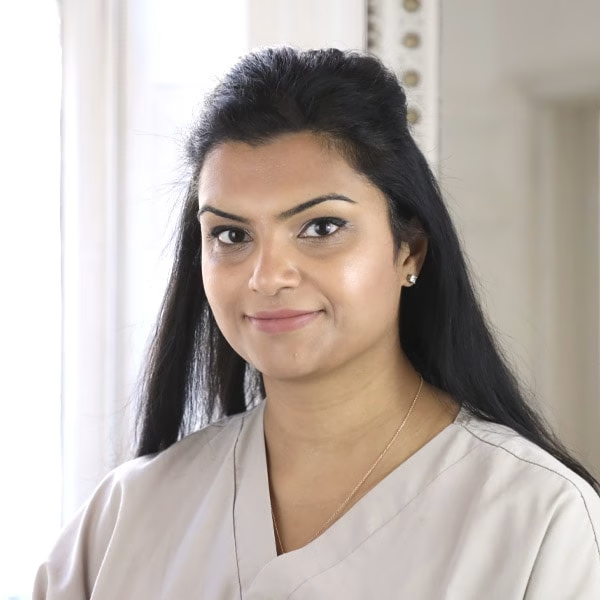
Endodontics is the branch of dentistry that treats the pulp and root canals of a tooth. Its purpose is to save a natural tooth that would otherwise be extracted. At London Dental Specialists this work is carried out by Dr Neha Patel, specialist in endodontics (GDC No. 150517), who provides root canal treatment and retreatment.
We publish our fees on the page so you can plan without waiting for a surprise bill. Every fee is itemised before you commit to anything.
We are a CQC-registered dental practice, which means we are inspected against national standards for safety and quality. Treatment planning is specialist-led from the first visit.
Fear stops many people from seeking care. We offer sedation options for patients who feel anxious. You can read what happens at your root canal consultation and how to book.
The first visit is thorough. A clinical examination and the in-mouth x-rays needed for diagnosis are included in the £195 consultation fee, not charged as extras.
Cost is usually the first question when a tooth needs saving. We take a diagnosis-first approach so you only pay for the treatment you actually need. This begins with a dental consultation for £195, and that fee goes towards your treatment. Dr Patel uses the visit to assess whether the tooth can be treated and what the case will involve.
Payment options are available to help you manage the cost of care; our staff can explain the particulars. For a full breakdown of fees, visit our endodontics costs page.
Leave your number and we will call you back. Nothing is booked until you say so.
We treat infected pulp under operating microscopes, using fine instruments and modern filling and disinfection materials. The same magnification helps us find tooth fractures that are not visible to the naked eye.
Where a pulp exposure is small, we can place bioactive materials that encourage a protective dentine bridge to form, so the pulp has a chance to heal rather than being removed.
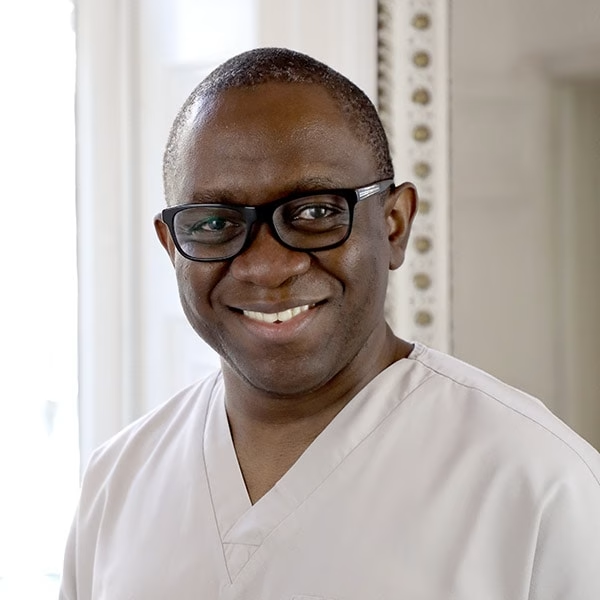
Our endodontic work includes apicoectomy, root canal retreatment, and care for dental trauma and cracked teeth. The practice is led by Dr Ope Sodeinde, GDC-registered specialist periodontist (GDC No. 104071).
We remove infected nerve tissue and bacteria from the pulp chamber and root canals, clean and shape the canals, and seal them to prevent reinfection. This relieves the pain and lets you keep the natural tooth.
Fees depend on the tooth involved and the complexity of the infection. We give you a written cost breakdown at your clinical assessment, after we have examined the tooth, so you have an accurate figure before any work begins.
Most teeth can be saved if the infection is caught in time. We assess the remaining tooth structure to decide whether the tooth can be restored afterwards or whether another option is more sensible. Putting off dental work is common, and we do not judge anyone for it.
The time depends on how far the pulpitis has progressed and on the root anatomy. Some teeth are completed in a single visit; others need more than one appointment so the infection is fully cleared. Dr Patel confirms your likely timeline at the assessment.
Root canal treatment, also called endodontic therapy, stops an infection inside the tooth from spreading into the bone and avoids extraction. By removing the infected tissue and disinfecting the canals, we keep your own tooth in place.
Root canal treatment traditionally took several appointments. For suitable teeth we can clean, shape and seal the canals in a single appointment; Dr Patel will tell you at the assessment whether your tooth is one of them.
Endodontics covers more than a first-time root canal. To decide which root canal treatment option fits your tooth, we rely on examination and imaging rather than assumption. The main interventions are:
Before treatment begins, Dr Patel uses CBCT 3D imaging where needed to map complex root anatomy.
We examine the tooth and its root system to find the cause of the dental abscess or infection and confirm the tooth can be treated.
Dr Patel removes the damaged pulp and cleans the canals. If anxiety is a barrier, we offer sedation for root canal treatment.
Once cleaned, the canals are filled with a biocompatible material to prevent reinfection. Where infection remains at the root tip, an apicoectomy may be needed later.
The tooth is protected with a permanent filling or crown. If a tooth cannot be saved, we can discuss dental implants as a replacement.
Most root canal problems are treated through the crown of the tooth without surgery, including first-time treatment and root canal retreatment. When that route cannot reach the problem, surgical procedures such as apicoectomy treat the root tip directly through the gum. We also manage dental trauma and cracked teeth. The consultation tells us which route is appropriate and safe for your tooth.
A root canal treated tooth can last many years when the canals are properly sealed and the tooth is restored with a filling or crown soon afterwards. How you look after it in the first days and weeks matters. For a detailed recovery plan, read our root canal aftercare guide.
At the consultation Dr Patel examines the root system, confirms which option is safe for your tooth, and gives you a timeframe once the anatomy has been mapped. Detailed endodontics costs in London are published to help you plan your budget.
The thought of a root canal makes many people anxious, and we take that seriously rather than dismissing it. Book your consultation with Dr Patel to receive a written treatment plan and itemised quote that is yours to keep, whichever practice you choose.
020 7589 7792
Real, verified Google reviews from patients of London Dental Specialists.
Your details are used to arrange your appointment and for nothing else.
111 Regent's Park Road, Primrose Hill, London NW1 8UR
Use our contact page if you would rather ask something than book.